
Bonsai Pruning and Shaping
When it comes to Bonsai pruning and shaping, did you know that there are twelve effective techniques that can elevate your tree-care skills?
From mastering the basics of branch pruning to exploring advanced methods like deadwood creation, each technique plays a crucial role in crafting a masterpiece out of your Bonsai tree.
By understanding the intricate balance of timing, tools, and creative vision, you can unlock the secrets to achieving stunning results that showcase the artistry of nature in a miniature form.
Understanding Bonsai Pruning Basics
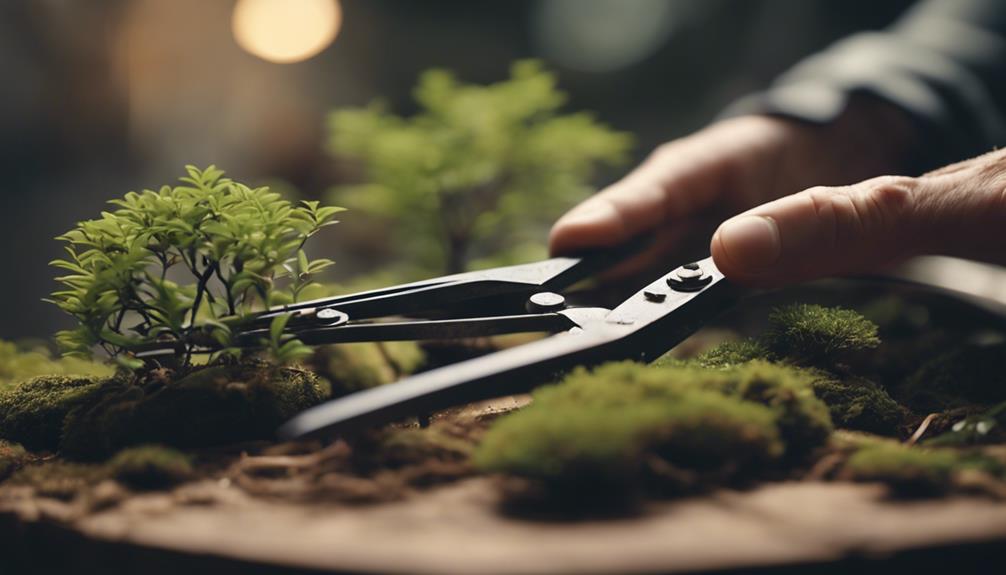
To understand the basics of bonsai pruning, it’s essential to grasp the fundamental principles that guide this intricate art form. Bonsai pruning involves carefully trimming new growth to maintain the desired shape and size of the tree. By pruning, you not only shape the bonsai aesthetically but also promote inner growth by directing the tree’s energy to specific areas. This process is vital for the overall health and structure of the bonsai. Regular pruning is necessary as it helps control the growth and ensures that the bonsai maintains its intended form.
As you delve into the world of bonsai pruning, remember that correct timing and techniques are crucial. Understanding when and how to prune will greatly impact the tree’s response and growth. Through the art of pruning, you can sculpt and mold your bonsai, encouraging it to grow in a way that reflects your vision and enhances its beauty. Mastering the art of bonsai pruning isn’t just about trimming leaves and branches; it’s about shaping a living work of art that continues to grow and evolve with your care and expertise.
Selecting the Right Pruning Tools
When it comes to maintaining the health and structure of your bonsai, selecting the right pruning tools is essential for achieving precise and effective results. Different tools serve specific purposes in bonsai pruning. Concave cutters are ideal for thick branch pruning to promote tree health and aid in healing. Knob cutters help in making clean cuts without leaving unsightly stubs.
Pruning shears are versatile and useful for general pruning tasks. It’s crucial to keep tools like scissors and wire cutters clean, sharp and well-maintained to ensure precise cuts that promote the overall health of the tree. Investing in quality tools not only enhances the aesthetic appeal of your bonsai but also makes the pruning process smoother and more efficient.
Additionally, bending or jacking tools, along with materials like raffia, can aid in shaping techniques, while wires of various gauges are essential for training branches effectively. Choose your tools wisely to ensure the best care for your bonsai tree.
Timing: When to Prune Your Bonsai
During the different seasons of the year, the timing for pruning your bonsai plays a key role in maintaining its health and promoting growth.
- Outdoor Bonsai Trees: Prune outdoor Bonsai trees from early spring to late fall to capitalize on the period of new growth and recovery. This timing allows the tree to flourish and develop in optimal conditions.
- Indoor Bonsai Trees: For indoor Bonsai trees, year-round pruning is essential to preserve their shape and structure. Indoor environments lack seasonal cues, making regular pruning necessary to keep the bonsai healthy and aesthetically pleasing.
- Species-Specific Guidelines: It’s crucial to consider species-specific pruning guidelines for different types of Bonsai trees. Each species may have unique growth patterns and requirements, making it important to tailor the pruning schedule to the specific needs of the tree.
Techniques for Branch Pruning
Branch pruning in Bonsai is a fundamental technique for shaping and maintaining the tree’s form. It involves strategic cutting to enhance growth and aesthetics while preserving balance and proportion. When pruning branches, focus on selectively cutting back or removing branches to maintain the desired tree shape. This process not only helps promote new growth but also plays a crucial role in improving ramification, which refers to the branching pattern of the tree. By carefully pruning branches, you can enhance the overall aesthetics of your Bonsai tree, creating a harmonious and visually appealing design.
To ensure the best results, use sharp and clean tools for branch pruning. Precise cuts minimize stress on the tree and reduce the risk of infection. Remember that regular branch pruning is essential to prevent overcrowding, improve air circulation, and maintain the health and vitality of your Bonsai tree. By mastering the art of branch pruning, you can sculpt your tree into a work of art that evolves beautifully with each new growth cycle.
Leaf Pruning Methods
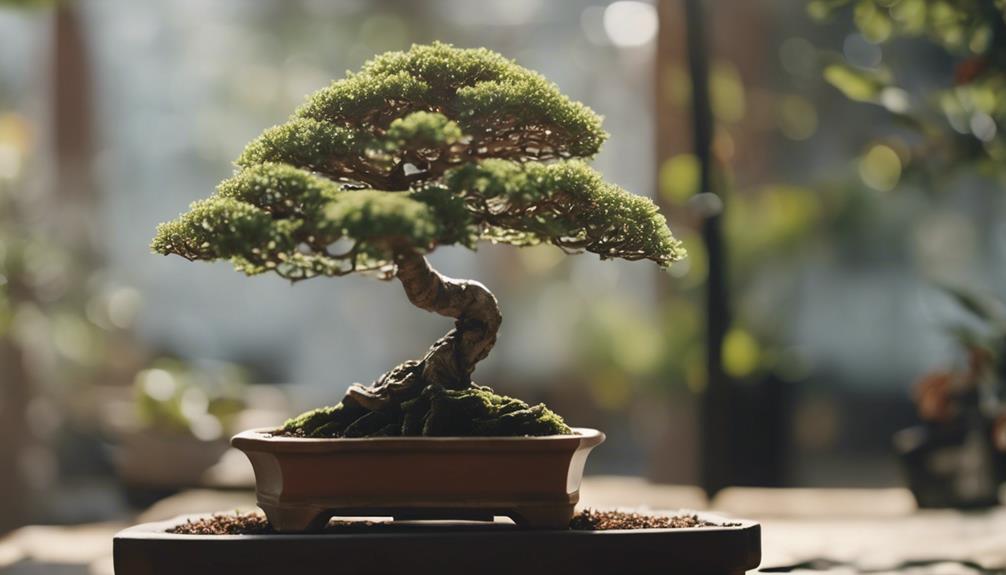
To further refine the aesthetics and health of your Bonsai tree, exploring effective Leaf Pruning Methods is essential for controlling leaf size and density while promoting overall growth and vitality.
- Precision is Key: When performing leaf pruning, focus on removing larger, outer leaves while allowing smaller inner leaves to thrive. This technique helps control leaf size and density, contributing to a more balanced and visually appealing canopy.
- Enhancing Ramification: By selectively pruning leaves, you encourage the development of finer twigs and branches, known as ramification. This intricate branching structure not only adds to the beauty of your Bonsai but also creates a fuller and more refined overall appearance.
- Optimizing Light Penetration: Through strategic leaf pruning, you can improve light penetration into the inner parts of the tree. This allows for better photosynthesis, essential for the tree’s health and vitality. Additionally, increased light exposure promotes better air circulation within the canopy, creating a more conducive environment for growth.
Mastering leaf pruning methods is a crucial step in maintaining the balance and beauty of your Bonsai tree.
Precision Pruning for Bonsai Shape
Precision in pruning is paramount when shaping your Bonsai tree to achieve a desired aesthetic and encourage healthy growth. This technique involves making accurate cuts close to the branch collar, promoting healing and preventing damage.
By selectively removing unwanted branches or foliage, precision pruning focuses on shaping the bonsai tree to maintain its overall form. Utilizing proper tools such as sharp shears or concave cutters is essential for executing precise pruning methods effectively.
Not only does precision pruning help in maintaining the bonsai’s shape, but it also plays a crucial role in stimulating new growth in specific areas, contributing to the tree’s overall design. This meticulous approach to pruning is fundamental in bonsai care, ensuring that the tree develops in a way that aligns with the desired aesthetic goals.
Mastering precision pruning techniques is key to sculpting your bonsai tree into a work of art that reflects your creativity and dedication to this ancient art form.
Wiring for Shaping Bonsai
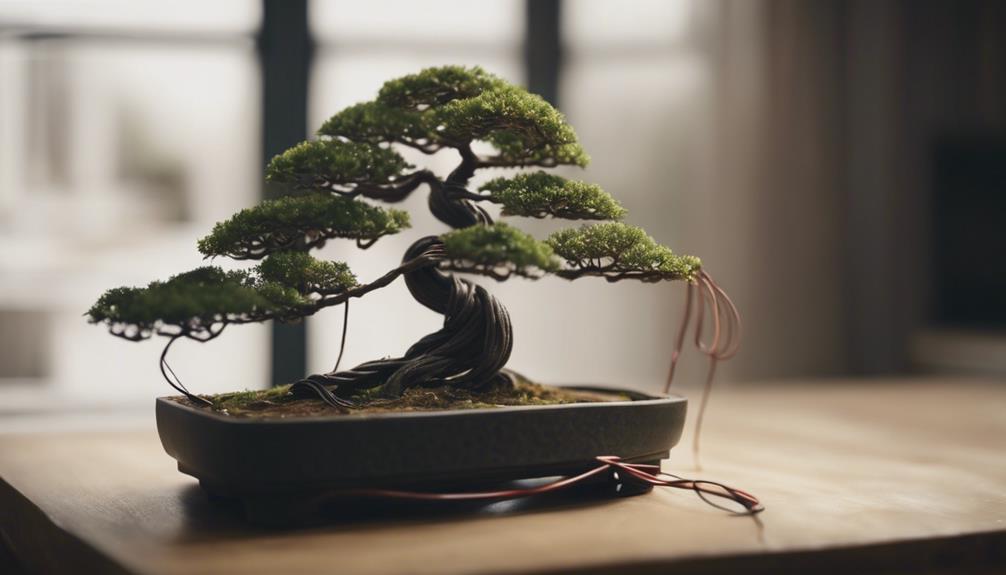
When shaping your Bonsai tree, utilizing wiring techniques is essential for guiding branch growth and achieving desired aesthetic outcomes. Here are three key points to consider when using wiring for shaping your Bonsai:
- Precision Technique: Carefully wrap wire around branches to guide their growth and shape. Ensure that the wire is placed at the correct angle and tension to achieve the desired bend without causing damage to the branch.
- Monitoring Growth: Regularly observe the wired branches to track their progress. Adjust the wiring as needed to maintain the desired shape. Be mindful of the growth rate of different tree species as this can impact how long the branches need to be wired.
- Proper Removal: Once the branches have set in the new position, remove the wire with caution. Improper removal can lead to scars or damage on the branches. Gently unwind the wire rather than pulling it off to avoid harming the tree.
Layering Techniques for Bonsai Structure
Have you explored the intricate art of layering techniques to enhance the structure of your Bonsai tree?
Layering in Bonsai is a method that encourages roots to grow on a branch before separating it from the main tree. There are different techniques for layering, such as air layering and ground layering.
Air layering involves removing a section of bark and covering it with moss to stimulate root growth. On the other hand, ground layering requires partially burying a branch in soil to promote root development.
These techniques help create new Bonsai trees from existing branches, allowing for innovative shapes and designs. By establishing a well-developed root system through layering, you can shape the future of your Bonsai tree with precision and creativity.
Carving and Trimming for Aesthetics
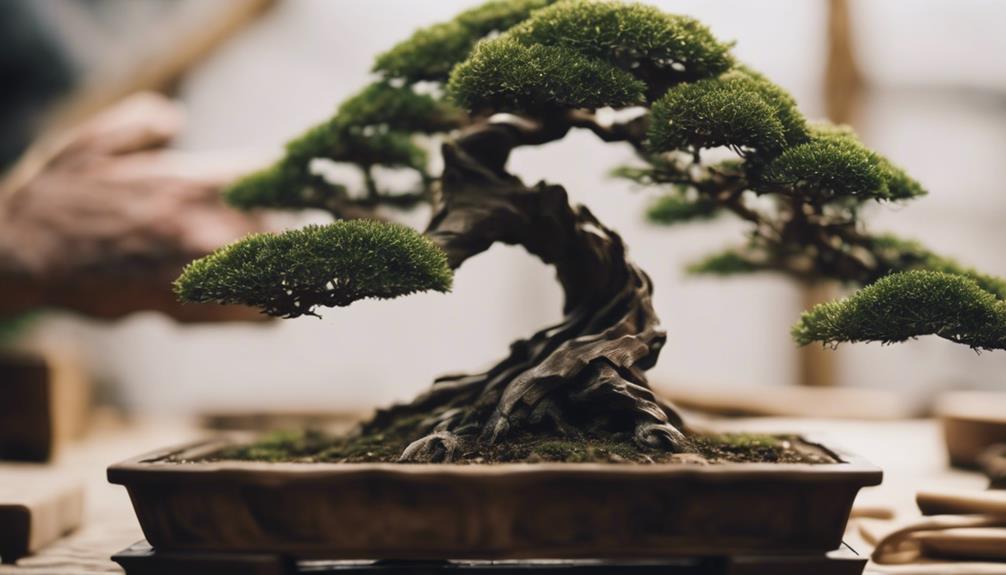
Enhancing the visual appeal of your Bonsai tree through careful carving and trimming techniques is an essential aspect of cultivating its aesthetic charm and character. To achieve this, consider the following:
- Prune it Regularly: Regular pruning is vital to maintain the overall shape of your Bonsai tree. By trimming excess growth, you encourage the tree to focus its energy on developing a compact and well-proportioned form.
- Refine the Existing Shape: Utilize carving and trimming methods to refine the existing shape of your Bonsai tree. By selectively removing branches and foliage, you can enhance the tree’s structure and create a more visually pleasing composition.
- Encourage the Tree to Grow New: Through strategic carving and trimming, you can stimulate new growth in specific areas of the tree. This allows you to guide the tree’s development and shape it according to your artistic vision, fostering a sense of vitality and dynamism in your Bonsai masterpiece.
Pruning for Bonsai Health
To maintain optimal health and vitality in your Bonsai tree, strategic pruning practices are essential for promoting growth and maintaining overall balance. Regular pruning for bonsai health involves precise cuts to encourage natural growth patterns and prevent overcrowding.
By removing dead or diseased branches, you enhance airflow and sunlight exposure, reducing the risk of pests and diseases while stimulating new growth. Rigorous pruning to give shape and refine the tree’s silhouette is crucial for maintaining its aesthetic appeal and structural integrity.
Proper pruning techniques also trigger back-budding, leading to denser foliage and compact growth, ensuring a harmonious balance in the tree’s energy distribution. Timely pruning prevents energy depletion in specific areas, promoting overall vitality and vigor in your bonsai tree.
Seasonal Pruning Considerations
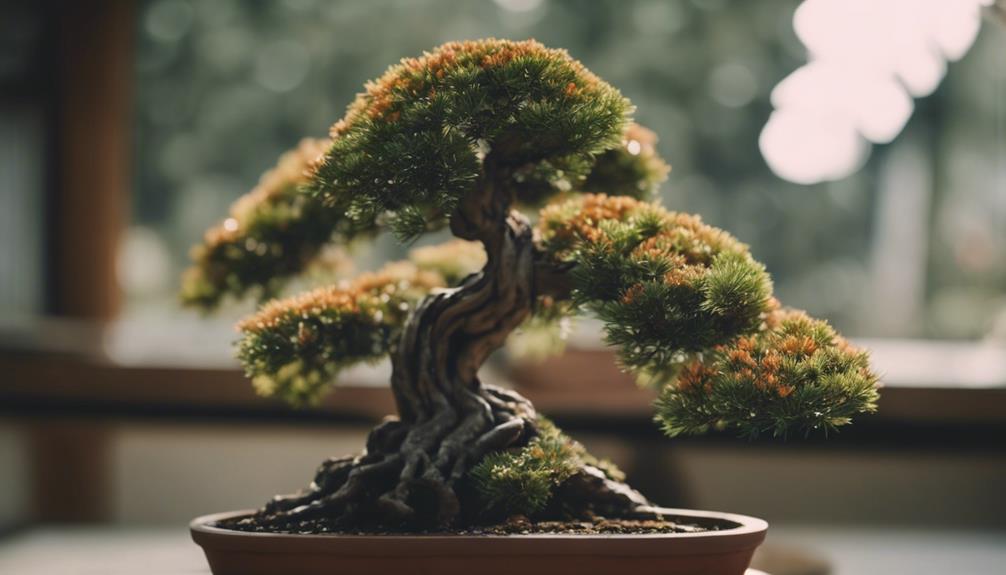
For optimal growth and health of your Bonsai trees, it’s essential to consider seasonal pruning carefully. Proper timing and techniques play a vital role in shaping your trees and promoting healthy growth throughout the year. Here are key considerations for seasonal pruning:
- Timing Matters: Prune outdoor Bonsai trees between early spring and late fall to encourage vigorous growth and maintain their overall well-being. Indoor Bonsai trees, on the other hand, benefit from year-round pruning to preserve their shape and structure.
- Species-Specific Needs: Different tree species may have unique pruning requirements based on their growth patterns and characteristics. Understanding these specific needs will help you tailor your pruning techniques to ensure the best results.
- Shaping for Aesthetics: Utilize effective pruning techniques during the appropriate seasons to shape and refine your Bonsai tree according to your desired aesthetic goals. Thoughtful pruning not only maintains the tree’s health but also enhances its visual appeal, creating a harmonious and balanced tree shape.
Expert Tips for Bonsai Pruning Success
For successful Bonsai pruning, mastering expert techniques is paramount to achieve the desired tree shape and health.
When engaging in bonsai pruning, it’s crucial to use concave cutters for thick branch pruning. These tools help maintain the overall health of the tree and promote efficient healing.
Additionally, when pruning, focus on branches that disrupt the desired design or growth pattern while considering the natural shape and anatomy of the tree species. To make precise pruning decisions, position the bonsai tree at eye level, allowing you to carefully assess and shape it effectively.
For advanced shaping techniques, consider utilizing specialized tools such as knob cutters, bending tools, and raffia. These tools can aid in achieving intricate bonsai shapes and designs.
Lastly, remember to incorporate maintenance-pruning practices like defoliation to reduce leaf size, enhance ramification, and stimulate new growth, ensuring the continued health and beauty of your bonsai tree.