
Care Tips for Bonsai Trees
As you embark on the journey to Care Tips for Bonsai Trees throughout the seasons, it is imperative to grasp the delicate dance between nature and nurture. Winter’s icy embrace can pose challenges, but with the right knowledge, you can ensure your bonsai’s survival and flourishing come spring.
By mastering the art of winterization, understanding the unique needs of your bonsai varieties, and implementing thoughtful strategies, you lay the groundwork for a thriving bonsai oasis.
Curious about the secrets to unlocking your bonsai’s full potential? The following seasonal care tips hold the key to a year-round flourishing bonsai garden.
Winter Care for Bonsai Trees

Wondering how to best care for your bonsai trees during the winter months to ensure their health and survival? Winter care for bonsai trees is crucial, especially as temperatures drop. Tropical trees, sensitive to the cold, should be brought indoors if the thermometer dips below 60°F (15°C).
On the other hand, temperate trees naturally prepare for winter by going dormant, hardening new growth, and shedding leaves. It’s essential that cold-hardy bonsai enter dormancy fully before winter sets in to guarantee their survival.
To protect your bonsai during the winter, consider using a cold frame or insulating the pots to prevent roots from freezing. Monitoring root temperatures, especially in shallow containers, is also vital. Providing extra protection, such as mulching, can further shield your bonsai from harsh winter conditions.
Spring Care for Bonsai Trees
As winter fades and nature begins to stir, the careful attention given to your bonsai trees transitions seamlessly into the realm of spring care. Keep a watchful eye for budding signs on your bonsai trees, signaling their reawakening from the dormancy of winter.
To enhance the overall appearance and health of your bonsai, make sure to pinch new growth regularly, promoting ramification and a more refined aesthetic. Consider utilizing air layering as a propagation method during this active growth phase to expand your bonsai collection.
Towards the end of spring, pruning flowering and fruiting bonsai trees can lead to optimal results later in the season. Additionally, part of your spring maintenance routine should include inspecting your bonsai trees diligently for any signs of pests or diseases, and intervening promptly to maintain their well-being.
Embrace the vibrancy of spring to cultivate a thriving bonsai garden.
Summer Care for Bonsai Trees
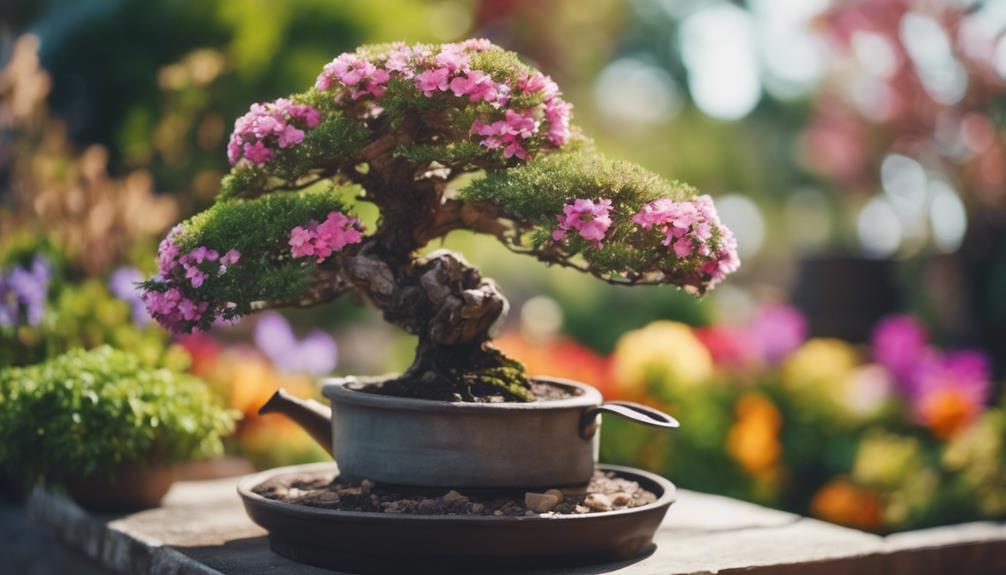
During the summer months, ensure your bonsai trees receive adequate hydration to support their healthy growth and development. Frequent watering is crucial to prevent dehydration, especially in hot weather. To protect them from the scorching sun and heat stress, place your bonsai trees in partial shade. Additionally, fertilize your bonsai trees with a balanced, water-soluble fertilizer to provide essential nutrients for vigorous summer growth.
While caring for your bonsai trees in summer, be vigilant for pests such as spider mites and aphids, which are common during this season. Promptly treat any pest infestations to prevent them from damaging your plants. Summer is also an ideal time to prune and shape your bonsai trees to maintain their desired form and promote compact growth for the rest of the season.
Autumn Care for Bonsai Trees
To continue caring for your bonsai trees as the seasons change from the vibrant growth of summer to the preparatory phase of autumn, adjust your approach to ensure their health and vigor during the upcoming dormancy period. As autumn approaches, it’s essential to adapt your bonsai care routine to cater to the changing needs of your trees:
- Reduce Fertilizer: Deciduous trees benefit from decreased fertilizer to prepare for dormancy and prevent new growth.
- Decrease Watering: Adjust watering frequency to mimic natural conditions as temperatures drop.
- Check for Pests and Diseases: Pests and diseases may become more active as trees prepare for winter dormancy.
- Pruning and Shaping: Begin pruning to shape trees, removing dead or damaged branches before winter arrives.
Remember to clean up fallen leaves and debris around your bonsai trees to prevent rot and enhance overall tree health during the dormant season. By following these autumn care tips, you can ensure your bonsai trees remain healthy and vibrant throughout the changing seasons.