
Essential Indoor Bonsai Species
Imagine a serene corner in your home adorned with Essential Indoor Bonsai Species, each delicately cared for to embody the essence of nature within your living space.
As you explore the world of indoor bonsai trees, understanding the unique requirements of eight essential species becomes paramount for their well-being. From the graceful Ficus Ginseng to the resilient Chinese Elm, each species offers a distinct beauty that can thrive under your attentive care.
Let’s unravel the intricate details of these bonsai companions, guiding you toward a fulfilling journey of nurturing these living works of art.
Ficus Ginseng Care Tips
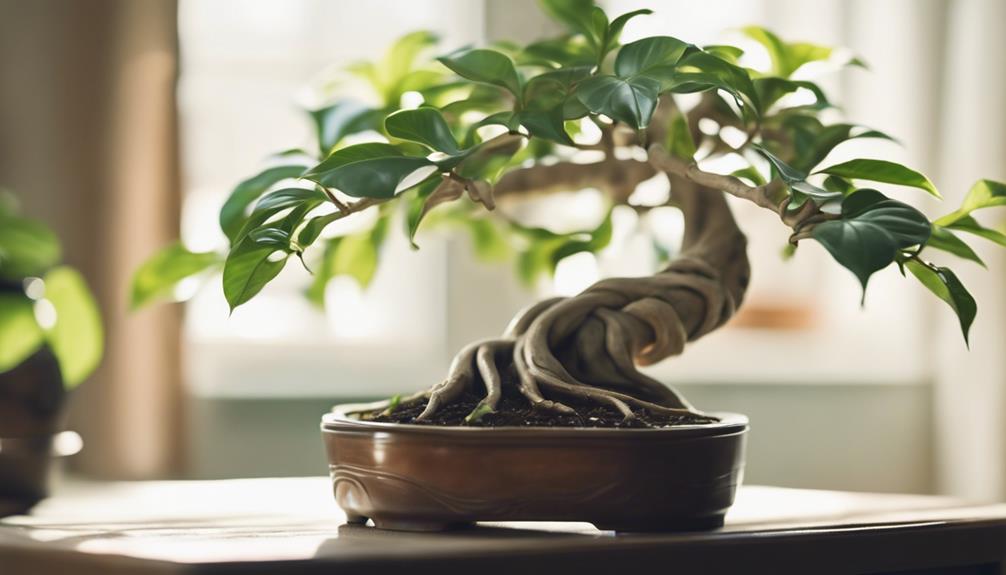
When caring for your Ficus Ginseng Bonsai, ensure it receives ample bright, indirect light to thrive indoors. This indoor tree, belonging to the bonsai species, Ficus Ginseng, flourishes in environments with consistent temperatures ranging between 65-75°F. To maintain the health of your Ficus Ginseng, it’s crucial to water it regularly, allowing the soil to partially dry out between waterings. Proper pruning and shaping are essential care tips to uphold its compact form and encourage robust growth.
For optimal growth, fertilize your Ficus Ginseng every 2-4 weeks during the growing season to provide it with essential nutrients. By following these care tips attentively, you can ensure that your Ficus Ginseng Bonsai thrives and remains a stunning addition to your indoor space. Remember, the key to nurturing indoor trees like the Ficus Ginseng lies in providing the right balance of light, water, and nutrients, all of which are crucial for its overall well-being.
Ficus Microcarpa Care Guide
Regularly providing your Ficus Microcarpa with the right balance of light, water, and care is essential for maintaining its health and vitality indoors. This indoor Bonsai species, also known as the Chinese Banyan, thrives in bright, indirect light and temperatures between 65-75°F, making it adaptable to most indoor settings.
When watering your Ficus Microcarpa, ensure the top inch of soil is dry before watering, and consider misting occasionally to maintain adequate humidity levels. Pruning is recommended during the spring and summer to shape the tree and encourage new growth. Additionally, repotting every 2-3 years helps refresh the soil and promote root health.
To prevent issues such as root rot, it’s crucial to provide good drainage in the Bonsai pot and avoid overwatering. By following these care guidelines for your Ficus Microcarpa, you can enjoy a thriving and beautiful indoor Bonsai tree that brings nature into your living space.
Rosemary Bonsai Care Essentials
Caring for your rosemary bonsai involves providing ample sunlight, well-draining soil, and regular pruning to ensure its health and shape. This fragrant herb, known for its culinary uses, thrives in a slightly dry environment, so be cautious not to overwater it to prevent root rot. Rosemary bonsai is a resilient plant, forgiving of some neglect, which makes it an excellent choice for beginners venturing into herb bonsai cultivation.
Its ability to adapt to indoor conditions adds a touch of beauty and fragrance to any living space. Remember to place your rosemary bonsai in a sunny spot, as it requires sunlight to flourish. Additionally, periodic pruning is essential to maintain its desired form and promote healthy growth.
Chinese Elm Indoor Care Instructions
To ensure the optimal health and beauty of your Chinese Elm indoor bonsai tree, provide it with the appropriate lighting, temperature, and watering regimen. Chinese Elm bonsai trees thrive in bright, indirect light and prefer temperatures between 60-75°F, making them ideal for indoor environments.
When it comes to watering, ensure you water your Chinese Elm bonsai regularly but be cautious not to overwater, as they’re sensitive to excess moisture which can lead to root rot. Pruning and shaping should be carried out in spring or fall to maintain the desired form and encourage healthy growth of your Chinese Elm bonsai.
Additionally, maintaining proper humidity levels around 50% and providing occasional fertilization during the growing season will further support the flourishing of your Chinese Elm indoor bonsai tree. By following these care instructions diligently, you can enjoy the serenity and beauty of your Chinese Elm bonsai for years to come.
Schefflera Bonsai Species Care
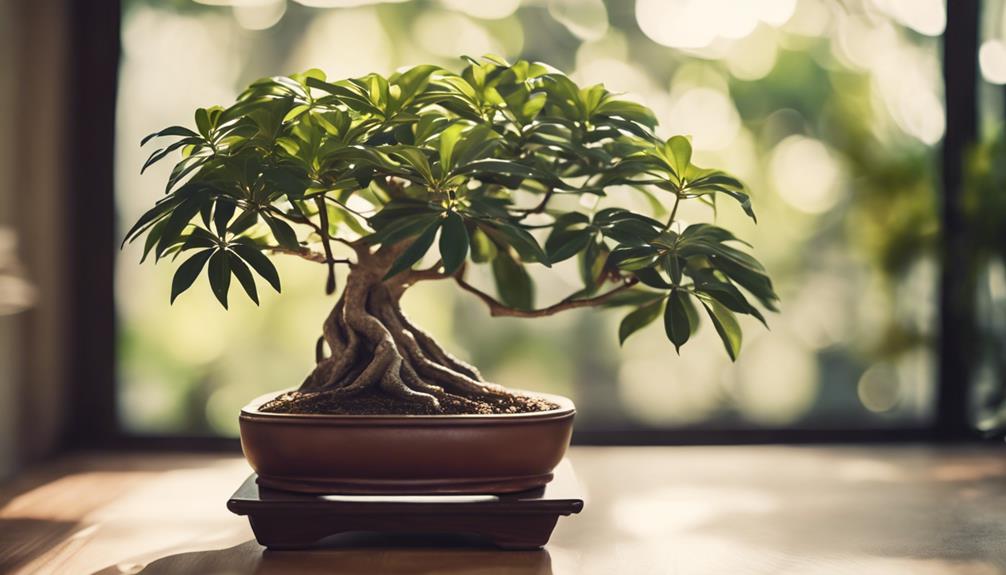
For those who’ve successfully cared for their Chinese Elm indoor bonsai, transitioning to nurturing a Schefflera Bonsai can introduce you to the unique care requirements of this tropical species. The Schefflera Bonsai, also known as the Hawaiian umbrella tree, thrives indoors due to its adaptability to indoor conditions. Here are some essential care tips for your Schefflera Bonsai:
- Bright Light: Provide your Schefflera Bonsai with bright, indirect light to ensure healthy growth and leaf development.
- Regular Pruning: Keep your bonsai’s shape in check by pruning it regularly to maintain its compact and aesthetic appearance.
- Proper Humidity: Maintain proper humidity levels around your Schefflera Bonsai to prevent issues like leaf drop and ensure its overall health.
- Consistent Moisture: Water your bonsai consistently, ensuring the soil is moist but not waterlogged to promote optimal growth.
- Draft Protection: Shield your Schefflera Bonsai from drafts to prevent stress and maintain its well-being while indoors.