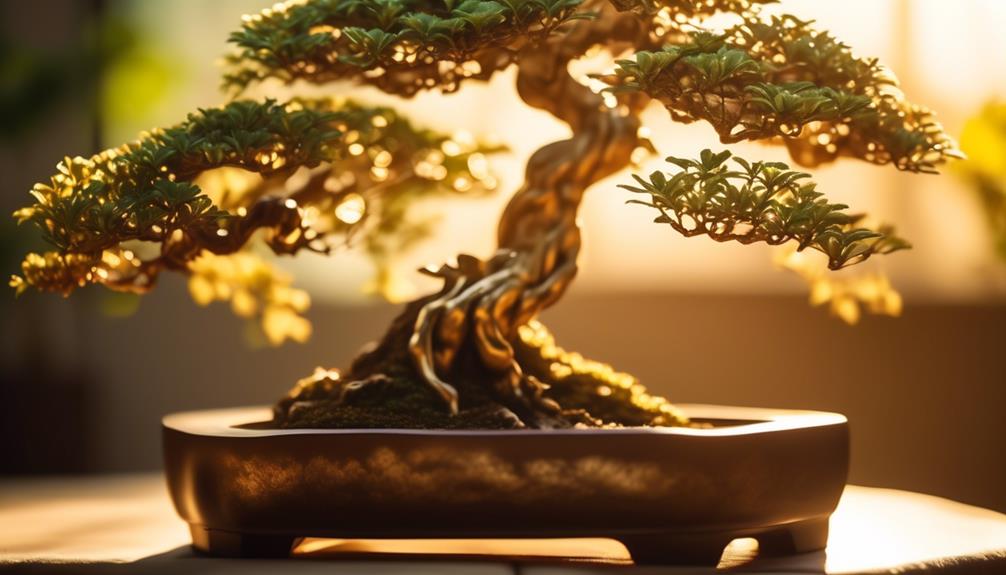
Imagine you’re standing in a lush garden, surrounded by an array of vibrant and healthy bonsai trees and Bonsai Tree Health Through Sunlight. Their leaves shimmer in the sunlight, their branches gracefully reaching towards the sky.
As you observe their beauty, you can’t help but wonder how these miniature marvels maintain such impeccable health. Well, my friend, the answer lies in the art of sunlight care. By understanding the importance of sunlight and implementing proper techniques, you can unlock the secret to enhancing the health and longevity of your own bonsai trees.
But before we delve into the details, let’s first explore the fascinating world of bonsai and its deep-rooted connection to the sun.
Importance of Sunlight in Bonsai Care And Bonsai Tree Health Through Sunlight
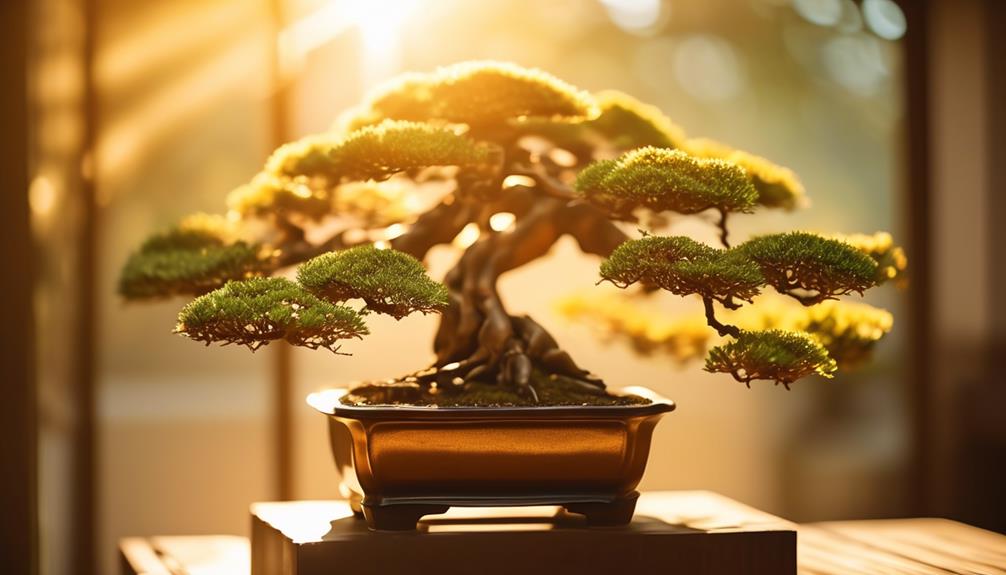
To ensure the optimal growth and health of your bonsai tree, it’s crucial to understand the importance of sunlight in its care. Sunlight plays a vital role in the life of a bonsai tree, providing energy for photosynthesis and supporting its overall well-being. Outdoor bonsai trees, in particular, rely on direct sunlight for at least 5 to 6 hours a day to thrive. This exposure to sunlight ensures that the tree receives enough energy to produce food and grow strong.
Different bonsai tree species have varying sunlight requirements. Some species can tolerate lower levels of sunlight, while others need more intense exposure. It’s important to research the specific care needs of your bonsai tree species and place it in the right location accordingly. Placing your bonsai tree in an area with the right amount of sunlight is crucial to its health and development.
For indoor bonsai trees, sunlight care becomes even more critical. While they may not require as much sunlight as outdoor trees, indoor bonsai trees still need sufficient light to survive. Tropical and subtropical species, in particular, thrive in warm and humid indoor environments. These indoor bonsai trees can be a great option for those living in challenging climates or experiencing extreme temperature differences between seasons.
Understanding the importance of sunlight in bonsai care is essential for the well-being of your tree. By providing your bonsai with the right amount of sunlight, whether it’s an outdoor or indoor tree, you’re ensuring its optimal growth and health.
Optimal Sunlight Exposure for Bonsai Trees
For optimal health and growth, bonsai trees require a minimum of 5 to 6 hours of direct sunlight daily. Sunlight is crucial for the overall health and development of bonsai trees.
Here are some important points to consider regarding the optimal sunlight exposure for bonsai trees:
- Weak foliage and other health issues can arise if bonsai trees don’t receive enough sunlight. Lack of sunlight can cause the foliage to become pale, thin, and weak. It can also lead to stunted growth and a weakened immune system, making the tree more susceptible to diseases and pests.
- The amount of sunlight and warmth bonsai trees receive influences their watering frequency. Sunlight helps in the evaporation of water from the soil, so trees exposed to more sunlight may require more frequent watering. On the other hand, trees in shady areas may need less watering.
- To determine when to water your bonsai tree in relation to sunlight exposure, it’s important to check the moisture level of the soil. Stick your finger about an inch into the soil to feel its dampness. If it feels dry, it’s time to water. This way, you can ensure that your bonsai tree receives adequate moisture based on its sunlight exposure.
Sunlight Requirements for Different Bonsai Species
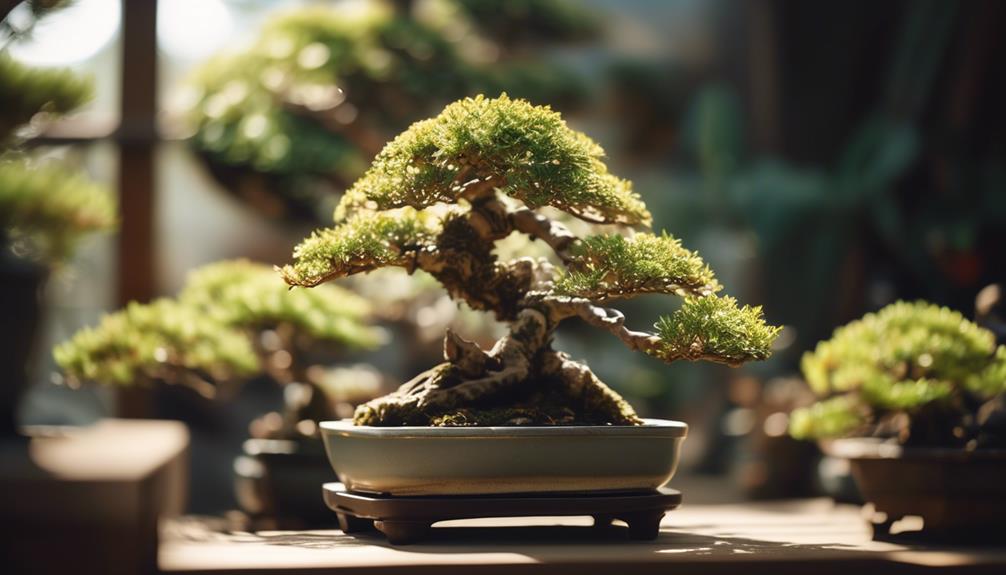
After understanding the importance of optimal sunlight exposure for bonsai trees, it’s now essential to explore the specific sunlight requirements for different bonsai species. Each bonsai tree species has its own unique needs when it comes to sunlight care, and understanding these requirements is crucial for enhancing bonsai tree health.
Most bonsai tree species require 5 to 6 hours of direct sunlight daily. This means that they should be placed in an area where they can receive ample sunlight for this duration. If you have outdoor bonsai trees, it’s important to keep them outside from May to September, as this is the period when they can benefit the most from sunlight.
However, it’s a common misconception that all bonsai trees require direct sunlight. Some bonsai species, particularly tropical and subtropical ones, can thrive with low or artificial light, making them suitable for indoor environments. Bonsai tree species such as Ficus, Jade, and Carmona can tolerate low-light conditions and are well-suited for indoor settings with limited sunlight.
To ensure that your bonsai trees receive the right amount of sunlight, it’s recommended to place them near a window that receives sunlight for most of the day. You can also use a humidity tray to increase the humidity around the tree and prevent it from drying out in the presence of direct sunlight. Additionally, it’s important to keep bonsai trees in small pots, as this allows for better control of sunlight exposure and prevents the roots from becoming too hot.
Maximizing Sunlight for Bonsai Health
Maximize the health of your bonsai trees by optimizing their exposure to sunlight. Sunlight is crucial for the overall health and well-being of bonsai trees, as it provides essential energy for photosynthesis and encourages strong growth.
To enhance the health of your bonsai tree through sunlight care, keep the following factors in mind:
- Duration of sunlight: Bonsai trees should ideally receive 5 to 6 hours of direct sunlight daily. This exposure helps promote healthy growth and development. However, be cautious of excessive sunlight, as it can cause leaf burn. Contextually choose the right amount of sunlight for your bonsai tree species.
- Adjust watering frequency: The amount of sunlight your bonsai tree receives affects its water requirements. Bonsai trees exposed to more sunlight and warmth may need more frequent watering to prevent dehydration. Monitor the soil moisture regularly and adjust the watering frequency accordingly.
- Artificial grow lights: In low-light indoor environments, artificial grow lights can be used to supplement sunlight. These lights provide the necessary light spectrum for photosynthesis and help support the health of your bonsai tree.
Sunlight Care Tips for Bonsai Tree Maintenance
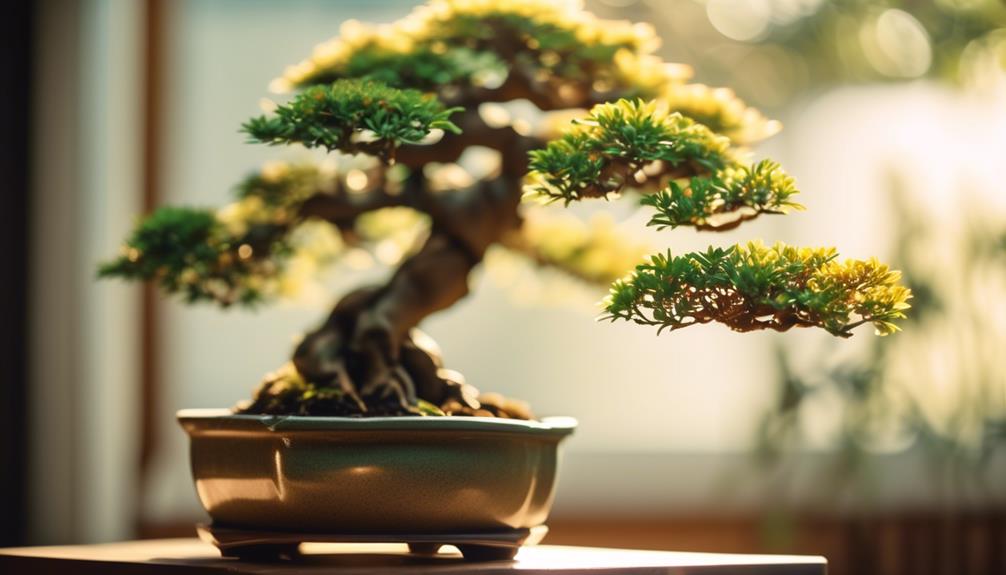
To ensure the health and vitality of your bonsai tree, proper sunlight care is essential. Bonsai trees need a good amount of sunlight to thrive, whether they’re kept indoors or outdoors. Sunlight provides energy for photosynthesis, which is crucial for the growth and development of the tree. Ideally, your bonsai tree should receive direct sunlight for about 5-6 hours every day. This will help promote strong foliage and overall health.
When caring for your bonsai tree, it’s important to consider its species and the amount of light exposure it requires. Some species prefer more sunlight, while others thrive in partial shade. Researching the specific needs of your bonsai tree species will help you provide the optimal light conditions.
If your bonsai tree is kept indoors, place it near a window where it can receive the maximum amount of sunlight. Rotate the tree regularly to ensure even light distribution on all sides. If you notice weak foliage or slow growth, it may indicate a lack of sunlight, in which case you may need to consider using artificial grow lights to supplement the light.
In addition to proper sunlight care, it’s important to balance watering and fertilizing to maintain the health of your bonsai tree. The frequency of watering depends on factors such as the amount of sunlight and warmth your bonsai tree receives. Checking the moisture level of the soil will help you determine when it’s time to water. Remember to also monitor humidity levels, as some indoor environments may be drier, requiring occasional misting to provide the necessary moisture.
Frequently Asked Questions
Is Sunlight Good for Bonsai?
Sunlight is essential for bonsai health. It promotes leaf growth, root development, and flowering. Morning sunlight provides optimal exposure, while afternoon sun has advantages. However, be cautious of excessive sunlight and ensure shade requirements are met to enhance your bonsai’s health.
How Do I Make My Bonsai Tree Healthy?
To make your bonsai tree healthy, prune regularly, adjust soil moisture, adhere to a proper fertilizer schedule, control pests, water appropriately, choose the right pot, position it correctly, provide winter care, select the right species, and use bonsai styling techniques.
How Do I Bring My Bonsai Tree Back to Life?
To bring your bonsai tree back to life, try these revival techniques: assess its health, adjust watering and sunlight, prune dead branches, repot if necessary, and fertilize appropriately. With proper care, you can restore its vitality.
How Do You Nourish a Bonsai Tree?
To nourish your bonsai tree, water it properly, choose the right soil, fertilize regularly, prune and shape carefully, select the right pot, control pests, care for it during winter, repot when needed, maintain humidity, and manage the dormancy period.
Conclusion
In conclusion, ensuring that your bonsai tree receives adequate sunlight is essential for its overall health and well-being. By providing 5-6 hours of direct sunlight daily, you can prevent weak foliage and other issues.
Remember to place your bonsai in a location where it can receive ample sunlight, while also maintaining humidity, air circulation, and preventing insect infestations.
By following these sunlight care tips, you can maximize the health and beauty of your bonsai tree.