
Beginner Bonsai Tree Species
Beginner Bonsai Tree Species to imagine embarking on your bonsai journey, much like an artist with a blank canvas, seeking the perfect tree to mold into a masterpiece.
The allure of cultivating miniature trees with rich histories and intricate designs beckons, and selecting the right species is crucial for success.
As you begin this captivating exploration, consider the three best beginner-friendly bonsai tree species that promise a rewarding start to your bonsai adventure.
Top Pick: Ficus Bonsai
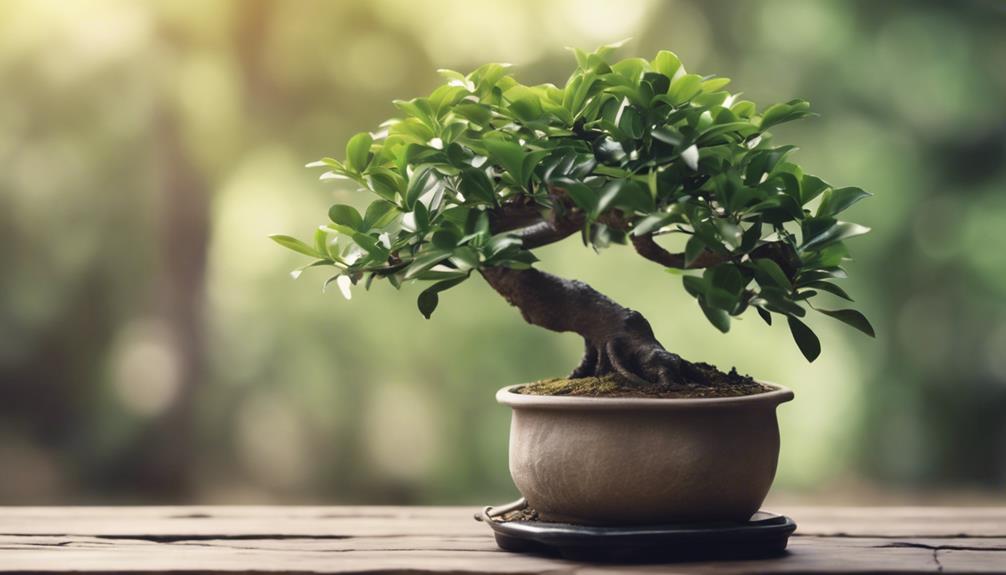
For beginners seeking a resilient and forgiving bonsai tree species, the top pick is the Ficus Bonsai. This indoor beauty isn’t only beginner-friendly but also a low-maintenance delight. With simple pruning techniques, where you just need to cut back leaves, and the tree easily backbuds for new growth, caring for a Ficus Bonsai becomes a joy rather than a chore.
Placing it in an indoor environment that offers high humidity and a sunny spot with temperatures above 68°F, the Ficus Bonsai thrives effortlessly. Its adaptability to various conditions and forgiving nature make it an ideal choice for those starting their bonsai journey. Even if you forget a watering session or two, this bonsai is likely to forgive you and bounce back gracefully.
Embrace the beauty of bonsai cultivation with the Ficus Bonsai, an easy-care plant that will bring a touch of nature’s elegance into your indoor space.
Easy Care: Chinese Elm Bonsai
Explore the world of bonsai cultivation with the Chinese Elm Bonsai, a beginner-friendly choice known for its affordability and ease of maintenance. Chinese Elm Bonsai trees are considered one of the best bonsai tree species for beginners, offering a perfect canvas for your bonsai artistry.
- Chinese Elm Bonsai trees have small leaves naturally, allowing you to create a well-balanced and visually appealing bonsai tree effortlessly.
- These bonsai trees can thrive both indoors and outdoors, but they grow exceptionally well in outdoor environments with filtered sunlight.
- Regular pruning is essential for Chinese Elm Bonsai trees to maintain their shape and structure. By pruning new shoots that sprout after cutting branches, you can enhance the aesthetic beauty of your bonsai tree.
With their affordability, adaptability to various environments, and ease of pruning, Chinese Elm Bonsai trees are a fantastic choice for novice bonsai enthusiasts looking to embark on a fulfilling bonsai journey.
Beginner-Friendly: Juniper Bonsai

Discover the captivating world of Juniper Bonsai, a timeless choice cherished by beginners for its resilience and simplicity of care.
Juniper bonsai trees offer a perfect entry point into the art of bonsai for beginners due to their hardiness and easy maintenance requirements. These trees thrive with regular watering, abundant sunlight, and proper airflow.
One of the fascinating aspects of working with juniper bonsai is the opportunity to train them using wire for shaping branches and even thicker wire for adjusting trunk positions, enabling you to explore various design styles and techniques.
Additionally, junipers are forgiving plants that recover well from pruning mistakes, making them an excellent learning platform for honing bonsai skills.
Embrace the chance to delve into the world of bonsai artistry through the versatile and resilient nature of juniper bonsai trees, allowing you to cultivate both a beautiful tree and a deeper understanding of bonsai techniques.
The world of bonsai artistry
The world of bonsai artistry is a captivating realm that intertwines history, technique, and creativity. Bonsai, with its rich heritage and intricate cultivation methods, offers enthusiasts a profound connection to nature and the enduring spirit of artistic expression.
From the evolution of styles driven by changing fashions to the delicate dance between horticulture and artistic vision, bonsai embodies a sanctuary of tranquility and a timeless invitation to cultivate harmony and balance in our lives. Artists like Kimura have revolutionized the art form, using power tools to create dramatic transformations that challenge traditional norms and inspire admiration and critique alike123. The art of bonsai, with its essential tools, meticulous care, and dedication to shaping living sculptures, continues to captivate audiences worldwide, celebrating the delicate beauty and enduring legacy of miniature trees.