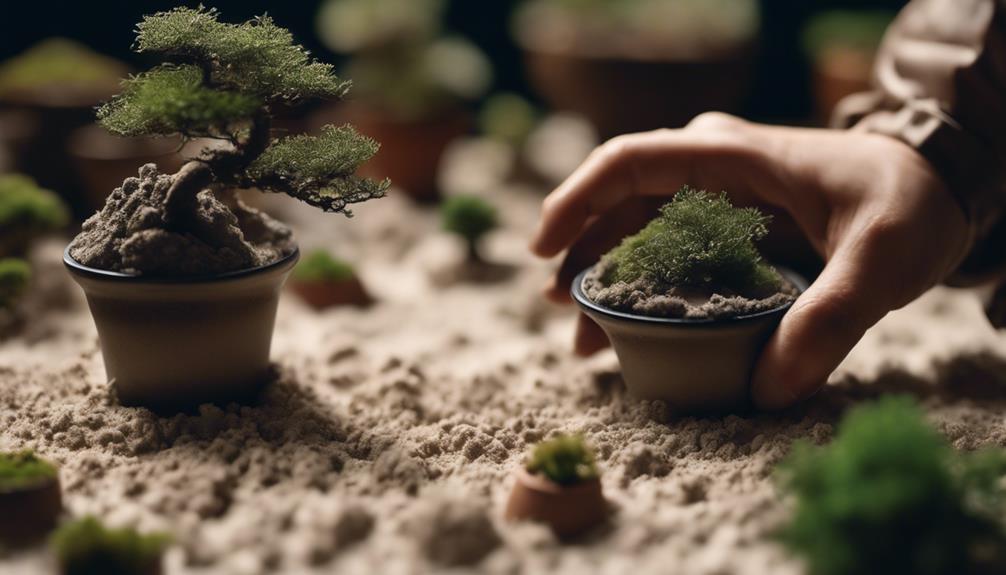
Perfect Soil for Miniature Trees
Have you ever pondered the intricate dance between soil composition and the vitality of miniature trees and Perfect Soil for Miniature Trees, where each component plays a crucial role akin to a maestro conducting a symphony?
Understanding the delicate balance required for optimal growth and health of bonsai trees entails a journey into the realm of soil intricacies, where every grain holds the secret to flourishing greenery.
The meticulous crafting of the perfect soil mixture is not merely a task but an art form that requires finesse and dedication, promising a world of miniature wonders waiting to unfurl before your eyes.
Signs of Unhappy Bonsai Soil
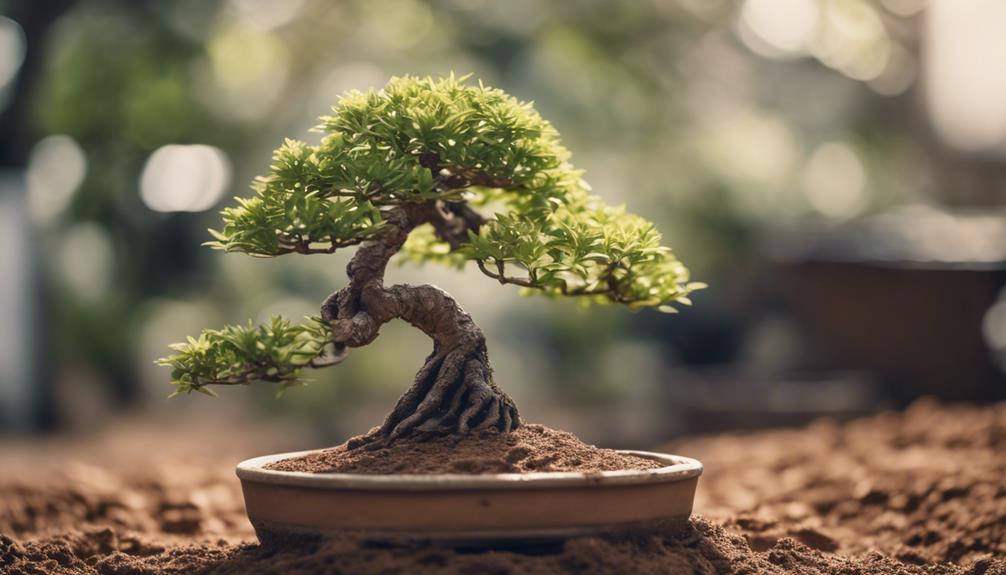
Unveiling signs of discontent in bonsai soil requires a keen eye for subtle manifestations indicating underlying issues affecting the miniature Pine Trees’ health and vitality. Mold growth, whether as white fuzz or colorful patches, serves as a telltale sign of soil problems. When such mold appears, it signals a need for immediate attention to prevent further damage.
Additionally, foul odors emanating from the soil can signify overwatering or poor drainage, both of which can negatively impact the Pine Tree’s well-being. Excessive moisture, a common result of improper watering practices, can lead to root suffocation, ultimately compromising the health of the Pine Trees. To combat root rot caused by such soil issues, timely repotting becomes essential.
Maintaining a proper balance in watering is crucial to ensure the soil remains healthy and conducive to the growth of these delicate miniature trees. By recognizing and responding promptly to these signs of distress in bonsai soil, you can safeguard the well-being and longevity of your Pine Trees.
Rescuing Troubled Soil
To rescue troubled soil in bonsai cultivation, repotting is a vital step to eliminate root rot and rejuvenate the soil for optimal tree health. When addressing soil issues, consider incorporating perlite into the mix. Perlite, a lightweight volcanic glass with excellent aeration properties, helps improve soil drainage and prevent compaction, allowing roots to breathe and absorb nutrients efficiently.
In addition to repotting, adjusting your watering practices is crucial for promoting tree recovery. By ensuring the soil is neither too dry nor waterlogged, you create an environment that supports root health and overall tree vigor. Introducing organic matter into the soil mix further enhances drainage and provides essential nutrients for the tree.
Essential Ingredients for Bonsai Soil
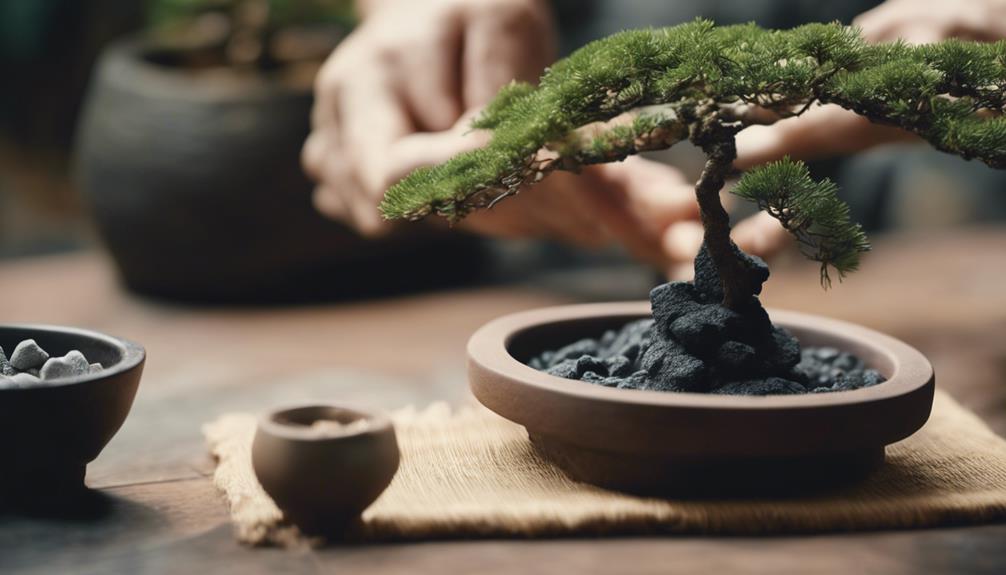
Rescuing troubled soil in bonsai cultivation involves incorporating essential ingredients such as sandy loam, perlite, and vermiculite to promote optimal growth and root health. Sandy loam forms the base of bonsai soil, providing stability and anchorage for the miniature tree.
Perlite, a volcanic glass that’s lightweight and porous, plays a crucial role in the soil mix by improving water retention and aeration. This helps prevent waterlogging and ensures that the roots receive adequate oxygen, promoting healthy growth.
Vermiculite, derived from expanded Mica minerals, aids in water absorption, assisting the roots in taking up moisture and nutrients effectively.
The standard ratio for bonsai soil typically involves equal parts of sandy loam, perlite, and vermiculite, with adjustments made based on the specific requirements of different tree species. Achieving a well-balanced bonsai soil mix is essential for fostering robust root development and overall tree health. By incorporating these essential ingredients, you can create an environment that supports the flourishing of your miniature trees.
Mixing Proportions and Process
For achieving optimal growth of your miniature trees, mastering the art of mixing proportions and the process is crucial. To create the perfect soil mix for your bonsai trees, follow these essential steps:
- Proper Proportions: Begin by combining one part sandy loam, one part perlite, and one part vermiculite. Adjust these proportions accordingly based on the specific needs of your miniature tree species, like pine or maple. The perlite aids in improving drainage and aeration within the soil mix, crucial for the health of your bonsai.
- Efficient Mixing: Utilize a sturdy garbage bag to mix the soil components thoroughly. By shaking the bag, you ensure an even distribution of the materials, allowing for consistent growth and nutrient uptake in your miniature trees.
- Lump-Free Soil: Break up any clumps in the soil mix to promote proper aeration and water retention for the roots. This step is vital in creating a non-homogeneous soil mix that benefits your miniature trees by enhancing water retention and overall health.
Commercial Vs Homemade Soil Mixes
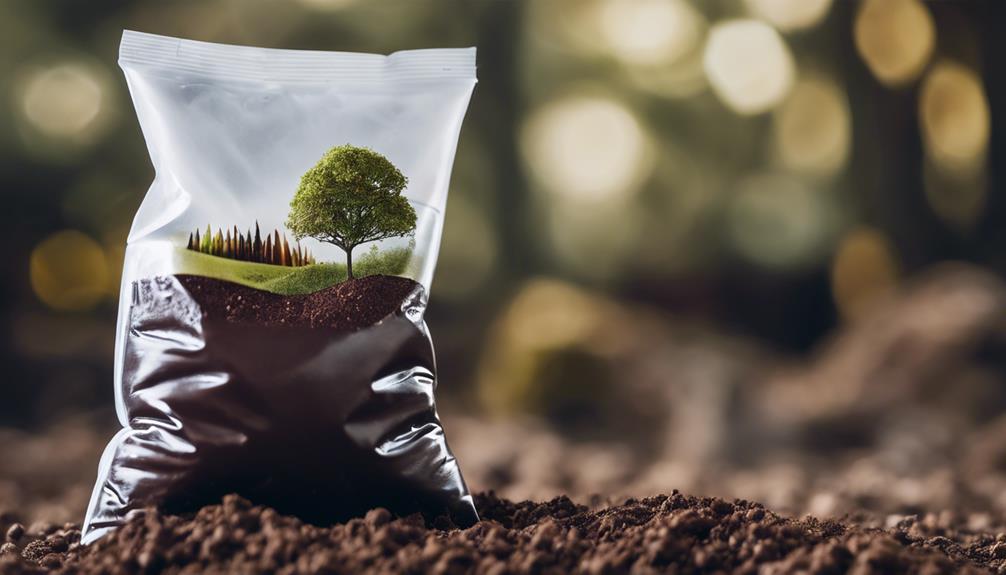
When deciding between commercial and homemade soil mixes for your miniature trees, consider the unique advantages and drawbacks of each option to ensure optimal growth and health for your bonsai.
Commercial soil mixes often contain perlite, a lightweight volcanic glass that aids in drainage and aeration, promoting healthy root development. These mixes are convenient and provide consistency in their composition, making them suitable for beginners or those looking for a low-maintenance option.
On the other hand, homemade soil mixes offer the flexibility to tailor the components to suit specific plant needs. By incorporating organic matter such as peat moss, you can create a mix that caters to your bonsai’s individual requirements. While homemade mixes may require more effort in sourcing and measuring ingredients, they allow for greater control over the blend.
Whether you opt for the accessibility of commercial mixes or the customization of homemade blends, both can be adjusted to meet the unique demands of different bonsai tree species.