You may think that the Optimal Watering Schedule bonsai tree is a simple task, but when it comes to different species, the optimal watering schedule can be quite tricky to determine.
Each bonsai tree species has its own unique needs and preferences when it comes to water. Pine bonsai trees, for example, require a different watering schedule compared to juniper bonsai trees.
The size of the tree, the condition of the soil, the climate, and even the pot size all play a role in determining the right amount and frequency of watering.
So, if you want to ensure the health and vitality of your bonsai tree, it is essential to understand the specific watering needs of your chosen species.
Pine Bonsai Optimal Watering Schedule
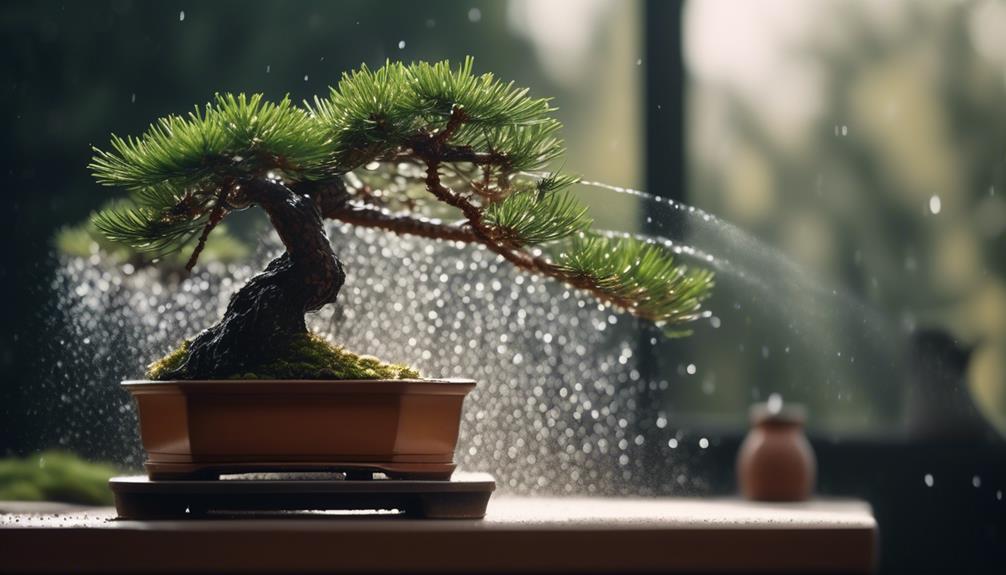
To ensure the health and vitality of your pine bonsai tree, it’s crucial to establish a well-planned watering schedule that takes into account various factors such as weather conditions, soil mixture, and the specific needs of your individual tree. Watering your pine bonsai tree at the optimal time and in the correct amount is essential for its overall well-being.
When determining the watering schedule for your pine bonsai tree, it’s important to consider the species and its specific requirements. Pine bonsai trees, being conifers, may prefer slightly drier conditions compared to other bonsai species. This means that you need to be cautious not to overwater your pine bonsai tree, as it can lead to root rot and other issues.
One effective technique for watering your pine bonsai is to soak the roots thoroughly. This ensures that the water reaches the deepest parts of the soil, providing hydration to the entire root system. When watering, it’s advisable to use rainwater or tap water that has been left to stand for 24 hours to allow the chlorine to evaporate. Additionally, using a fine nozzle on your watering can or hose helps to distribute the water evenly and prevent damage to the delicate branches and foliage.
The frequency of watering your pine bonsai tree depends on several factors, including the weather conditions and the type of soil mixture used. In general, during the warmer months, you may need to water your pine bonsai tree more frequently, while in colder months, you can reduce the frequency. However, it’s crucial to closely observe your individual pine bonsai tree to determine its specific watering needs.
Juniper Bonsai Watering Schedule
When establishing a watering schedule for your Juniper bonsai tree, it’s important to consider various factors such as the tree’s specific requirements, climate, and soil composition. Juniper bonsai trees often need frequent watering, especially during hot summer months when they’re exposed to full sun. In these conditions, daily watering may be necessary to ensure they receive enough water. However, in winter, watering once a week is usually sufficient, although adjustments should be made based on your specific climate and humidity levels.
To determine when to water your Juniper bonsai tree, it’s crucial to check the soil moisture regularly. This can be done by inserting your finger into the soil up to the second knuckle. If the soil feels dry at that depth, it’s time to water. It’s important to note that the watering needs may vary for smaller bonsai trees compared to larger ones, as the root mass and soil mix differ.
When watering your Juniper bonsai tree, ensure that you use a well-draining soil mix specifically designed for bonsai trees, such as Bonsai soil. Water thoroughly until you see drainage occurring from the bottom of the pot. This will ensure that the roots receive enough water without becoming waterlogged. Allow the soil to partially dry between waterings, as over-watering can lead to root rot and other issues.
Maple Bonsai Watering Schedule
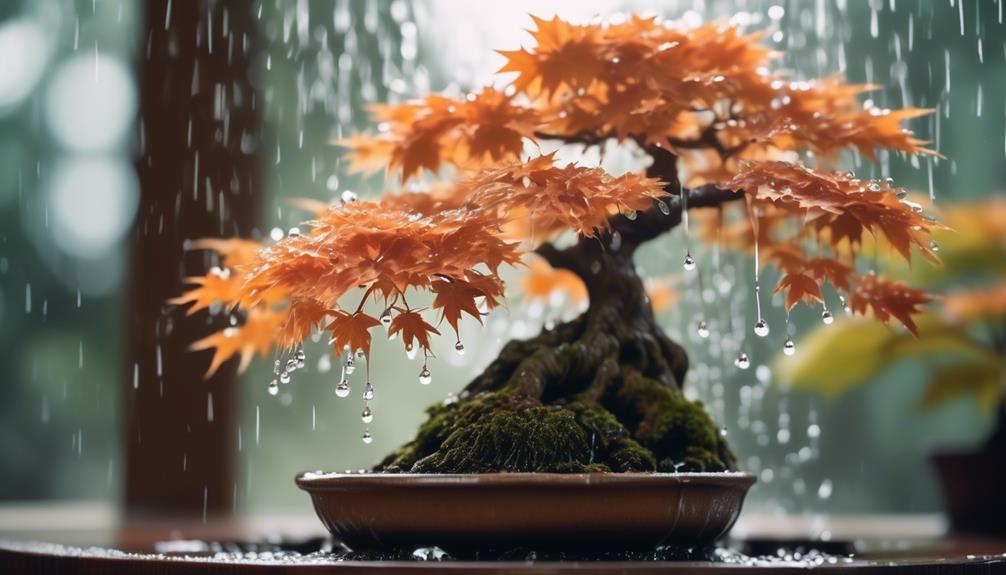
For optimal care of your Maple bonsai tree, it’s crucial to establish a proper watering schedule that takes into account various factors and ensures the tree receives adequate hydration. When determining how often to water your Maple bonsai, it’s important to consider factors such as the size of the pot, the type of soil mixture, and the environmental conditions in which the tree is placed.
To keep your Maple bonsai tree properly watered, it’s essential to pay attention to the dryness of the soil. Check the soil regularly by gently inserting your finger about an inch deep into the soil. If the soil feels dry at this depth, it’s time to water your bonsai.
When watering your Maple bonsai, it’s important to thoroughly soak the root system. This can be achieved by watering until you see water flowing out of the drainage holes of the pot. This ensures that the entire root system receives adequate hydration.
If possible, use rainwater for watering your bonsai as it’s free from chemicals and minerals that may be present in tap water. Rainwater is gentle on the roots and helps maintain a healthy soil pH.
Elm Bonsai Watering Schedule
Now let’s explore the optimal watering schedule for Elm bonsai trees, building on the importance of establishing a proper watering routine for Maple bonsai trees.
When it comes to watering routine, it’s crucial to determine the specific water needs of each tree species. Elm bonsai trees thrive when their soil mixtures have proper drainage and water retention.
To ensure optimal watering, follow these guidelines:
- Monitor the soil moisture: Check the soil regularly and water as soon as it becomes slightly dry. Focus on the soil moisture rather than a specific time frame to avoid overwatering or underwatering.
- Thoroughly soak the root system: When watering your Elm bonsai, make sure to thoroughly soak the entire root system. Water until you see water draining from the bottom drainage holes. This ensures that the roots receive ample hydration.
- Consider environmental factors: Take into account the environmental factors that can affect the watering requirements of your Elm bonsai. Factors such as wind, sun exposure, and rainfall can impact the rate at which the soil dries out.
- Observe the tree’s response: Pay attention to how your Elm bonsai tree responds to watering. If the leaves start to droop or turn yellow, it may be a sign of overwatering. Adjust your watering schedule accordingly.
- Establish a consistent watering routine: Once you have determined the optimal watering schedule for your Elm bonsai, stick to it consistently. This helps create a stable environment for the tree and ensures its water needs are consistently met.
Ficus Bonsai Watering Schedule
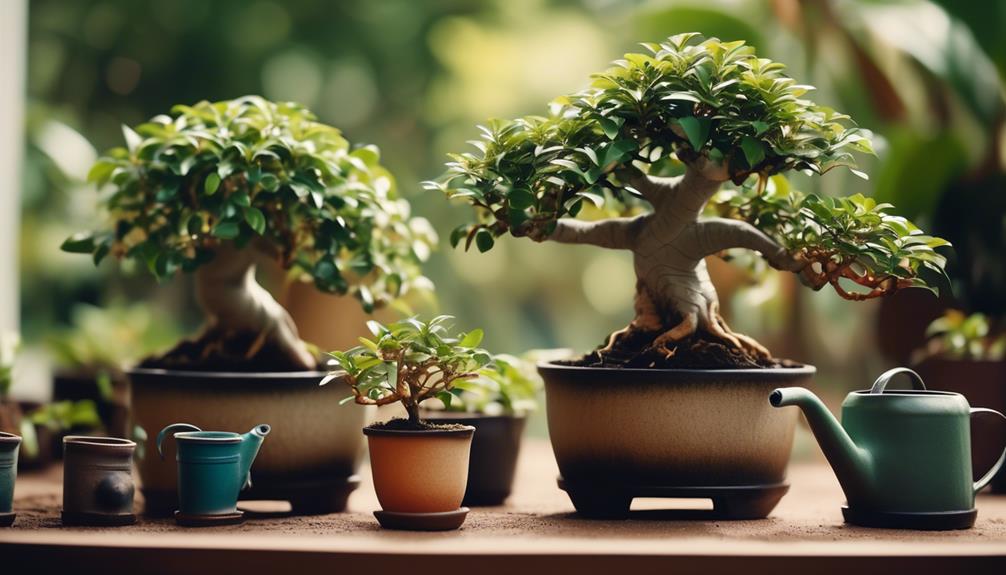
To ensure the health and vitality of your Ficus Bonsai, understanding its unique watering needs is essential. The watering schedule for Ficus Bonsai depends on various factors such as location, temperature, and soil type. It’s important to note that there’s no universal watering guide for Ficus Bonsai, as each tree may have different requirements. Observing and experiencing the watering needs of your Ficus Bonsai is crucial in maintaining its health.
Checking the soil moisture is a key step in determining when to water your Ficus Bonsai. You can do this by inserting your finger about an inch deep into the soil. If it feels dry, it’s time to water. However, if it still feels moist, it’s recommended to wait a bit longer before watering again.
The soil mixture also plays a significant role in determining the watering schedule for Ficus Bonsai. A well-draining soil mixture consisting of components like akadama, pumice, and lava rock is ideal. This type of soil allows excess water to flow out, preventing root rot and ensuring optimal watering.
When watering your Ficus Bonsai, it’s important to thoroughly soak the soil. This ensures that the water reaches the roots and promotes healthy growth. Additionally, using rainwater or distilled water is recommended as tap water may contain chemicals that can harm your bonsai.
Frequently Asked Questions
What Is the Watering Schedule for Bonsai?
To properly water your bonsai, it’s important to understand its specific needs. Factors like soil mixture, environmental conditions, and species influence watering requirements. Adjust the schedule based on climate and watch for signs of under watering. Avoid common mistakes and use appropriate tools for watering.
What Is the Best Watering for Bonsai?
The best watering for bonsai depends on the specific species. Factors like soil moisture, drainage, and watering tools play a role. Avoid overwatering by observing signs of underwatering and adjusting watering frequency accordingly.
How Do You Tell if Bonsai Is Overwatered or Underwatered?
To tell if your bonsai is overwatered, look for yellowing leaves, wilting, fungal growth, root rot, and slow growth. Revive it by adjusting watering frequency, using a moisture meter, and ensuring proper drainage. Underwatering shows as wilting, yellow or brown leaves, slow growth, dry soil, and leaf drop.
Is It OK to Water Bonsai at Night?
Yes, it’s generally okay to water your bonsai at night. However, be cautious not to overwater and ensure proper drainage. This can prevent issues like root rot and fungal growth while still meeting the moisture needs of your bonsai.
Conclusion
In conclusion, understanding the optimal watering schedule for bonsai trees is crucial for their health and survival.
Factors such as tree species, soil condition, climate, and pot size all play a role in determining the frequency of watering.
By monitoring the soil moisture and adjusting the watering schedule accordingly, bonsai enthusiasts can ensure that their trees receive the right amount of water for their specific needs.
Proper watering is an essential aspect of bonsai care and can contribute to the overall beauty and longevity of these miniature trees.