
If you’re new to Top Bonsai Tree Species Ideal bonsai cultivation, starting with a Ficus tree could be a wise choice. The versatility and ease of care of this species make it a favorite among beginners.
Understanding the unique characteristics of various bonsai tree species is crucial for your success in this art form. By exploring the distinct qualities of Chinese Elm, Juniper, Jade, and Rosemary bonsai trees, you can broaden your knowledge and find the perfect match for your skill level and growing conditions.
Ficus Bonsai for Beginners and Top Bonsai Tree Species Ideal

Ficus bonsai trees, with their forgiving nature and resilience, are an excellent choice for beginners venturing into the art of bonsai cultivation. These trees, particularly the Ficus species, such as the Ficus Retusa, thrive well in indoor environments, making them ideal for those with limited outdoor space. One of the key aspects of caring for Ficus bonsai is pruning. This essential practice involves cutting back leaves to maintain the tree’s shape and size. For beginners, pruning Ficus bonsai is a great technique to learn as it’s relatively simple and beginner-friendly.
Additionally, Ficus bonsai responds positively to back budding, a process where new shoots grow from old wood, aiding in the tree’s styling and design. This characteristic makes Ficus bonsai a versatile choice for beginners looking to experiment with different pruning techniques. As you delve into the world of bonsai cultivation, the Ficus tree’s adaptability and forgiving nature will surely support your journey toward mastering the art of bonsai.
Chinese Elm Bonsai Varieties
Exploring the diverse array of Chinese Elm bonsai varieties unveils a world of hardy and adaptable miniature trees awaiting your creative touch. Chinese Elm bonsai are ideal for beginners due to their resilience and forgiving nature. Here are some key points to consider when working with Chinese Elm bonsai:
- Versatile Pruning Techniques: Chinese Elm bonsai trees can be easily trained into various styles, allowing you to unleash your creativity and experiment with different pruning methods.
- Outdoor Resilience: Thriving in outdoor settings with filtered sunlight, these bonsai varieties are perfect for enhancing your garden or patio with their charming presence.
- Small Leaves Aesthetic: The small, serrated leaves of Chinese Elm bonsai trees contribute to their overall appeal, adding a delicate and intricate look to your miniature tree.
- Beginner-Friendly: Known for their forgiving nature, Chinese Elm bonsai trees are perfect for those new to the art of bonsai, offering a learning experience that’s both enjoyable and rewarding.
Juniper Bonsai Types

Delve into the enchanting world of Juniper Bonsai Types, renowned for their resilience and versatility in bonsai cultivation. Juniper bonsai trees are a perfect choice for beginners due to their easy care requirements and pest-resistant nature. These outdoor bonsai trees can thrive in various climates, making them adaptable to different regions. With their distinctive needle-like foliage, junipers can be trained into different styles like formal upright or cascading, allowing for creative expression in your bonsai designs.
One of the key aspects of caring for juniper bonsai trees is ensuring they receive plenty of sunlight, at least 4 hours daily, for optimal growth. These bonsai trees respond well to pruning and wiring, enabling you to shape and design them according to your preferences. By providing the necessary light and pruning well, you can enjoy watching your juniper bonsai thrive and flourish in your bonsai collection.
Jade Bonsai Species
Considered a gem among beginner bonsai enthusiasts, Jade bonsai species, known scientifically as Crassula ovata or Portulacaria afra, offer a delightful entry point into the world of bonsai cultivation. These succulent trees are easy to care for and can tolerate neglect, making them ideal for novices. Their small, round leaves and sturdy trunk enhance their visual appeal, especially in bonsai displays.
To evoke emotion in you, consider the following:
- Imagine the joy of nurturing a jade bonsai, watching it thrive with minimal effort.
- Picture the beauty of its compact form, perfect for small spaces and indoor settings.
- Feel the tranquility it brings, as you carefully shape and prune this resilient tree.
- Envision the admiration of your friends and family as they marvel at your flourishing jade bonsai.
With the right conditions of bright indirect light and well-draining soil, these jade bonsai trees can grow into stunning miniature versions of their larger counterparts, rewarding you with a sense of accomplishment and botanical artistry.
Rosemary Bonsai Selections
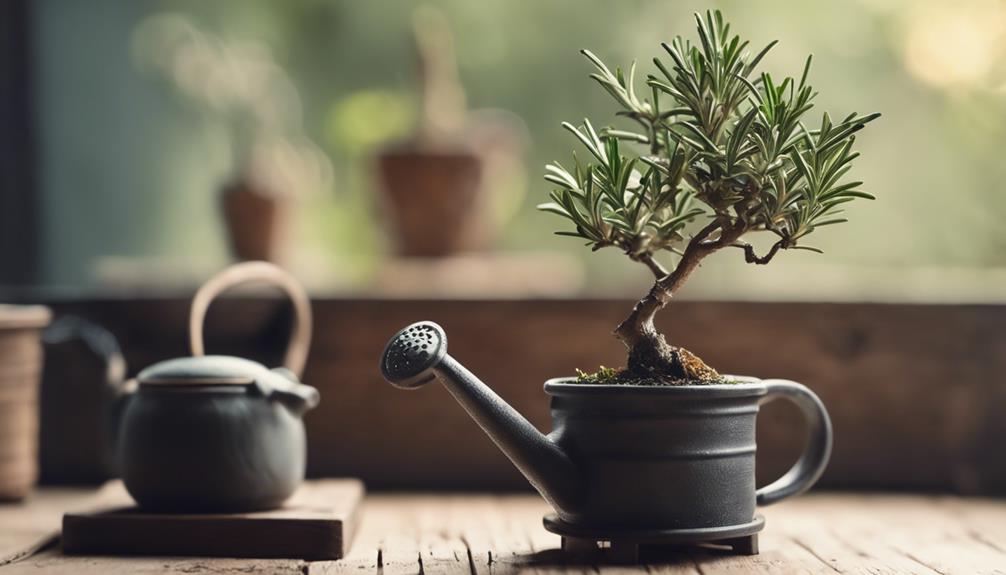
Among the array of bonsai options available to beginners, rosemary bonsai trees stand out for their hardy nature and aromatic blue-green foliage, making them a delightful choice for enthusiasts venturing into the world of bonsai cultivation. These compact trees are ideal for beginners due to their adaptability to various growing conditions, forgiving nature, and unique fragrance.
Rosemary bonsai trees can thrive both indoors and outdoors, requiring well-draining soil and regular watering to maintain their attractive appearance year-round. With proper care, these bonsai trees can produce small, delicate flowers, adding a touch of elegance to any bonsai collection.
The hardy nature of rosemary bonsai trees ensures that even novice growers can enjoy success in cultivating these beautiful plants. Consider adding a rosemary bonsai to your collection for a fragrant and visually appealing addition that will bring a sense of innovation to your bonsai cultivation experience.