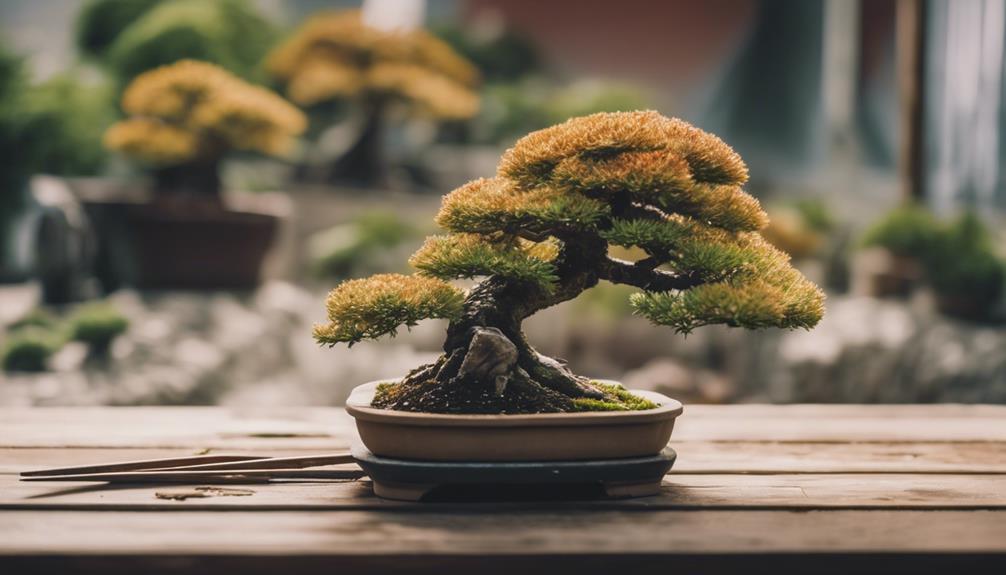
6 Essential Bonsai Tree Care Tips
With over 1,200 species of 6 Essential Bonsai Tree Care Tips, caring for these miniature wonders requires a precise approach that varies with each season. To ensure your bonsai thrives year-round, it’s essential to master six key care tips tailored to every season.
From adjusting watering and fertilization routines to understanding the unique requirements of your tree, each season demands specific attention to detail. By following these expert guidelines, you can cultivate a thriving bonsai garden that flourishes throughout the changing seasons.
Winter Dormancy Care
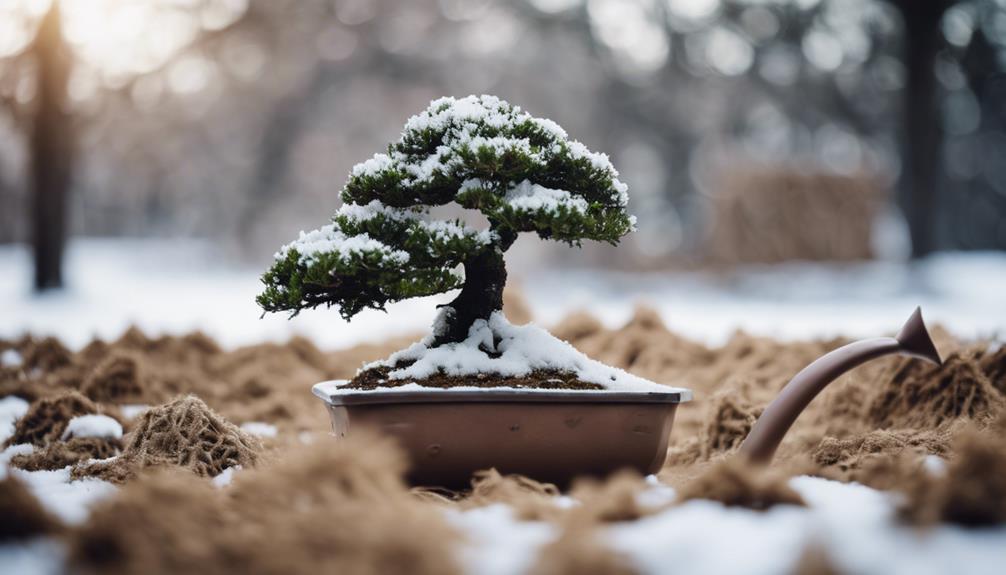
Prepare your bonsai trees for the winter dormancy period by reducing watering to prevent root rot and conducting essential maintenance tasks such as deadwood work and branch bending. During winter, your bonsai trees enter a period of rest, signaling a time for you to focus on their care. By reducing watering, you help prevent the roots from staying too moist, which could lead to rot. This adjustment aligns with the trees’ natural cycle, ensuring their health and vitality. Additionally, take this opportunity to inspect your bonsai trees for any signs of distress and address them promptly.
As winter progresses, consider the timing for repotting certain bonsai species. Late winter to early spring serves as an ideal window for repotting, providing the trees with a fresh start for the upcoming growing season. Repotting supports healthy growth and allows you to refresh the soil, vital for the overall well-being of your bonsai trees. Stay attuned to the needs of your trees during winter, setting the stage for a thriving spring awakening.
Early Spring Awakening Care
As your bonsai trees awaken in early spring, their growth cycle demands meticulous attention to watering and fertilizing to support their healthy development. Adequate watering is crucial during this time as the trees transition from dormancy to active growth. Check the soil moisture regularly, ensuring it’s damp but not waterlogged.
Look for signs of new growth such as budding and fresh leaves, which indicate that your bonsai is thriving. For indoor bonsai, be mindful of their specific watering needs, as indoor environments can affect moisture levels differently than outdoor settings.
Additionally, consider fertilizing your bonsai to provide essential nutrients for their growth. Pruning and shaping your bonsai at this stage can help stimulate new growth and maintain the desired form. By carefully monitoring and tending to your bonsai during this early spring awakening, you set the stage for a healthy and vibrant growing season ahead.
Spring Growth Care
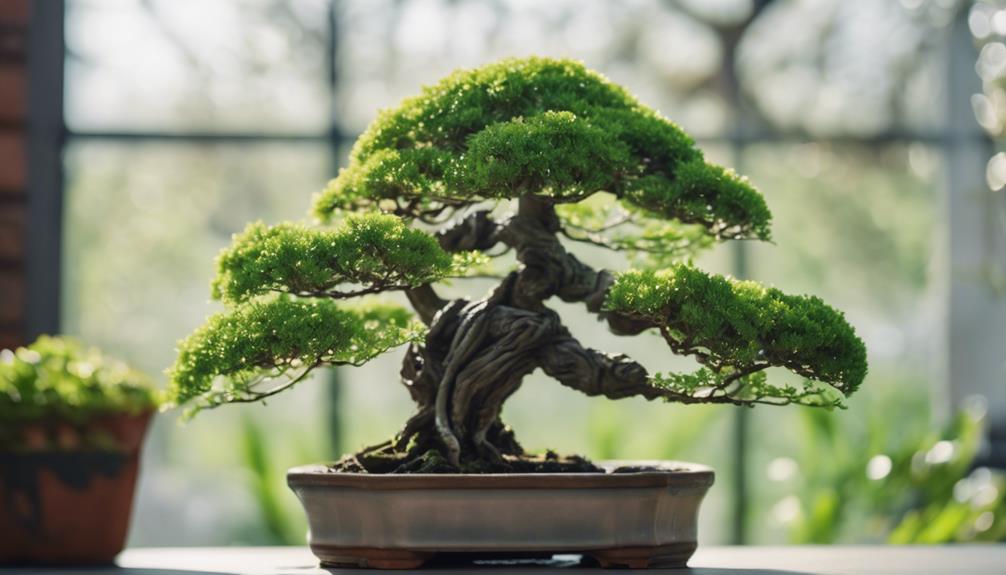
Spring brings a period of rapid growth for your bonsai trees, requiring attentive pruning and fertilization to maintain their desired shape and health. As you observe signs of budding on your bonsai, it signals the tree’s readiness for the upcoming growing season. This is the perfect time to focus on pruning and shaping branches to uphold the bonsai tree’s form.
Utilize pinching techniques to control growth and encourage the development of fine branches, contributing to a fuller appearance during spring. Adjust your fertilization routine to support the vigorous growth of your bonsai trees. Using a balanced fertilizer will provide the necessary nutrients for overall health and thriving growth.
Additionally, consider repotting certain bonsai species during this season to refresh the soil and create ample space for root expansion. By dedicating time to these practices, you can ensure the optimal growth and vitality of your bonsai trees during the spring season.
Summer Maintenance
During the summer months, adjust your bonsai tree care routine to accommodate the increased demands of the active growing season.
Firstly, pay close attention to watering frequency to prevent dehydration, especially in hot weather. Your bonsai tree may require more water during this season, so ensure the soil is consistently moist but well-drained to avoid waterlogging.
Additionally, provide shade during peak sunlight hours to shield your bonsai trees from heat stress. This can be achieved by moving them to a spot with indirect sunlight or by using shade cloth.
While enjoying the summer sun, be vigilant for pests such as spider mites and aphids, which tend to be more active in this warm season. Regularly inspect your bonsai trees for any signs of infestation and take appropriate measures promptly.
Lastly, continue fertilizing with a balanced formula to support growth and health during this active period. Remember to prune and shape your bonsai trees regularly to maintain their desired form and stimulate new growth.
Autumn and Winter Care
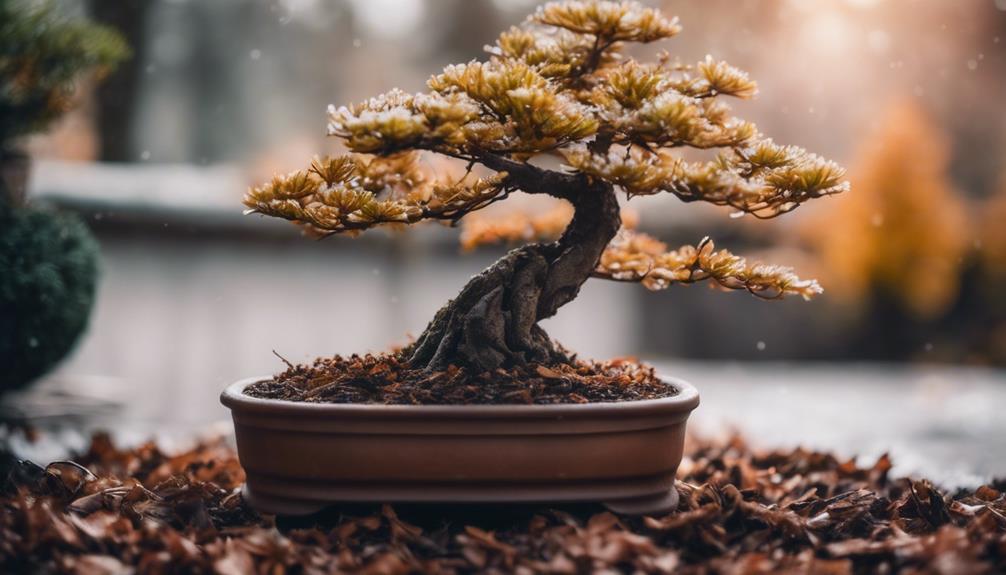
Adjust your bonsai tree care routine in autumn to prepare for the upcoming winter dormancy period. As the temperatures drop, reduce the frequency of watering to help your bonsai trees enter dormancy naturally.
It’s crucial to shield your bonsai from frost during winter by relocating them to sheltered areas. Additionally, insulate outdoor bonsai pots to protect the roots from freezing temperatures that can cause damage.
Refrain from heavy pruning in autumn and winter to prevent stressing the trees, allowing them to conserve energy for the dormant season. For indoor bonsai, keep a close eye on humidity levels, especially as winter brings dry air that can impact your tree’s health.