
Perfect Outdoor Bonsai Tree Species
You may think selecting the Perfect Outdoor Bonsai Tree Species is a simple task, but as you contemplate the intricate dance between nature and nurture, a world of possibilities unfolds before you.
Each species holds its own story, adapting to the whims of your climate and garden landscape. Consider the gentle sway of a Juniper, the stoic presence of a Pine tree, or the delicate beauty of a Japanese maple.
As you envision your outdoor oasis, the choice of bonsai species becomes a reflection of your aspirations and dedication to this timeless art form.
Suitable Outdoor Bonsai Tree Species

When considering suitable outdoor bonsai tree species, look to Juniper Bonsai trees for their intricate deadwood and rock-growing styles, ideal for enthusiasts seeking a unique and artistic touch in their outdoor collection. Juniper Bonsai trees, known for their resilience and ability to thrive in full sunlight, are frost-hardy species that can withstand various weather conditions, making them a reliable choice for outdoor cultivation. Their gnarled trunks and delicate foliage create a captivating aesthetic that adds a touch of elegance to any outdoor bonsai garden.
In addition to Juniper Bonsai trees, Japanese maple bonsai trees, Japanese black pine bonsai trees, cedar bonsai trees, and oak bonsai trees are also excellent choices for outdoor growth. Japanese maple bonsai trees offer vibrant foliage colors, while Japanese black pine bonsai trees are versatile for styling techniques and require full sun exposure. Cedar bonsai trees provide dark trunks and green foliage contrast, and oak bonsai trees thrive in full sunlight, offering unique characteristics to outdoor bonsai collections.
Choose wisely, and let your outdoor bonsai garden flourish with beauty and innovation.
Factors to Consider When Choosing
Explore a variety of key factors essential for making an informed decision when selecting the perfect outdoor bonsai tree to enhance your garden’s beauty and vitality. Consider the local climate when choosing a species for bonsai cultivation. Opt for native tree species that are well-suited to your region, increasing the likelihood of success. For areas with colder seasons, select frost-hardy species like Juniper, Pine trees, or Japanese maples. Remember to provide protection from frost if needed, especially in shallow containers.
Popular outdoor bonsai trees offer a range of options, each with unique adaptability traits. Ensure your garden meets the specific requirements of the chosen species, including sunlight exposure and wind patterns, for optimal growth. By carefully evaluating these factors and selecting a specific tree species that aligns with your garden’s conditions, you can create a thriving outdoor bonsai display that adds elegance and tranquility to your outdoor space.
Popular Outdoor Bonsai Tree Varieties

Discover a myriad of popular outdoor bonsai tree varieties, each exuding unique charm and beauty to enrich your garden landscape.
- Juniper: This outdoor Bonsai tree is renowned for its ability to thrive on rocks, showcasing intricate deadwood features that add character and age to the tree.
- Elm: Varieties like the Chinese elm, Siberian elm, and Japanese elm are commonly cultivated outdoors, offering elegant foliage and graceful branching patterns.
- Cedar: Cedar Bonsai trees, including species like atlas cedar, western red cedar, and Lebanon cedar, boast dark trunks and vibrant green foliage that create a striking visual contrast in any outdoor setting.
These outdoor bonsai tree varieties, such as the Japanese maple, red maple, and trident maple, provide a range of colors and textures to elevate your garden space.
Additionally, the Azalea Bonsai tree, with its diverse color palette and suitability for colder climates, can bring a touch of vibrancy and charm to your outdoor bonsai collection.
Explore these popular outdoor bonsai tree varieties to infuse innovation and beauty into your garden oasis.
Outdoor Bonsai Trees for Different Climates
For successful cultivation of outdoor Bonsai trees in varying climates, careful consideration of the specific environmental requirements of each species is essential. Different climates present unique challenges and opportunities for outdoor Bonsai enthusiasts. Subtropical or Mediterranean climates are well-suited for species like Olive, Pomegranate, and Fuchsia, thriving in their warm environments. In temperate climates, a diverse range of outdoor Bonsai species, including Japanese maple, can flourish. Maritime climates demand well-draining soil and attention to sunlight needs for outdoor Bonsai trees to thrive. In continental climates, protection from extreme temperatures may be necessary for species like cherries and apples. It’s crucial to select species like Japanese maple, Chinese elm, Bald cypress, Cork oak, White oak, Ficus, Jade, Olive, Pomegranate, and Fuchsia that are best suited for the specific climate you intend to grow them in.
| Climate Type | Ideal Bonsai Species |
|---|---|
| Subtropical/Mediterranean | Olive, Pomegranate, Fuchsia |
| Temperate | Japanese maple |
| Maritime | Cork oak, Bald cypress |
| Continental | White oak, Ficus |
Tips for Successfully Growing Outdoor Bonsai
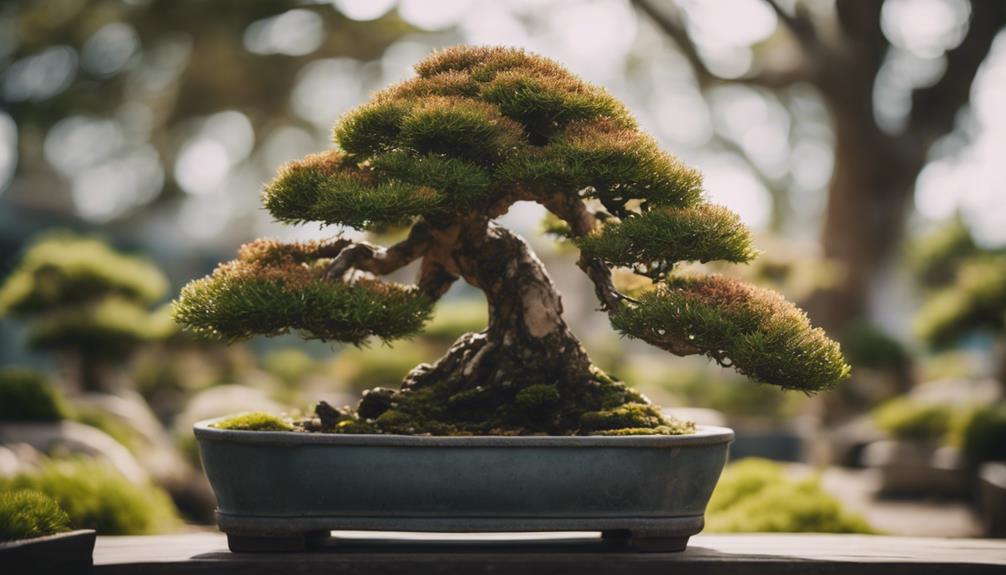
To successfully grow outdoor Bonsai trees, prioritize understanding the specific care requirements and environmental needs of your chosen species. Here are some essential tips to help you achieve successful growth:
- Climate Compatibility: Ensure your outdoor Bonsai tree species is suitable for your local climate to promote healthy growth and longevity.
- Sunlight and Watering: Provide adequate sunlight based on the species’ requirements and water your Bonsai tree as needed, considering factors like humidity levels and soil moisture.
- Regular Maintenance: Commit to regular pruning, fertilizing, and repotting schedules to keep your outdoor Bonsai tree in optimal condition and encourage its development.