Wrong Soil Could Kill Miniature
Planting miniature trees in soil that doesn’t suit their needs might not be the best idea and Wrong Soil Could Kill Miniature. Consider this: the wrong soil could mean the difference between flourishing bonsai trees and ones struggling to survive.
Imagine the impact improper soil could have on your carefully curated miniature tree collection. Make sure to stay tuned for essential tips on selecting the right soil for your bonsai trees to ensure their longevity and vitality.
Importance of Soil for Bonsai Trees
Embracing the crucial role of soil in nurturing bonsai trees is vital for their health and longevity. The soil serves as the foundation for the tree’s root system, directly impacting its ability to thrive. For bonsai trees to flourish, it’s imperative that the soil they’re planted in has the capacity to drain well, ensuring that excess water doesn’t accumulate around the roots. This proper drainage facilitates proper oxygenation of the roots, which is essential for the tree’s overall health.
The soil composition plays a significant role in nutrient absorption and root development. The wrong soil type can impede these processes, leading to stunted growth and potential health issues for the bonsai tree. By maintaining a delicate moisture balance within the soil, bonsai enthusiasts can ensure that their miniature trees receive the necessary nutrients for sustained growth. Understanding the importance of soil in bonsai cultivation is fundamental to cultivating thriving and long-lasting miniature trees.
Characteristics of Ideal Bonsai Soil
To ensure the vitality and growth of your bonsai tree, selecting the right soil with specific characteristics is paramount. When choosing soil for your bonsai trees, keep in mind the following key features:
- Well-Draining Composition: Ideal bonsai soil should be well-draining to prevent waterlogging and root rot, ensuring that your miniature trees receive the right amount of moisture without drowning the roots.
- Inorganic Components: Bonsai soil mix should contain inorganic components such as akadama, pumice, and lava rock. These elements provide stability to the soil structure and aid in aeration for the roots.
- Promotes Aeration and Root Development: The soil mix for bonsai trees should promote aeration, allowing oxygen to reach the roots, which is essential for healthy root development and overall tree growth.
- Proper Water Retention: Good bonsai soil strikes a balance by retaining water adequately without becoming waterlogged. This characteristic ensures that your miniature trees have access to moisture when needed, supporting their health and vitality.
Common Mistakes in Bonsai Soil Selection
Common pitfalls in selecting bonsai soil can significantly impact the health and growth of your miniature trees if not carefully avoided. When choosing soil for your bonsai, it’s crucial to prioritize proper drainage to prevent issues like root rot and promote healthy root development. Using regular garden soil may lead to waterlogged conditions, hindering the bonsai’s ability to thrive. Optimal bonsai soil should consist of a well-balanced mix of components such as akadama, pumice, and lava rock, ensuring adequate aeration and drainage for the roots. Neglecting to select the right soil can impede nutrient uptake, affecting overall tree vitality and growth. Incorrect soil choices not only stunt your bonsai tree’s growth but also make it more vulnerable to diseases and pests. By paying attention to the composition of your bonsai soil, you can set the foundation for a flourishing and resilient miniature tree.
| Common Mistakes in Bonsai Soil Selection |
|---|
| Using regular garden soil |
| Neglecting proper drainage |
| Ignoring the importance of soil components |
DIY Bonsai Soil Mix Recipes
To create optimal conditions for your bonsai tree’s health and growth, mastering DIY Bonsai Soil Mix Recipes is essential. Here are four key components to consider when creating your own bonsai soil mix:
- Akadama: This component is vital in bonsai soil mixes due to its excellent moisture retention and nutrient-holding capabilities. Akadama promotes healthy root growth by allowing proper airflow within the soil.
- Pumice: Including pumice in your soil mix is crucial for maintaining good soil structure. Pumice helps prevent soil compaction, ensuring adequate aeration for the roots to thrive.
- Lava Rock: Lava rock plays a significant role in enhancing drainage within the soil, preventing waterlogging that can lead to root rot. It also aids in root development by creating a well-draining environment.
- Balanced Mix: Finding the right balance of akadama, pumice, and lava rock is key to creating a well-draining soil mix that promotes healthy bonsai growth. Experiment with different ratios to achieve the perfect blend for your bonsai trees.
Testing Soil Drainage for Bonsai Trees
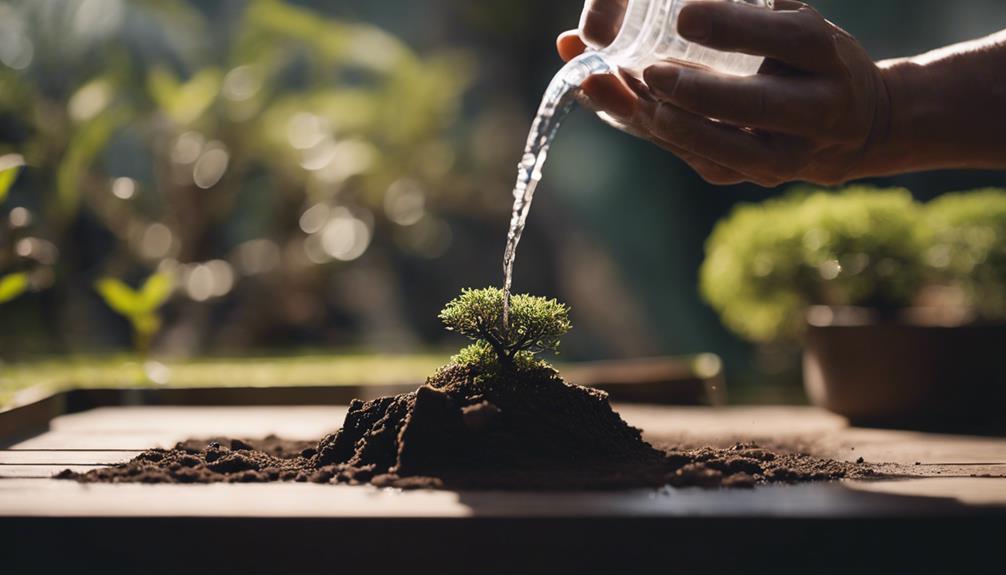
Testing the drainage of soil for your bonsai trees is a crucial step in ensuring their health and vitality. Bonsai trees require well-draining soil to prevent issues like waterlogging and root rot.
To test soil drainage, observe how quickly water infiltrates and drains from the soil. One simple method is to pour water into a hole and monitor the rate of absorption. If drainage is slow, it indicates poor soil structure, which can harm your bonsai’s health.
Optimal moisture levels are crucial for healthy root development in bonsai trees. Ensuring your soil has good drainage will help maintain these levels. By actively testing and improving soil drainage, you can provide the best environment for your bonsai trees to thrive.