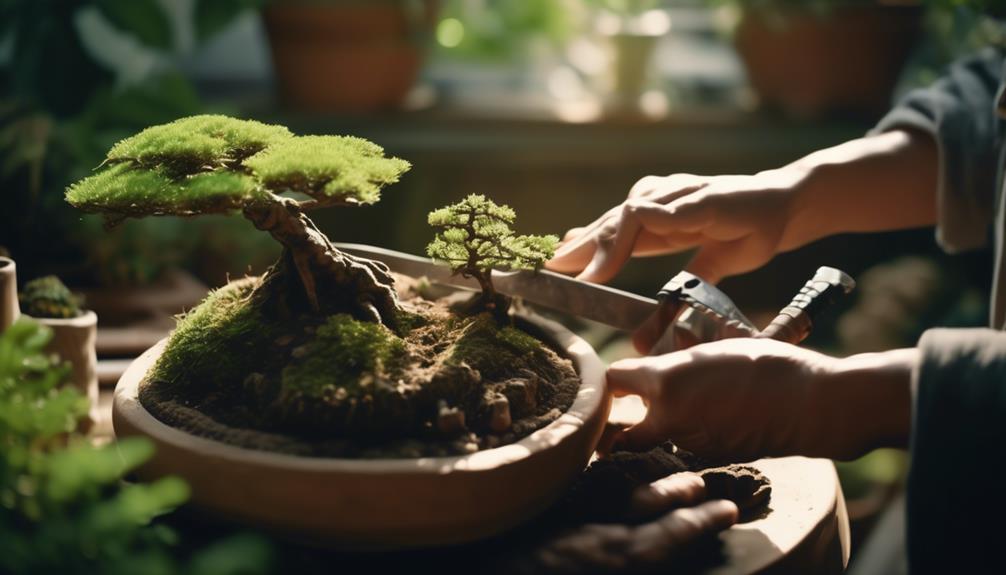
You may be hesitant to repot your bonsai tree because of the potential stress it can cause both you and the tree. However, with these 7 Stress Free Tips for Repotting Bonsai Trees, you can confidently tackle the task and ensure a successful repotting experience.
From choosing the right time to repot to providing proper aftercare, each step is carefully outlined to make the process as smooth as possible.
So, if you’re ready to give your bonsai tree a fresh start, keep reading to discover these stress-free tips that will help you maintain its health and beauty.
Choosing the Right Pot For 7 Stress Free Tips for Repotting Bonsai Trees
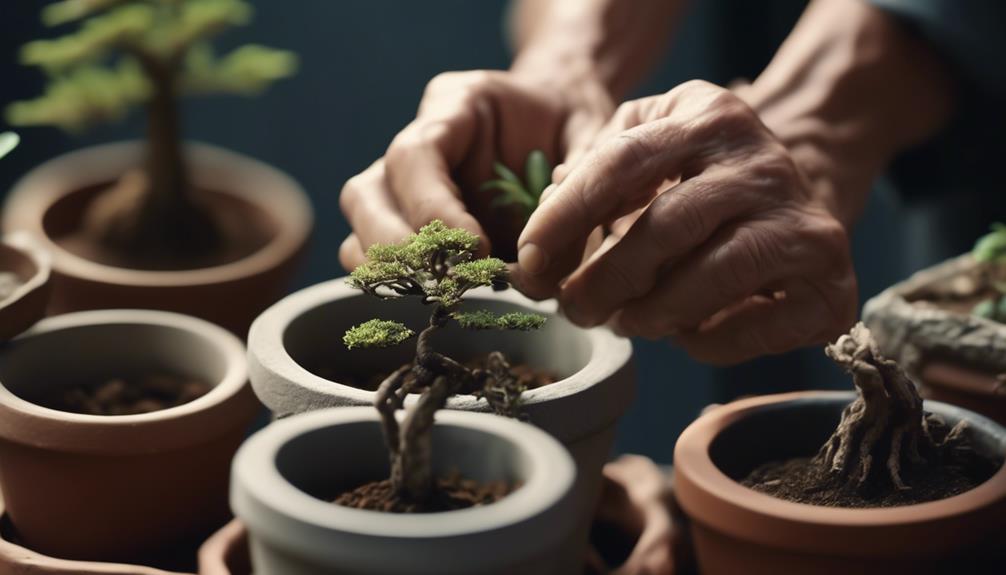
When repotting your bonsai tree, it’s crucial to choose the right pot that not only provides ample space for root growth but also complements the unique style and aesthetics of your tree.
The size of the pot is an important consideration. You want to ensure that it’s large enough to accommodate the root system without being excessively large, as this can hinder the health of the tree. A pot that’s too small will restrict root growth and limit the tree’s ability to absorb nutrients and water.
In addition to size, the shape of the pot should be carefully considered. Bonsai trees come in various styles, such as cascading, upright, or windswept, and the pot shape should complement the tree’s natural form. For example, an upright tree would look best in a rectangular or oval-shaped pot, while a cascading tree would benefit from a deeper, cascading pot shape.
The color of the pot is another important aspect to consider. Opt for a pot color that enhances the overall presentation of your bonsai. Earth tones like brown or tan are often preferred as they provide a natural and harmonious backdrop for the tree.
Lastly, the material of the pot should be suitable for your bonsai species and climate. Common materials include ceramic and plastic. Ceramic pots are more traditional and provide better insulation, while plastic pots are lighter and easier to handle.
Preparing the Bonsai Tree
To properly prepare your bonsai tree for repotting, gather all the necessary supplies and ensure you have a well-organized workspace. Start by carefully removing the bonsai tree from its current pot, being cautious not to damage the roots. Gently loosen the soil around the root ball and inspect the roots. Look for any tangled or circling roots that may hinder the tree’s health and growth. If you find any, prune them using sharp and clean pruning shears. By pruning the roots, you promote new growth and maintain a compact and healthy root system.
Next, prepare the new pot for your bonsai tree. Choose a pot that’s slightly larger than the current one, allowing room for the roots to expand. Ensure the pot has proper drainage holes to prevent waterlogging. Fill the pot with a well-draining bonsai soil mix, specifically designed for the needs of your tree. This specialized soil will provide the necessary nutrients and aeration for your bonsai’s roots.
Once the pot is ready, carefully place the bonsai tree in the new pot, making sure it’s centered and stable. Gently fill the gaps with bonsai soil, ensuring the roots are covered but not excessively buried. Finally, thoroughly water the tree, allowing the water to soak through the soil and reach the roots.
Removing the Old Soil
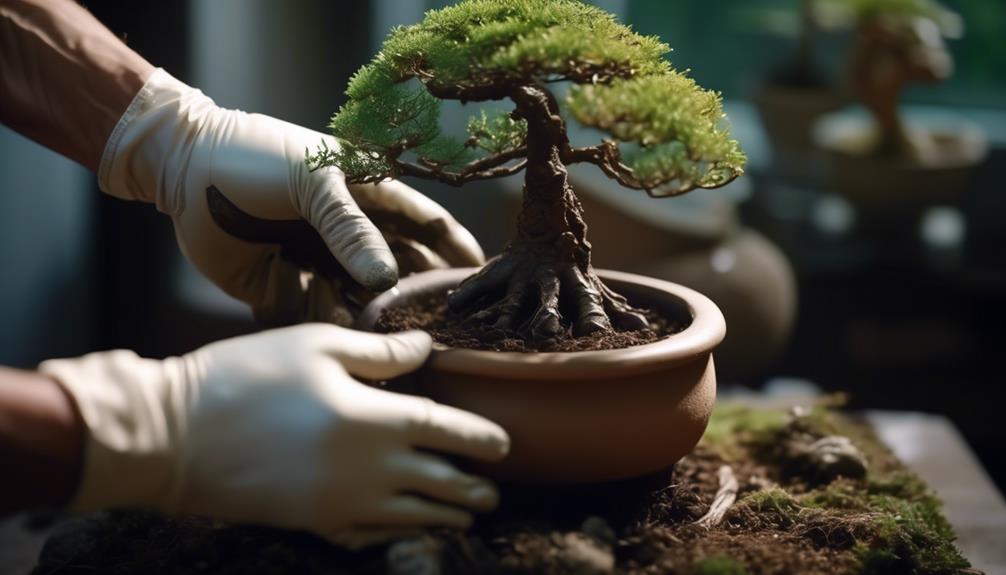
To remove the old soil from your bonsai tree, carefully loosen the soil around the root ball using a small handheld rake or chopstick, being mindful not to damage the delicate roots. This step is crucial in the repotting process, as it allows for the inspection and maintenance of the root system. Start by gently inserting the rake or chopstick into the soil, making small circular motions to loosen it. Be patient and take your time to avoid causing harm to the roots. As you work your way around the root ball, you’ll notice the soil becoming easier to remove. Once the old soil is loosened, you can gently tap the pot or use a soft brush to remove any loose particles.
It is important to remove the old soil because it can become compacted over time, leading to poor drainage and decreased oxygen levels for the roots. By removing the old soil, you create space for fresh, nutrient-rich soil that will promote healthy growth. Additionally, removing the old soil allows you to examine the roots and prune any that are overly long or tangled. This root pruning encourages the development of a more compact and well-structured root system.
After removing the old soil, it’s time to prepare the pot for the new soil. Ensure that the pot has drainage holes to prevent waterlogging, which can lead to root rot. Place a layer of fresh soil at the bottom of the pot, creating a small mound in the center. This will help to position the tree correctly and provide stability. With the old soil removed and the pot prepared, you’re now ready to repot your bonsai tree.
Trimming the Roots
Carefully pruning and untangling the roots is an essential step in promoting healthier growth for your bonsai tree. When re-potting your bonsai, it’s important to trim the roots to maintain a compact root system. Trimming the roots stimulates new growth and helps the tree recover and stay healthy.
Before trimming the roots, carefully remove the tree from its pot. Gently loosen the soil around the roots to make them more accessible. Inspect the roots for any signs of disease or damage. If you notice any unhealthy roots, it’s best to remove them to prevent further spread of disease.
When trimming the roots, use sharp and clean tools to ensure a clean cut. Start by removing any long or thick roots that are growing in undesirable directions. Trim the roots in a way that maintains a balanced and compact root system.
After trimming, examine the root ball and make sure it fits properly in the new pot. The pot should have drainage holes to allow excess water to escape. Fill the pot with fresh bonsai soil, making sure to anchor the tree securely. The soil should provide the necessary nutrients and drainage for healthy growth.
Remember to water the tree after repotting to help it recover from the root-trimming process. Watering will also help settle the soil around the roots and provide the necessary hydration for the tree to thrive.
With proper care and maintenance, your bonsai tree will continue to grow and flourish.
Placing the Bonsai in the New Pot
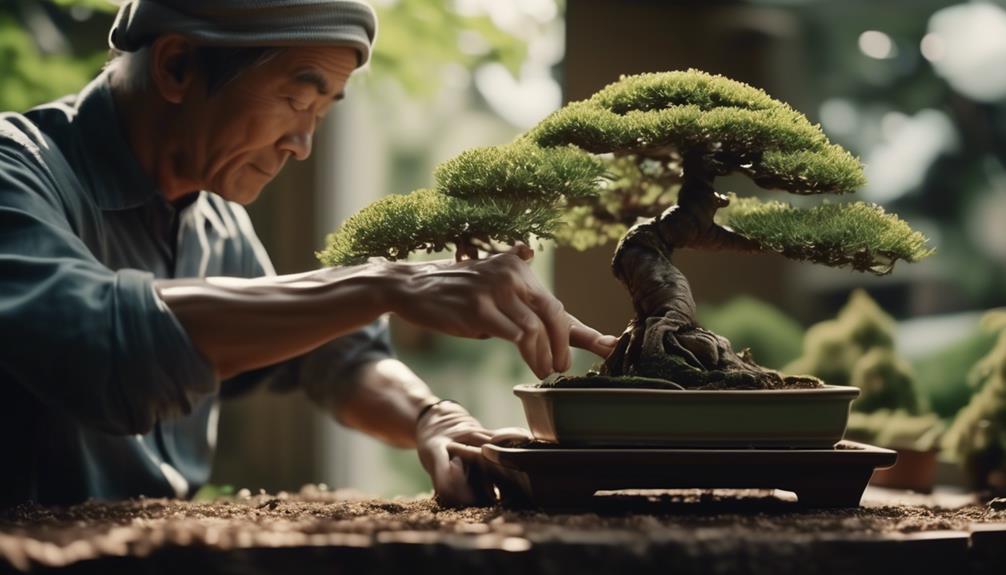
Place the bonsai gently in the new pot, taking care not to damage the delicate roots. After trimming the roots, it’s important to find a suitable bonsai pot that allows for proper drainage. Once you have selected the pot, position the bonsai in the center to ensure stability. Take a moment to adjust the position of the bonsai to achieve the desired aesthetic and balance. You can use wires or anchoring to secure the bonsai in the new pot, ensuring that it remains in place during the re-potting process.
Next, fill the remaining space in the pot with fresh bonsai soil. This is an important step as it provides the necessary nutrients and support for the bonsai. Carefully add the soil around the root mass, making sure to avoid any air pockets. Gently press down the soil to secure the bonsai in place and promote stability.
When selecting the bonsai substrate, consider using a mix of organic and inorganic materials. This will help provide adequate drainage and moisture retention for the bonsai. It’s important to choose a substrate that’s suitable for the specific needs of your bonsai tree.
Once the bonsai has been placed in the new pot and the soil has been added, water the tree thoroughly. This will help settle the soil and promote new growth. Be mindful not to overwater, as this can lead to root rot.
With proper care and attention, your repotted bonsai will thrive in its new pot.
Applying Fresh Soil
After securing the bonsai in the new pot, the next step in repotting is to carefully apply fresh soil, providing the necessary nutrients and aeration for the tree to thrive.
When repotting bonsai trees, it’s important to remove the old soil and replace it with fresh bonsai soil. The new soil should be similar in texture to the remaining old soil, especially during the first repotting.
While applying the fresh soil, it’s crucial to be gentle and avoid damaging the roots. Fine roots require more protection, so it’s recommended to leave some old soil around them when replacing it with fresh soil. This will help maintain the health and stability of the bonsai tree.
Additionally, proper drainage in the new soil mix is essential. Make sure the pot has drainage holes to prevent waterlogging, which can negatively impact the tree’s growth.
The fresh soil should contain the necessary nutrients to support the tree’s growth and overall well-being. By carefully applying fresh soil during the repotting process, you’re providing the bonsai tree with the optimal environment it needs to flourish.
Watering and Post-Repotting Care
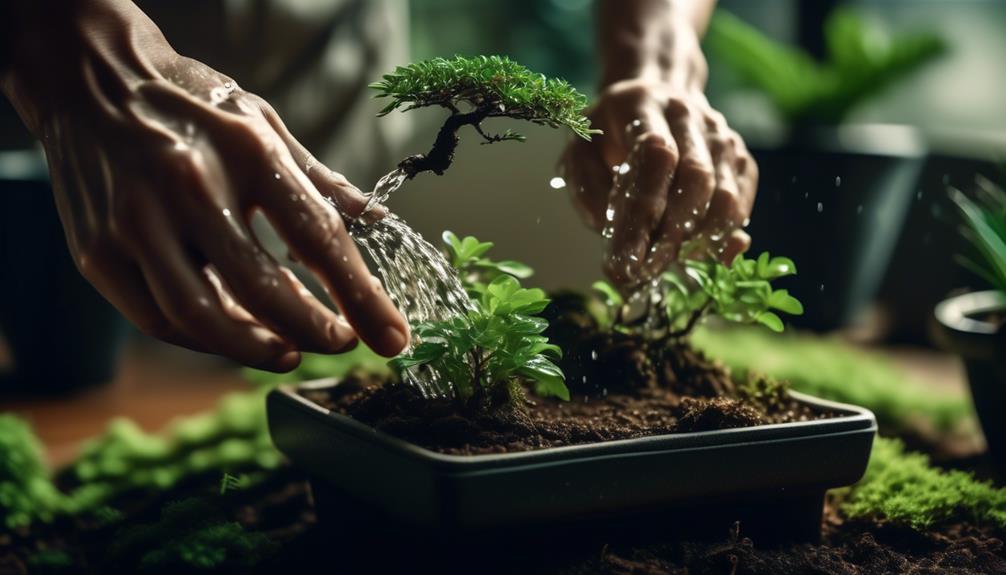
To ensure the proper recovery and health of your bonsai tree, watering and post-repotting care are of utmost importance. After repotting, it’s crucial to provide your bonsai tree with the right amount of water as it adjusts to its new environment. Here are some tips to help you with watering and post-repotting care:
- Monitor the watering needs: Keep a close eye on your bonsai tree’s watering needs after repotting. The tree may require more frequent watering during this time as it recovers. However, be cautious not to overwater, as it can lead to root rot and other issues.
- Adjust watering accordingly: As your bonsai tree establishes itself in its new pot, you may need to adjust the watering frequency. Factors such as the size of the pot, type of soil, and the tree’s specific needs will influence how often you should water.
- Check for proper drainage: Ensure that the pot has adequate drainage holes to prevent water from pooling at the bottom. Good drainage is essential to keep the roots healthy and prevent waterlogging, which can cause root rot.
Frequently Asked Questions
When Should You Not Repot a Bonsai Tree?
You should not repot a bonsai tree when it is already stressed. This includes extreme weather conditions, heavy pruning, or if the tree is unhealthy or diseased. It’s important to choose the right timing for optimal root development and to avoid further stress.
How Often Do You Water a Bonsai Tree After Repotting?
After repotting, water your bonsai tree more frequently than usual to aid in recovery from transplant shock. Adjust watering schedule based on soil moisture levels. Avoid overwatering by ensuring proper drainage and allowing the soil to slightly dry between waterings.
How Do You Repot an Indoor Bonsai Tree?
To repot an indoor bonsai tree, start by choosing the right pot and soil. Use essential tools to carefully trim the roots. Prepare the tree by checking for signs of repotting need and preventing root rot. Follow a step-by-step guide and provide proper care after repotting. Avoid common mistakes.
Why Is My Bonsai Tree Dying After Repotting?
If your bonsai tree is dying after repotting, common mistakes may include using the wrong soil mix, choosing the wrong pot size, or not properly pruning the roots. Understanding these factors can help prevent stress and promote healthy growth.
Conclusion
In conclusion, repotting bonsai trees doesn’t have to be a stressful task. By following the 7 stress-free tips mentioned above, you can ensure a successful repotting experience.
Remember to choose the right pot, carefully prepare the bonsai tree, trim the roots if necessary, and securely place it in the new pot with fresh soil.
Lastly, provide proper aftercare by watering and monitoring the tree’s recovery. With these steps, you can repot your bonsai tree with ease and maintain its health and beauty for years to come.