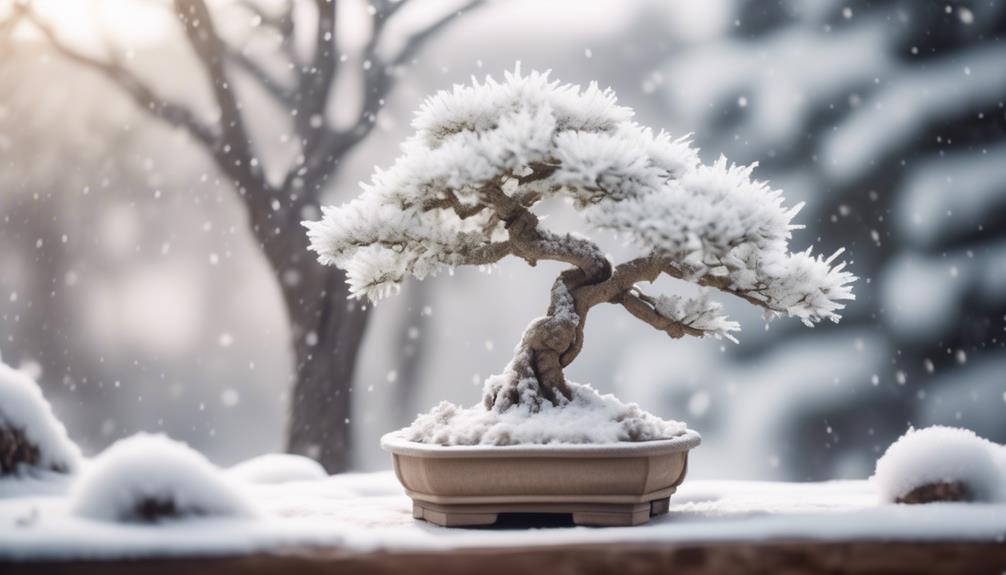
Did you know that Best Care for Bonsai Trees in Winter requires specific attention to ensure their survival and health?
As the temperature drops and snow begins to fall, the Iowa Juniper bonsai, known for its resilience in cold climates, needs protection from freezing temperatures and strong winds.
In this discussion, we will explore the best practices for winter care, including finding a sheltered spot, monitoring soil moisture, and preventing pests and diseases.
Discover the secrets to keeping your bonsai thriving during the chilly months, and prepare to unlock the knowledge that will ensure its beauty for years to come.
Understanding Winter Dormancy And Best Care for Bonsai Trees in Winter

During winter, bonsai trees undergo a natural process called dormancy, where they adapt to freezing temperatures by hardening their growth and shedding leaves. This is a crucial survival mechanism for bonsai trees, especially those from temperate regions. Tropical trees, on the other hand, aren’t adapted to withstand freezing temperatures and should be kept indoors during the winter months. Understanding the concept of winter dormancy is essential for the care of your bonsai trees.
Temperate trees, including many common bonsai species such as maples, elms, and pines, have evolved to withstand cold temperatures. They prepare for winter by gradually reducing their metabolic activity and developing a protective layer on their branches and roots. This process allows them to enter a dormant state, conserving energy and protecting themselves from the harsh winter conditions. Hardy bonsai trees can tolerate freezing temperatures, but they still require some protection to prevent damage.
It is important to note that overprotecting your bonsai trees by keeping them indoors all winter can be detrimental. They require exposure to cold temperatures to complete their natural cycle of dormancy. Extended periods of high temperatures can disrupt this process and lead to weak growth and poor health. It’s best to provide a period of winter dormancy for your temperate bonsai trees.
When it comes to winter storage of your bonsai trees, consider the specific needs of each species. Some may benefit from being placed in a sheltered area, such as a cold frame or unheated garage, while others may require additional insulation or protection from dry winds. It’s important to research the specific requirements of your bonsai tree species to ensure proper care during the winter months.
Adjusting Watering and Humidity Levels
To ensure the health and vitality of your bonsai trees during winter, it’s crucial to make adjustments to watering and humidity levels. Cold weather and reduced evaporation rates mean that your bonsai trees require less water than during the warmer months. Here are some practical tips to help you adjust watering and humidity levels for your bonsai trees:
- Monitor soil moisture levels using a moisture meter and water only when the soil is dry. This will prevent overwatering and the risk of root rot in dormant trees.
- Consider misting the foliage to maintain humidity levels, especially in dry indoor conditions. This will help prevent the leaves from drying out and keep the tree healthy.
- Use well-draining soil to prevent waterlogging. Proper drainage ensures that the roots have sufficient oxygen and prevents water from sitting around the roots for too long.
Providing Sufficient Sunlight Exposure

For optimal growth and leaf development, ensure that your indoor bonsai receives adequate sunlight exposure. During the growing season, indoor bonsai trees require ample sunlight to thrive. Place your indoor bonsai in a bright and warm spot, preferably near a window where it can receive direct sunlight. However, be cautious not to place it too close to heating vents, as this can cause excessive drying out of the tree.
If your indoor bonsai doesn’t receive enough natural sunlight, you can consider using grow lights to supplement its light requirements during the winter. These artificial lights can provide the necessary light spectrum needed for your bonsai’s growth and development.
It is important to monitor your indoor bonsai for signs of light deprivation, such as yellowing leaves. If you notice any of these symptoms, adjust the placement of your bonsai to ensure it receives adequate sunlight exposure.
For outdoor bonsai trees, especially tropical species, they may need extra protection during the cold winter months. Consider placing the trees in an area where they’re sheltered from strong winds and extreme cold temperatures. Another option is to bury the pots in the ground, which provides additional insulation and protection for the roots.
Providing sufficient sunlight exposure is crucial for the health and well-being of your indoor and outdoor bonsai trees. By taking the necessary steps to ensure adequate sunlight, you can help your bonsai thrive and flourish throughout the winter season.
Protecting Bonsai Trees From Extreme Cold
If you want to ensure the survival of your bonsai trees during the harsh winter months, it’s essential to take proactive measures to protect them from extreme cold temperatures. Here are some practical ways to protect your bonsai trees from the cold:
- Use a greenhouse or cold frame: In cold areas, placing your bonsai trees in a greenhouse or cold frame can provide them with the necessary protection. These structures help create a microclimate that shields the trees from the freezing temperatures outside.
- Insulate the pots: To protect the roots of your bonsai trees, you can wrap the pots with styrofoam covers. These covers will provide an additional layer of insulation, preventing the roots from being damaged by the extreme cold.
- Plant in the ground: If you don’t have access to a greenhouse or cold frame, you can plant your bonsai trees in the garden and cover them with soil. This will offer some insulation and protection from the cold weather.
Implementing Proper Pruning Techniques

Take your bonsai tree care to the next level by implementing proper pruning techniques during the winter months. Pruning is an essential aspect of bonsai tree care, as it helps maintain the shape and health of the tree.
During winter, when bonsai trees go into dormancy, it’s the ideal time to prune. Regularly inspect your bonsai tree for any dead or damaged branches and prune them to prevent disease and promote new growth. It’s important to use clean and sharp pruning tools to make precise cuts and avoid damaging the tree.
Different bonsai species have specific pruning needs, so it’s crucial to research and understand the seasonal pruning requirements for your specific type of bonsai tree.
If you live in a cold climate, you can consider protecting your bonsai tree during winter by placing it in a greenhouse or cold frame. Alternatively, you can also move it to a garage where it can still receive adequate light.
Frequently Asked Questions
How Do You Keep a Bonsai Tree Alive in the Winter?
To keep your bonsai tree alive in winter, it’s important to protect it from the cold weather. Bonsai trees go dormant in winter, so adjust your watering accordingly. Use insulation techniques, provide enough sunlight, prevent frost, and consider winter storage options. Don’t forget winter pruning and attending winter bonsai workshops.
How Often Should I Water My Bonsai Tree in the Winter?
In winter, water your bonsai tree sparingly to avoid overwatering during its dormancy. Monitor soil moisture closely and adjust watering frequency accordingly. Protect from frost, provide winter sunlight, and consider using humidity trays. Adjusting watering schedule helps prevent root freeze.
Should I Feed My Bonsai in Winter?
Yes, you should feed your bonsai in winter, but be mindful of its winter dormancy. Adjust the feeding schedule and choose a balanced, low-nitrogen fertilizer. Monitor the tree’s response and avoid overfeeding to prevent premature growth.
Should You Trim a Bonsai in the Winter?
In winter, it’s important to trim your bonsai trees. This helps maintain their shape and promotes healthy growth. Be cautious not to over-prune, as the tree is in its dormant stage.
Conclusion
In conclusion, caring for bonsai trees in winter requires attention to their specific needs during the dormant period.
By providing protection from freezing temperatures and strong winds, monitoring soil moisture, and gradually reintroducing them to outdoor conditions in spring, you can ensure the survival and health of your bonsai.
Remember to also be vigilant against pests and diseases and implement proper pruning techniques to maintain their shape and beauty.
With these care practices, your bonsai will thrive year after year.