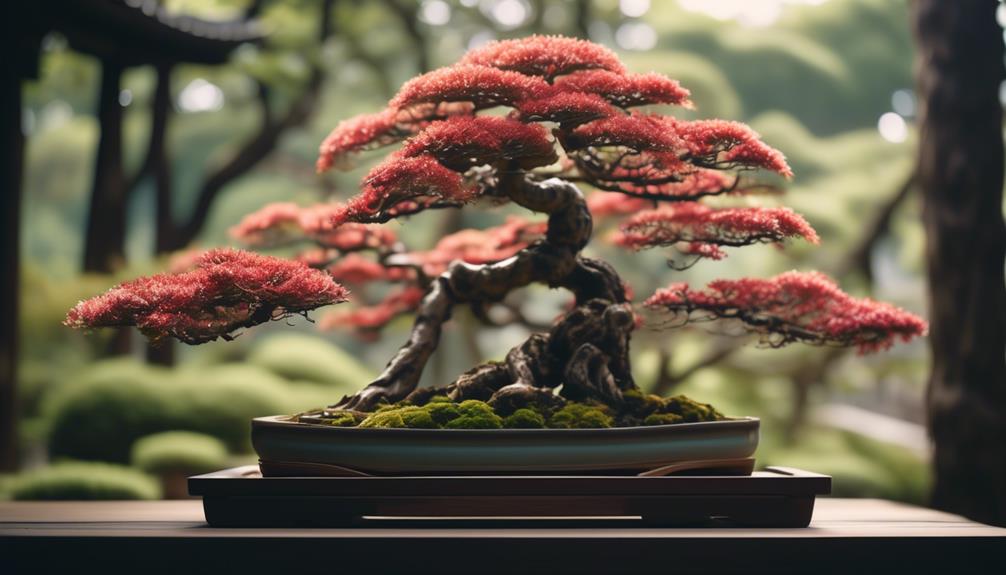
You may be under the impression that bonsai trees are a product of careful cultivation and shaping, requiring years of dedication and expertise. While that may be true for some species, Japan is home to seven native bonsai tree species that naturally possess the qualities desired in these miniature artworks.
These species, including the elegant Japanese Maple, resilient Japanese Black Pine, and graceful Japanese Elm, offer a unique opportunity for enthusiasts to connect with nature on a small scale. But what makes these native bonsai tree species so special?
Let’s explore their intriguing characteristics and discover why they continue to captivate bonsai enthusiasts worldwide.
Native Bonsai Tree Japanese Black Pine
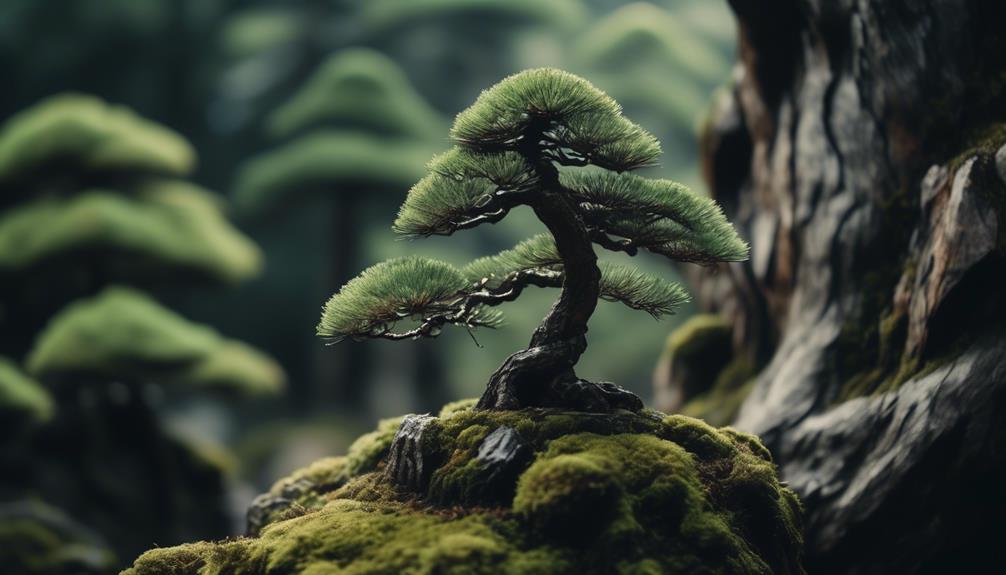
Japanese Black Pine, with its rugged and twisted trunk, along with distinctive dark green needles, is a popular choice for bonsai enthusiasts due to its unique aesthetic appeal.
The needles of this species grow in pairs and can be pruned to enhance the tree’s overall balance and visual appeal. One of the defining features of Japanese Black Pine bonsai trees is their informal upright style, which creates a sense of strength and resilience.
This species is known for its ability to withstand harsh conditions, making it suitable for bonsai enthusiasts of all skill levels. With proper care and training, Japanese Black Pine bonsai trees can develop striking, asymmetrical silhouettes that beautifully capture the essence of nature.
The combination of its rugged trunk, dark green needles, and ability to withstand adversity make the Japanese Black Pine an ideal choice for bonsai enthusiasts seeking a tree that embodies the spirit of Japanese bonsai.
Japanese White Pine
As we shift our focus to the captivating world of bonsai, let’s now explore the elegance and timeless beauty of the Japanese White Pine. This species, known as ‘Gyokusho’ in Japanese, is highly sought after for its exquisite appearance.
Here are some key points to grab your attention:
- The Japanese White Pine is prized for its short, bright green needles and rugged, picturesque bark. Its aesthetic appeal is truly captivating.
- One of the main reasons for its popularity is its ability to develop intricate and delicate foliage pads. This characteristic allows bonsai enthusiasts to create a sense of age and maturity in their compositions.
- This species is versatile and can be molded into different bonsai styles, such as formal upright, informal upright, and slanting. Its adaptability is truly remarkable.
- To maintain its health and aesthetic appeal, the Japanese White Pine requires meticulous care. Regular watering and balanced sunlight exposure are crucial.
- This species is known for its resilience and ability to withstand different conditions, making it a practical choice for both beginners and experienced bonsai enthusiasts.
Japanese Maple
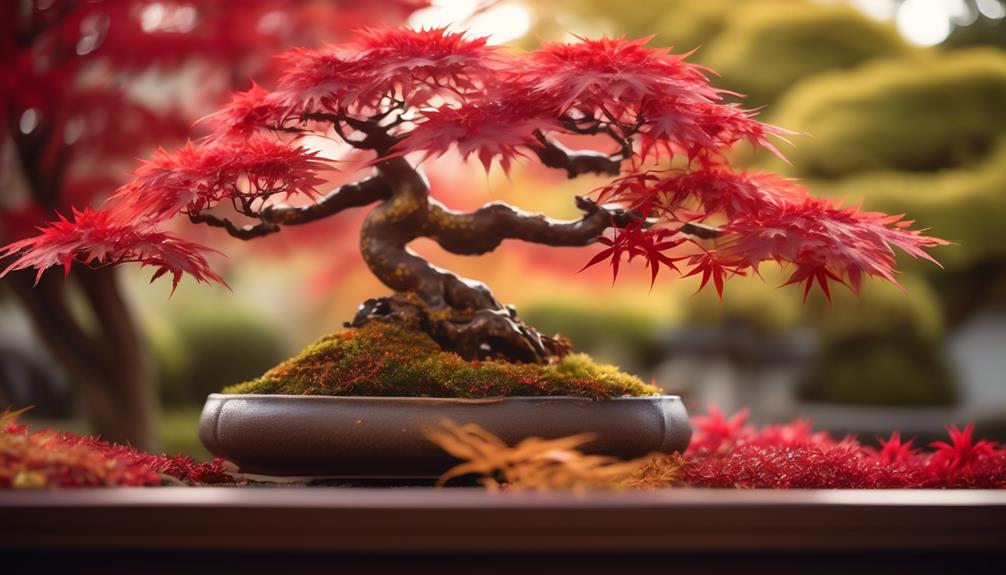
With its delicate leaves and stunning autumn colors, the Japanese Maple bonsai tree species, known as Acer palmatum, captures the essence of natural beauty in a captivating miniature form. This popular bonsai tree species is highly prized for its vibrant and diverse foliage, which ranges from vibrant greens to fiery reds. The Japanese Maple bonsai tree is a favorite among bonsai enthusiasts due to its ability to adapt to different bonsai styles, making it a versatile and rewarding choice for cultivation.
Caring for a Japanese Maple bonsai tree requires meticulous attention to detail. It’s important to provide the tree with the proper amount of sunlight, water, and nutrients. Pruning and wiring are also essential for maintaining the intricate and graceful appearance of the tree. The unique trunk formations and the graceful movement of the branches make the Japanese Maple bonsai tree a true work of art.
When properly cared for, a Japanese Maple bonsai tree can evoke the beauty of a full-sized maple tree in a miniature form. Its stunning foliage and elegant simplicity make it a captivating addition to any bonsai collection. Whether displayed indoors or outdoors, the Japanese Maple bonsai tree will surely be a source of admiration and delight.
Japanese Cedar
To continue exploring the world of bonsai trees, let’s now turn our attention to the captivating Japanese Cedar. Also known as Cryptomeria japonica, this bonsai tree species is native to Japan and is highly sought after by enthusiasts.
Here are some key facts about Japanese Cedar bonsai trees:
- Distinctive Appearance: Japanese Cedar bonsai trees are known for their straight trunk and pyramid-shaped crown, which gives them a classic and elegant look. Their lush green foliage adds to their aesthetic appeal.
- Ideal Growing Conditions: These bonsai trees thrive in full sun and require well-drained soil. It’s important to ensure that the soil is kept moist but not waterlogged to maintain the health of the tree.
- Resilient and Versatile: Japanese Cedar bonsai trees are resilient and can withstand various bonsai training techniques, such as wiring and pruning. This makes them suitable for both beginners and experienced bonsai enthusiasts.
- Cultural Significance: In Japanese culture, Japanese Cedar bonsai trees symbolize longevity, strength, and resilience. They’re often associated with the concept of eternal youth and are highly valued for their symbolism.
Japanese Beech

Japanese Beech, also known as Fagus crenata, is a highly esteemed bonsai tree species native to Japan. It is cherished for its delicate branching structure and beautiful autumn foliage. This particular species, Japanese beech, is a popular choice among bonsai enthusiasts due to its small, toothed leaves and smooth gray bark, which adds to its overall attractiveness.
One of the most captivating features of Japanese Beech bonsai trees is their vibrant autumn foliage. The leaves turn shades of yellow and orange, creating a stunning display. The compact growth habit of Japanese beech and its delicate branching structure make it well-suited for creating elegant and refined bonsai designs.
To ensure the health and vitality of Japanese Beech bonsai trees, it’s important to provide them with well-draining soil and regular pruning and shaping to maintain their desired form. By carefully attending to the needs of these bonsai trees, you can create a captivating and visually pleasing display that showcases the unique beauty of the Japanese Beech.
Japanese Elm
The elegant Japanese Elm, also known as Zelkova serrata, is a favored choice among bonsai enthusiasts for its small leaves and graceful, sweeping branches. This deciduous tree species, native to Japan, Korea, and China, offers a unique appeal with its distinctive exfoliating bark, adding character to bonsai compositions.
The Japanese Elm bonsai tree is highly versatile, accommodating various bonsai styles such as informal upright, slanting, and broom, allowing for creativity and diversity in bonsai design. Its strong resilience and ability to withstand aggressive pruning make it an ideal candidate for bonsai cultivation and shaping, ensuring the tree can be molded to fit the desired aesthetic.
Additionally, Japanese Elm bonsai trees are prized for their vibrant autumn colors, providing a captivating seasonal display that adds a touch of beauty to any bonsai collection. With its practicality and aesthetic appeal, the Japanese Elm is a popular choice that allows bonsai enthusiasts to create stunning and eye-catching compositions.
Japanese Juniper
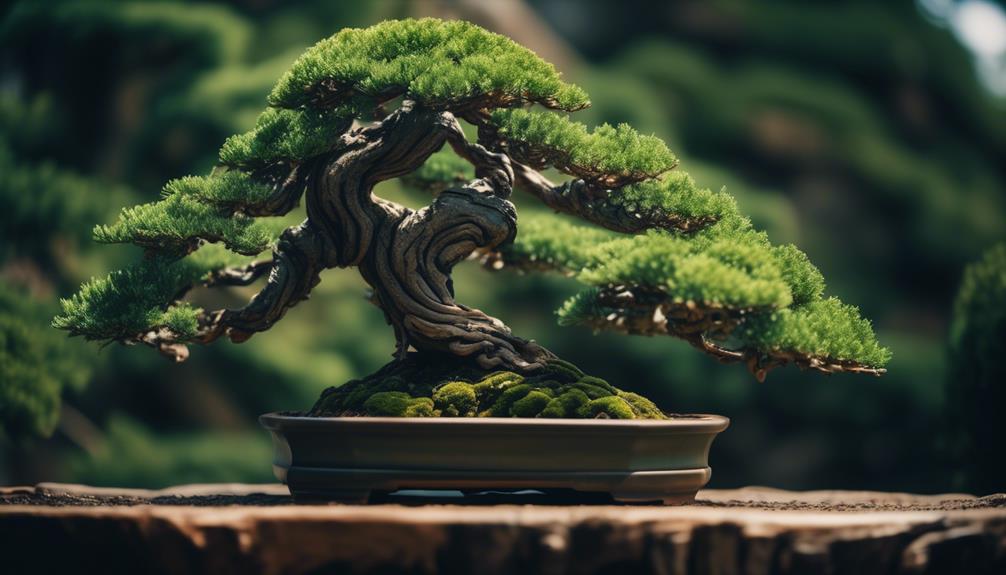
With its evergreen foliage and compact, well-proportioned shape, the Japanese Juniper stands as a captivating representation of nature’s enduring beauty in the art form of bonsai. Native to Japan, this bonsai tree species is highly sought after for its ability to form the classic ‘windswept’ or ‘cascade’ styles, reflecting the resilience of trees in harsh natural conditions. The Japanese Juniper thrives in full sun and well-drained soil, making it an ideal choice for outdoor cultivation. Its rugged and aged appearance evokes a sense of endurance and strength, adding to its allure as a bonsai tree. Japanese Juniper bonsai trees are revered for their ability to showcase the beauty of nature in a small, living art form.
In the world of bonsai, the Japanese Juniper is a beloved choice for both beginners and experienced enthusiasts. Its ability to adapt to various styles and its hardiness makes it a practical choice for bonsai artists. The evergreen foliage of the Japanese Juniper provides a year-round display of greenery, adding to its visual appeal. Its compact and well-proportioned shape allows for easy manipulation and shaping, enabling bonsai artists to create stunning compositions.
The Japanese Juniper embodies the elegance and simplicity of traditional bonsai aesthetics. Its understated beauty and timeless charm make it a popular choice among bonsai enthusiasts. Whether displayed indoors or outdoors, the Japanese Juniper adds a touch of nature’s tranquility and enduring beauty to any space. As you embark on your bonsai journey, consider the Japanese Juniper as a living work of art that will bring you joy and a deeper appreciation for the art of bonsai.
Frequently Asked Questions
What Is the Traditional Japanese Bonsai Tree?
The traditional Japanese bonsai tree is a masterpiece of cultivation techniques in Japan. It embodies attention to detail, elegant simplicity, and practicality. You’ll appreciate its unique beauty and the craftsmanship behind its creation.
What Is the Oldest Bonsai Tree in Japan?
The oldest bonsai tree in Japan, cultivated through ancient techniques, is the Hiroshima survivor bonsai. It has endured for almost 400 years, surviving the atomic bomb. Its resilience is a testament to the art of bonsai.
What Kind of Tree Is a Banzai?
A Banzai tree is not a specific type of tree, but a common misspelling of “bonsai.” Bonsai trees are miniature trees carefully cultivated for their aesthetic qualities and symbolize harmony, balance, and the beauty of nature.
What Is the Most Popular Tree in Japan?
The most popular tree in Japan is the Japanese Cherry Blossom. Its delicate pink petals create a breathtaking spectacle during the spring season. People gather under these trees to appreciate their beauty and celebrate the fleeting nature of life.
Conclusion
In conclusion, Japan boasts a rich variety of native bonsai tree species, each with its own unique characteristics and aesthetic appeal.
From the elegant Japanese Maple to the resilient Japanese Black Pine, these trees are highly valued by bonsai enthusiasts for their adaptability and natural form.
Cultivating these miniature trees allows us to appreciate the beauty and diversity of Japan’s native flora in a practical and visually pleasing manner.