
As you wander through the miniature forests of Top Varieties of Bonsai Trees, each variety stands like a distinct brushstroke on the canvas of nature.
The artistry of bonsai cultivation unveils a world where patience intertwines with precision, where the hands of the caretaker sculpt life into graceful forms.
In this silent dialogue between human hands and arboreal spirits, the choice of bonsai variety reflects one’s journey.
Each tree whispers a tale of resilience, beauty, and tranquility, inviting you to explore the diverse realms of Ficus, Juniper, Pine, and beyond.
Ficus Bonsai Tree
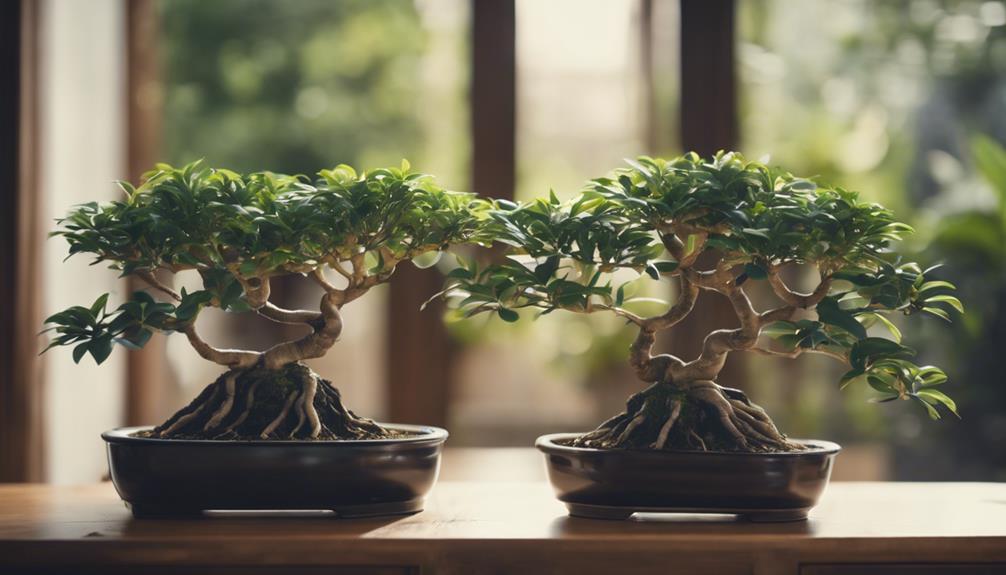
With its forgiving nature in watering and ability to thrive indoors in bright, indirect light, the Ficus bonsai tree stands out as an ideal choice for beginners venturing into the art of bonsai cultivation. Ficus bonsai trees offer a low-maintenance option for those new to bonsai care, making them a perfect starting point for your journey into this ancient art form.
These trees can be easily shaped into various structures, allowing you to unleash your creativity and add a touch of natural elegance to your living space. The popular Ginseng Ficus variety, known for its robustness and resilience, is particularly suited for beginners, as it’s hard to kill and requires minimal attention.
Cultivating a Ficus bonsai tree not only brings a sense of tranquility and harmony into your home but also infuses tropical vibes into your living environment. Embrace the beauty and simplicity of caring for a Ficus bonsai tree as you embark on your bonsai gardening adventure.
Juniper Bonsai Tree
Juniper bonsai trees exhibit a remarkable cold tolerance, capable of enduring temperatures as low as 15°F, showcasing their resilience in challenging climates. These trees have a distinctive appearance attributed to their foliage and bark, which evolve in color over time, adding to their charm.
Juniper bonsai trees are a versatile choice for beginners, offering two types of foliage—scale, and needle—that allow for diverse bonsai styling possibilities. Their hardiness and ability to respond well to aggressive pruning make them excellent for crafting various bonsai styles, catering to both traditional and contemporary tastes.
The miniature aesthetic of juniper trees, with their small foliage, appeals to many bonsai enthusiasts, making them a popular choice for those seeking to cultivate these living artworks. Whether you prefer the scale or needle foliage variety, the juniper bonsai tree is sure to captivate with its unique and captivating presence in any bonsai collection.
Pine Bonsai Tree
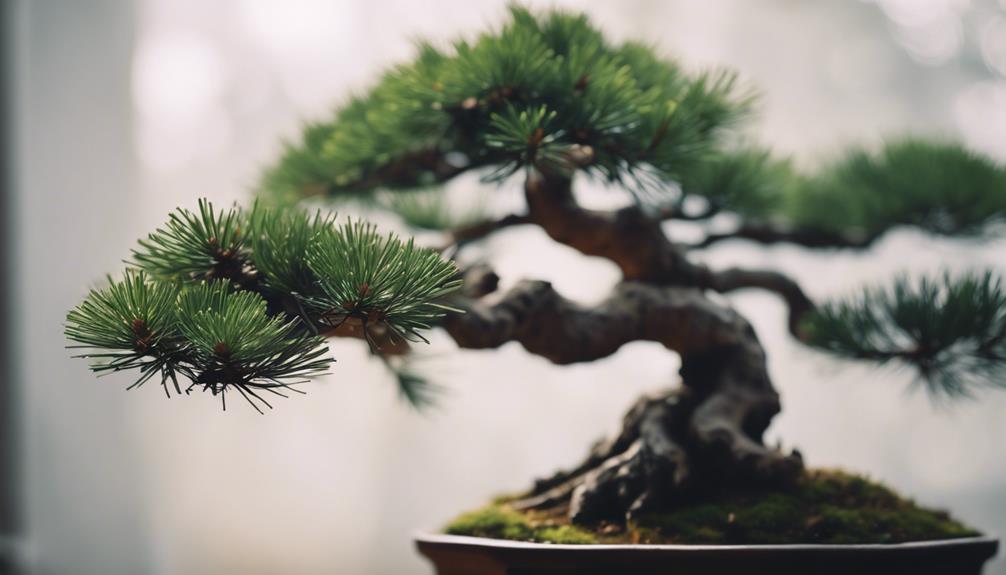
Renowned for their hardiness and unique visual appeal, pine bonsai trees offer a versatile canvas for crafting various bonsai styles. These trees boast needles that grow in bundles of two to five, creating a striking and distinctive appearance. As pine bonsai trees mature, their bark develops a scaly texture, enhancing their aesthetic beauty.
One of the appealing aspects of pine bonsai trees is the range of needle colors they exhibit, from light green to dark green, depending on the specific species. Enthusiasts often choose Japanese black pine and red pine for bonsai cultivation due to their ornamental features and ease of care. Their ability to adapt to various shaping techniques makes them a favorite among bonsai artists.
Whether you’re a seasoned bonsai grower or just starting pine bonsai trees provide an excellent opportunity to hone your skills and create captivating bonsai displays. Their hardy nature ensures they can thrive with proper care and attention, rewarding you with stunning ornamental additions to your collection.
Bald Cypress Bonsai Tree
Among the array of captivating bonsai tree varieties, the Bald Cypress Bonsai Tree stands out for its unique characteristics and seasonal allure. Bald Cypress Bonsai Trees, also known as Taxodium distichum, are deciduous conifers with needle-like leaves, native to the southeastern United States. These bonsai trees are distinguished by their intriguing ‘knees’ that protrude above the ground near the roots, adding to their aesthetic appeal.
They thrive in wet conditions, often seen flourishing near swamps and rivers, making them an ideal choice for bonsai enthusiasts seeking a tree that can handle such environments. One of the most striking features of the Bald Cypress Bonsai Tree is its transformation during the fall season when its foliage turns a beautiful rusty orange before shedding, creating a stunning display of colors.
Cultivating a Bald Cypress Bonsai Tree allows you to enjoy its distinctive characteristics and witness the mesmerizing changes it undergoes throughout the seasons.
Weeping Willow Bonsai Tree
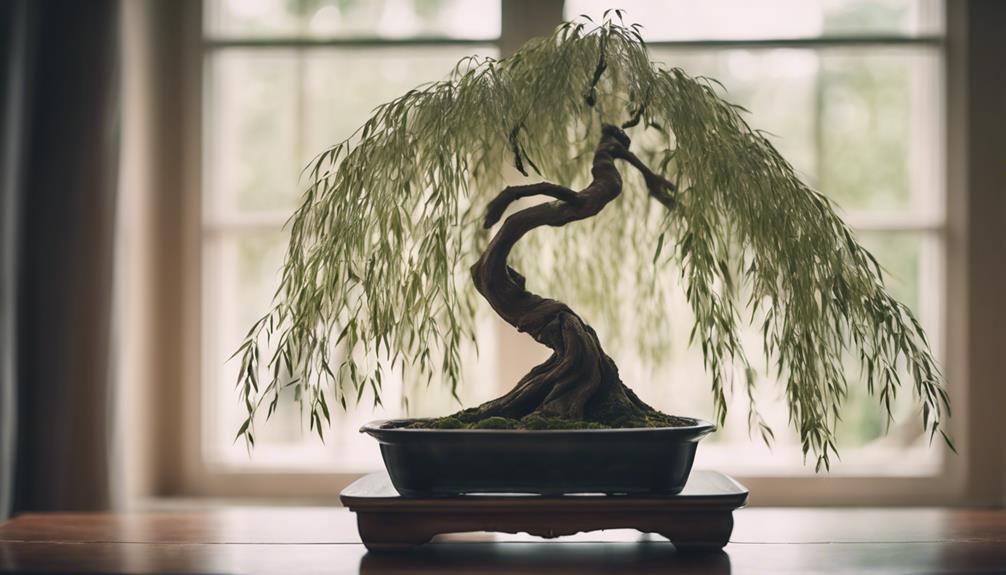
Gracefully cascading with its elegant draping foliage, the Weeping Willow Bonsai Tree captivates with its unique beauty and intricate care requirements. This bonsai tree, not recommended for beginners, presents larger than average size and a distinctive aesthetic appeal.
Careful monitoring of water levels is essential due to its rapid growth rate, demanding attention from experienced growers capable of meeting its needs. The maintenance of a Weeping Willow Bonsai requires dedication and expertise to ensure its graceful appearance is maintained over time.
Despite the challenges it presents, this tree is a beautiful addition to any bonsai collection, enhancing the overall elegance and charm of the display. If you’re an experienced grower seeking to enrich your collection with a specimen that exudes sophistication and beauty, the Weeping Willow Bonsai Tree could be the perfect choice for you.
Conclusion
In conclusion, the world of bonsai trees offers a diverse array of options for enthusiasts at every skill level.
From the graceful elegance of the Weeping Willow to the resilient beauty of the Juniper, each variety brings its own unique charm to the art of bonsai cultivation.
By selecting the right variety and following proper care practices, you can embark on a rewarding journey of nurturing and shaping these miniature marvels of nature.
Happy bonsai growing!