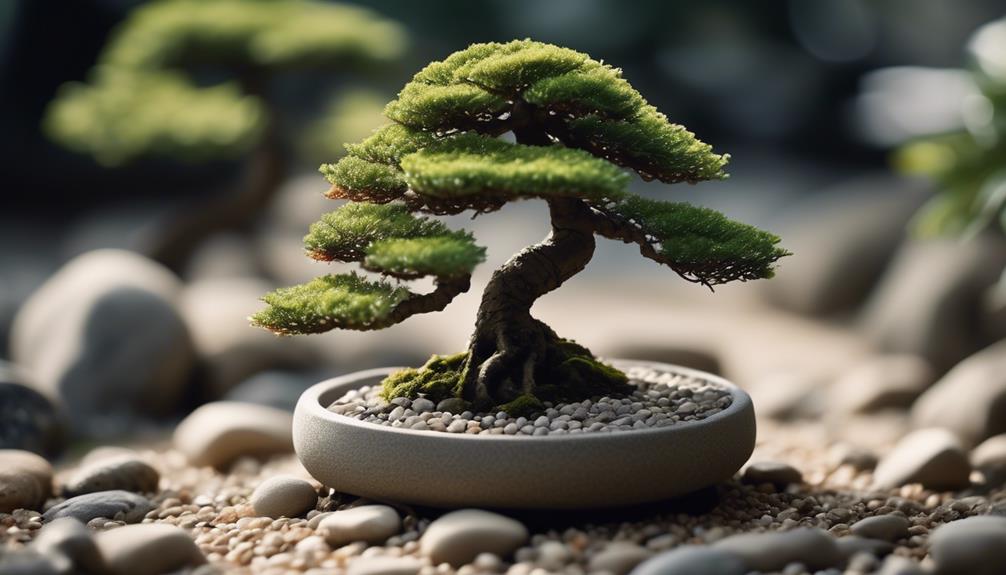
Imagine a world where giants roam the earth, their colossal presence casting shadows that engulf entire landscapes.
Now, picture a miniature tree, delicate and intricate, nestled in the palm of your hand. It seems almost impossible, doesn’t it?
Yet, within the art of bonsai lies the ability to capture the essence of nature and condense it into a small, captivating masterpiece.
In this discussion, we will unravel the 11 key principles that serve as the backbone for designing these enchanting miniature trees. From the meticulous placement of branches to the careful selection of containers, each principle plays a crucial role in shaping the harmonious beauty that bonsai embodies.
So, come with us as we explore the artful techniques and secrets that unlock the world of designing miniature trees.
Proportion and Scale
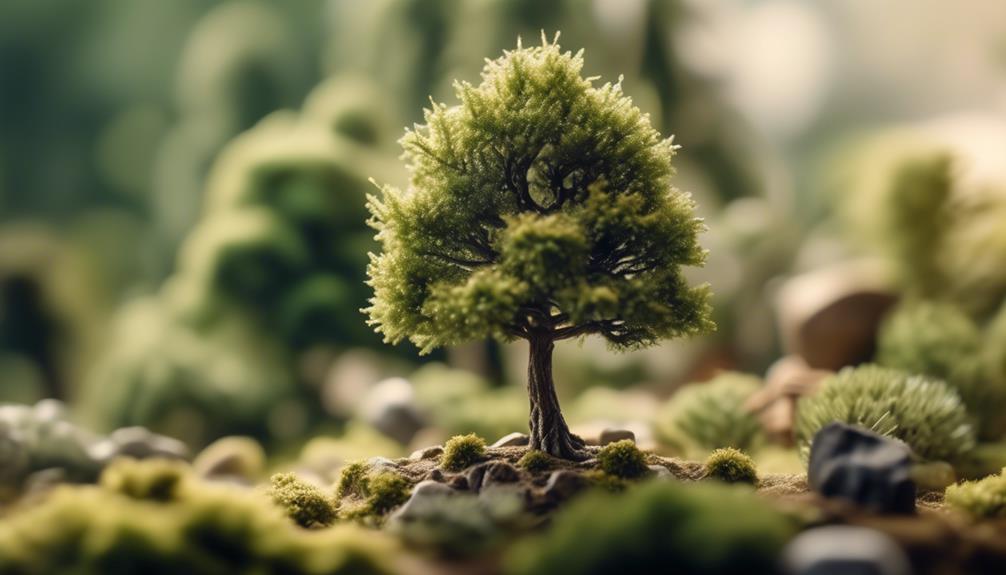
To create the illusion of a full-sized tree in a miniature form, bonsai design relies on the strategic use of proportion and scale. Proportion refers to the relationship between different parts of the tree, while scale refers to the overall size of the bonsai tree. In bonsai design, the challenge lies in compressing the proportions of a tree, which would normally span several meters, into a small, manageable size.
When designing a bonsai, the number of branches is significantly reduced compared to a tree in nature. This limited scale requires careful placement of branches to create the desired illusion. Low branches are strategically placed to create foliage throughout the tree, compensating for the reduced number of branches. This gives the bonsai a fuller appearance, despite its miniature size.
Visual depth is another important aspect of bonsai design. Branches are created in different directions to achieve a more natural look. By utilizing foreshortening techniques and incorporating taper, the illusion of height is created in these miniature trees. This helps to maintain the sense of proportion and scale, making the bonsai appear more realistic in its design.
The choice of bonsai pot also plays a crucial role in completing the illusion of size and viewing distance. Shallow pots are used to create the effect of a slice of ground, enhancing the illusion of a full-sized tree in a smaller form. Cascade pots, on the other hand, represent a slice of mountainside, further enhancing the sense of viewing distance.
Branching and Trunk Placement
Branching and trunk placement are essential elements in bonsai design, as they determine the overall aesthetic and visual balance of the miniature tree. Proper placement of branches and the trunk creates the illusion of a full-sized tree in miniature form. When designing a bonsai, it’s important to strategically place the branches and trunk to achieve the desired visual depth and perspective. By carefully considering branching and trunk placement, you can create an abstract tree that produces the desired effect.
Limited branches in bonsai design can be strategically utilized to achieve visual balance and create the impression of a full-sized tree. The placement of each branch should be intentional, as it contributes to the overall design and balance of the bonsai. Branches should be spaced evenly along the trunk, with smaller branches closer to the top and larger branches lower down. This creates a natural progression of growth, mimicking the way a full-sized tree would develop.
Trunk placement is equally important in bonsai design. The trunk should be positioned in a way that provides stability and visual interest. It should have a slight curve or bend to create movement and a sense of life. The angle at which the trunk emerges from the soil also plays a role in the overall design. A slight slant can add drama and interest to the bonsai.
Balance and Harmony
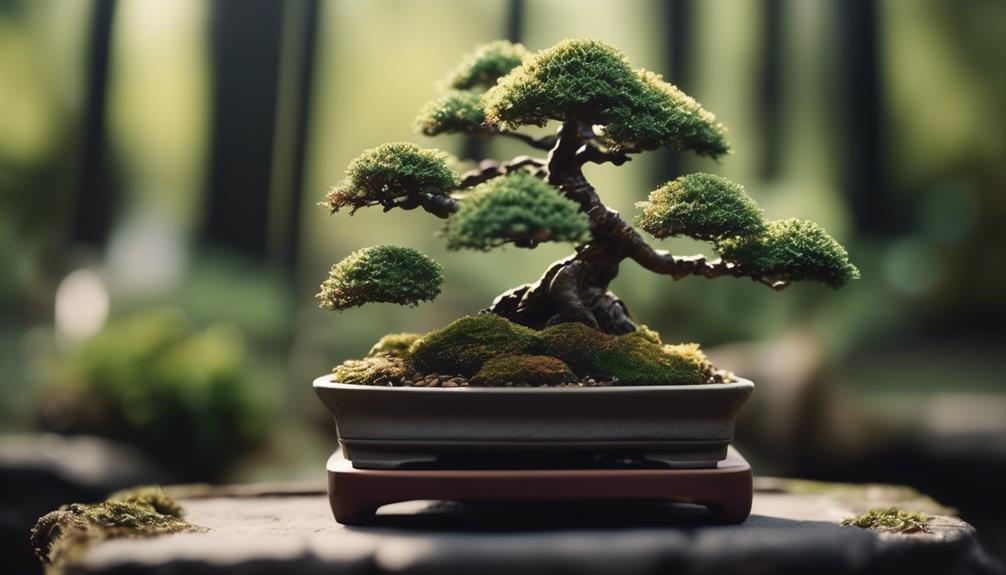
Creating balance and harmony is the key to achieving a visually captivating and harmonious bonsai design. By carefully considering the placement of branches, foliage, and other elements, you can create a sense of visual balance that’s pleasing to the eye. Here are three important aspects to keep in mind when aiming for visual balance in your bonsai design:
- Weight distribution: Just like in a traditional landscape, a bonsai tree should have a balanced distribution of visual weight. This means that no single element should overpower the others. For example, if you have a large, heavy branch on one side of the tree, you can balance it out by adding smaller branches or foliage on the opposite side.
- Branch placement: The placement of branches plays a crucial role in achieving visual balance. You want to avoid having all the branches on one side of the tree, as this can create an unbalanced and unnatural look. Instead, aim for a more even distribution of branches throughout the tree.
- Foliage density: Another important aspect of visual balance is the density of foliage. Too much foliage on one side of the tree can create an imbalance and make the tree appear top-heavy. By strategically pruning and thinning out the foliage, you can create a more harmonious and balanced overall appearance.
Negative Space and Composition
Enhance the visual allure of your bonsai design by skillfully incorporating negative space and composition.
Negative space, the intentional absence of elements, plays a crucial role in bonsai composition. By purposefully leaving areas empty, you create balance and harmony, adding depth and perspective to your design. The strategic use of negative space guides the viewer’s focus and allows for a sense of spaciousness and contrast with the tree elements.
When utilizing negative space, consider the placement and arrangement of your trees. The negative space should complement and enhance the overall composition. Think about how the empty areas interact with the trees, creating a dynamic and visually appealing design. Ensure that the negative space doesn’t overpower the tree elements but works harmoniously with them.
In bonsai design, negative space isn’t just about aesthetics; it also contributes to the storytelling aspect. It can evoke a sense of tranquility, solitude, or even the passing of time. The judicious use of negative space can help convey the desired emotions and narratives.
Foliage and Leaf Arrangement
To create a visually captivating bonsai design, mastering the art of foliage and leaf arrangement is paramount. Foliage and leaf arrangement play a significant role in the overall aesthetic and impression of a miniature tree. By understanding the specific foliage and leaf arrangement of different tree species, you can create a more realistic and visually appealing bonsai tree.
Here are three key principles to keep in mind when it comes to foliage and leaf arrangement:
- Proper balance: Achieving visual balance is crucial in bonsai design. The distribution of foliage should be carefully planned to create a harmonious composition. By considering the size and shape of the leaves, you can ensure that the branches are evenly covered with foliage, creating the illusion of a full-sized tree in miniature form.
- Leaf placement: The arrangement of leaves on the branches is also important for creating a realistic bonsai tree. Different tree species have distinct leaf patterns, such as alternate, opposite, or whorled arrangements. By mimicking the natural leaf arrangement of the chosen species, you can enhance the overall appearance and character of your miniature tree.
- Pruning and defoliation: Pruning and defoliation techniques can be used to control the density and distribution of foliage. By selectively removing leaves, you can create a more open and airy design or encourage new growth in specific areas. This allows you to have greater control over the overall shape and appearance of your bonsai tree.
Root Development and Nebari
Now let’s talk about the fascinating world of root development and nebari.
Nebari formation techniques play a crucial role in creating the illusion of a mature tree in a miniature form.
Understanding the importance of root development is key to nurturing a healthy bonsai, as it provides stability, nutrient absorption, and overall tree health.
Nebari Formation Techniques
Developing the surface roots, known as nebari, of a bonsai tree is a crucial aspect of creating a stable and visually captivating base. The nebari formation techniques play a significant role in achieving this goal.
Here are three key techniques to enhance nebari development:
- Air Layering: This technique involves removing a section of the tree’s bark and creating a new root system. It encourages the growth of new roots near the surface, resulting in a well-defined and attractive nebari.
- Root Pruning: By selectively pruning the roots, you can stimulate radial root spread and encourage the development of a wide and balanced nebari. Regular pruning helps prevent root congestion and allows the tree to absorb nutrients more efficiently.
- Strategic Root Placement: Placing the roots in a way that creates a radial pattern enhances the overall visual impact of the nebari. By carefully positioning the roots during repotting, you can ensure that they radiate evenly from the trunk, creating a sense of stability and maturity.
Importance of Root Development
Enhancing the nebari formation techniques discussed earlier is essential for the overall importance of root development in creating healthy and visually captivating miniature trees.
Root development plays a crucial role in the health and stability of bonsai. It ensures the tree’s ability to absorb nutrients and water efficiently, allowing it to thrive.
The nebari, or visible surface roots, not only contribute to the aesthetic appeal of the bonsai but also provide balance and a sense of age and stability.
Encouraging horizontal root growth is key to enhancing the visual impact of the bonsai. It creates a natural-looking root system that adds depth and dimension to the overall design.
Enhancing Nebari Aesthetics
To create visually stunning and well-balanced bonsai trees, it’s crucial to focus on enhancing the aesthetics of the nebari, the intricate root system at the base of the tree. The nebari plays a vital role in the overall visual impact of the bonsai, providing a sense of stability and maturity.
Here are three key techniques for enhancing nebari aesthetics:
- Root Pruning: Regularly pruning the roots helps to maintain a compact and well-distributed nebari. By selectively removing excess or crossing roots, you can create a more harmonious and balanced root system.
- Grafting: Grafting involves joining a branch or root from one tree onto another. This technique can be used to improve the nebari by adding thicker, more visually appealing roots to the bonsai.
- Air Layering: Air layering is a method used to encourage the growth of new roots along the trunk or branches of a tree. By creating a wound and wrapping it with moist moss or plastic, you can stimulate the growth of new roots, resulting in a more intricate and captivating nebari.
Movement and Flow
Movement and flow bring a vibrant energy to bonsai trees, infusing them with the essence of nature’s dynamic grace. These elements are crucial in bonsai design as they create a sense of dynamism and continuity within the tree’s structure.
By incorporating curved trunks and branches, as well as asymmetrical placement, movement is visually enhanced, giving the impression of a tree caught in a gentle breeze. Flowing lines and directional growth patterns guide the viewer’s eye, creating a sense of natural vitality.
Achieving movement and flow requires strategic wiring and pruning techniques, emphasizing graceful gestures and organic rhythms. By carefully sculpting the branches and foliage, bonsai artists can evoke the illusion of leaves swaying in the wind or a tree reaching towards the sunlight.
The harmonious balance between stillness and motion in bonsai design captures the dynamic essence of nature, reminding us of the ever-changing beauty that surrounds us.
Pruning and Shaping Techniques
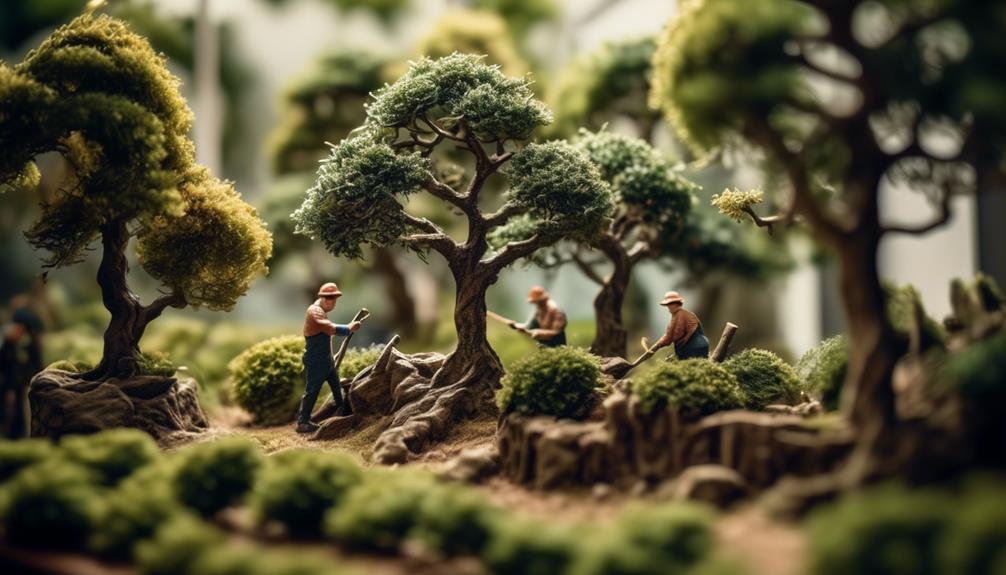
When pruning and shaping your miniature tree, you have the power to sculpt and refine its form, creating a work of art that reflects your vision and skill.
To achieve the desired shape and structure, there are several pruning and shaping techniques you can employ:
- Clip and grow method: This technique involves trimming back new growth to encourage branching and create a fuller canopy. By selectively pruning certain branches, you can control the overall shape and density of the tree.
- Directional pruning: This technique involves pruning branches in a specific direction to create movement and enhance the tree’s natural flow. By removing branches that grow in unwanted directions and encouraging growth in desired areas, you can shape your miniature tree with precision.
- Thinning: Thinning involves selectively removing excess branches and foliage to create an open and airy appearance. This technique allows light to penetrate the canopy, promoting inner growth and maintaining the health of your miniature tree.
Container Selection and Display
Choosing the perfect container for your bonsai tree is an essential step in creating a visually harmonious and healthy display. The container you select should complement the style and size of your bonsai tree, ensuring that there’s a sense of visual harmony and balance. When choosing a container, it’s important to consider the overall visual impact and the context in which your bonsai tree will be displayed.
One important factor to consider is the depth of the pot. Bonsai trees typically thrive in shallow pots, as this allows for proper root growth and drainage. A shallow pot helps prevent the roots from becoming too compacted and allows for better air circulation, essential for the health of your bonsai tree. Additionally, a shallow pot provides stability and balance for your bonsai tree, preventing it from toppling over.
Another aspect to consider is the material of the pot. Traditional bonsai containers are often made of ceramic or clay, which provide a natural and earthy aesthetic. However, there are also other materials available, such as plastic or metal, that can be used as long as they provide adequate drainage.
Ultimately, the container you choose should evoke a sense of natural beauty and balance, creating a visually pleasing display for your bonsai tree. Take your time in selecting the perfect container, ensuring that it enhances the overall aesthetic and health of your miniature tree.
Seasonal Considerations
Now that you’ve selected the perfect container and created a stunning display for your miniature tree, it’s time to consider the seasonal changes that will impact its growth.
Weather and climate play a crucial role in the health of your bonsai, so understanding how to adapt to different seasons is essential.
From planting and transplanting to pruning and maintenance, these seasonal considerations will guide you in providing the necessary care for your bonsai throughout the year.
Weather and Climate
Understanding the impact of weather and climate is essential for successfully caring for and maintaining miniature trees throughout the seasons. The weather and climate of your region directly affect the care routines you need to follow for your bonsai tree. Here are three important considerations when it comes to weather and climate:
- Watering frequency: Different seasons bring varying levels of rainfall and temperature, which directly impact the watering needs of your bonsai tree. During hot and dry periods, you may need to water more frequently to prevent dehydration. In colder months, you may need to reduce watering to avoid overwatering and root rot.
- Fertilization: Weather and climate also influence the nutrient requirements of your bonsai tree. During the growing season, when the weather is warm and favorable, you may need to fertilize more frequently to support healthy growth. In colder months, when growth slows down, you may need to reduce or even stop fertilization.
- Protection: Extreme weather conditions, such as strong winds, frost, or excessive heat, can be detrimental to your bonsai tree. It’s important to provide adequate protection during such conditions by moving the tree indoors or providing shelter.
Planting and Transplanting
As you continue your journey of caring for miniature trees, navigating the impact of weather and climate, you now shift your focus to the crucial seasonal considerations of planting and transplanting.
When it comes to planting or transplanting miniature trees, it’s important to take into account the seasonal variations to ensure optimal growth and adaptation. Different trees may require planting or transplanting during specific seasons, considering their dormancy and root growth periods.
Generally, spring and fall are ideal seasons for these activities, as they provide a balance between active growth and reduced stress on the tree. It’s crucial to avoid planting or transplanting during extreme weather conditions, such as the peak of summer heat or harsh winter frosts, as this can cause shock and hinder successful establishment.
Understanding these seasonal considerations will help provide the best conditions for your miniature trees’ health and development.
Pruning and Maintenance
To ensure the health and aesthetic appeal of your miniature trees, it’s essential to tailor pruning and maintenance practices according to seasonal changes and growth patterns. Understanding the specific seasonal needs of your trees is crucial for effective pruning and maintenance throughout the year.
Here are three key considerations for pruning and maintenance:
- Proper timing: Different seasons require specific approaches for shaping and maintaining your miniature trees. For example, pruning during the dormant season promotes new growth in spring, while pruning during the active growing season helps maintain shape and control size.
- Regular assessment: Regularly assess the growth and health of your trees to adjust pruning and maintenance practices accordingly. This allows you to address any issues promptly and ensure optimal growth.
- Species-specific care: Each miniature tree species has unique requirements. Adapting maintenance techniques based on these requirements is vital for their long-term growth and development. Research and understand the specific care needs of your tree species to provide the best possible care.
Patience and Long-Term Care
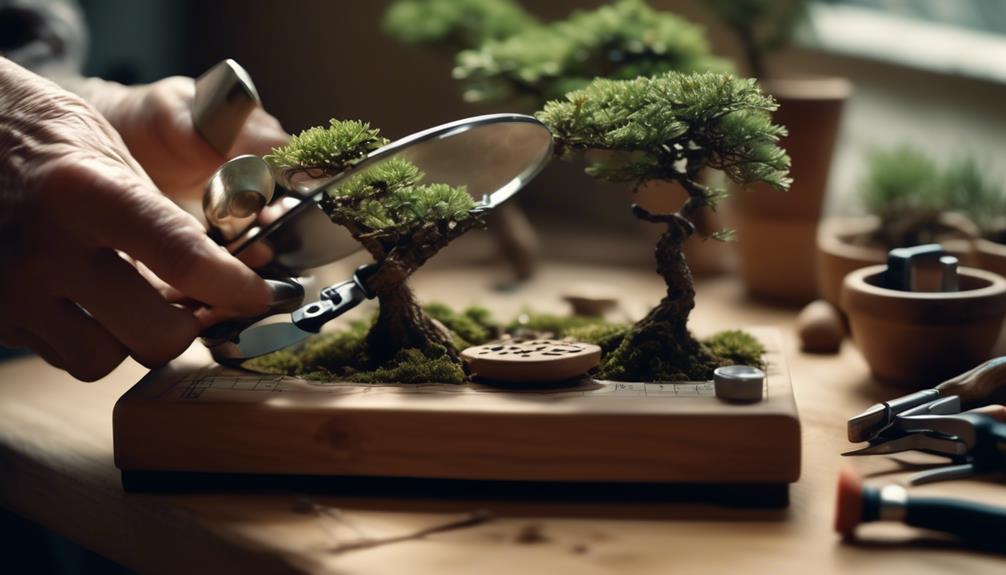
With patience and consistent care, you can nurture a bonsai tree over the years, allowing it to gradually transform into a miniature masterpiece of nature. Patience is the key when it comes to bonsai. It takes years of dedication and observation to develop a tree that resembles a mature, natural tree.
Long-term care is essential in ensuring the well-being of your bonsai. This involves consistent monitoring of its growth, adjusting wiring and pruning, and providing proper watering and feeding. Each bonsai tree has its own unique growth pattern, and understanding this requires patience and attentiveness. By observing and responding to its needs, you can help your bonsai thrive.
Long-term care also involves understanding the seasonal requirements of your tree. As the seasons change, so do the needs of your bonsai. Adjusting your care practices accordingly will ensure its health and longevity.
Embrace the beauty of its gradual transformation, allowing it to develop its unique character and form over time. Remember, with patience and long-term care, your bonsai tree can become a living work of art.
Frequently Asked Questions
What Are the Elements of a Bonsai Tree?
To design a bonsai tree, you’ll need to consider elements like shape, size, and pot selection. Nurturing techniques involve careful pruning, wiring, and watering to maintain its miniature form and achieve the desired aesthetic.
What Are the Rules of Bonsai?
To understand the rules of bonsai, you need to grasp its aesthetics. It involves creating miniature trees that mimic the appearance of full-sized ones. Achieving balance, depth, and perspective through careful design and styling is key.
What Is the Art of Growing Miniature Trees?
The art of growing miniature trees, known as bonsai, involves utilizing various techniques to design and maintain these tiny botanical creations. With careful styling and strategic branch placement, bonsai artists create visually balanced and captivating tree-like structures.
How Do You Grow Miniature Trees?
To grow miniature trees, you can use alternative methods. Start by selecting a small species and a suitable pot. Plan the foliage distribution and shape the branches for visual balance. Then, make wire armatures, mount the tree, and add details and foliage for a living artwork.