
Bonsai Tree Care: A friendly guide to help you nurture and maintain your miniature masterpiece.
Did you know that the art of bonsai, and Bonsai Tree Care often seen as merely decorative, actually stems from an ancient Japanese tradition symbolizing harmony and balance between nature, man, and soul?
As you step into this world, you’ll discover that each bonsai tree, with its miniature yet majestic form, narrates a unique story of patience and perseverance.
Becoming a bonsai caretaker involves more than just watering and pruning. From understanding your tree’s specific needs to mastering the intricate techniques of wiring and repotting, nurturing a bonsai is a journey of continuous learning.
As you venture deeper into this discussion, you’ll uncover the secrets to keeping these small wonders thriving, and in doing so, you might just find an unexpected and profound connection with nature.
Understanding Bonsai Tree Types And Bonsai Tree Care

Diving into the world of bonsai, you’ll quickly realize that there’s a rich tapestry of types, each one requiring unique care and attention. Understanding bonsai tree types can be akin to learning a new language. Each species has its own unique rhythm and requirements, and getting to know them is key to their survival and your success.
Deciduous bonsai trees, like the elegant Maple, require a period of dormancy in winter. You’ll need to ensure they experience a seasonal chill, even if they reside indoors. On the flip side, tropical bonsai species, like the ever-popular Ficus, thirst for warmth and humidity year-round.
Evergreens, such as the Juniper, are a dynamic choice, their needles changing from a lush green to a golden hue in the fall. They’re a fantastic option if you’re looking for a year-round display of color.
Your bonsai tree care should be tailored to the type of tree you’re nurturing. It’s not a one-size-fits-all deal. So, always take note of the specific tree type when cultivating your own bonsai. Understanding bonsai tree types isn’t just about knowing names; it’s about comprehending their individual needs.
Proper Bonsai Watering Techniques
Just as you’d quench a thirst, watering your bonsai tree is a delicate art that demands your attention and understanding, as it plays a pivotal role in the health and growth of these miniature masterpieces. Proper bonsai watering techniques require a deep understanding of the unique needs of your bonsai plant.
The need to water can vary depending on the species of your tree, size of the pot, and the climate conditions. Adjust the watering frequency based on the specific tree species and pot size to avoid overwatering or underwatering. Check the soil moisture regularly and water when the top layer of soil feels slightly dry. Ensure proper drainage in the soil and pot to prevent waterlogging and root rot.
Consider environmental factors such as climate, time of year, and indoor/outdoor placement when determining the watering needs. Use a watering can with a fine rose or a spray bottle to gently water the bonsai, ensuring even distribution.
Remember that bonsai tree care is a journey, not a destination. The goal is for your bonsai to not just survive, but thrive.
Essential Pruning and Shaping
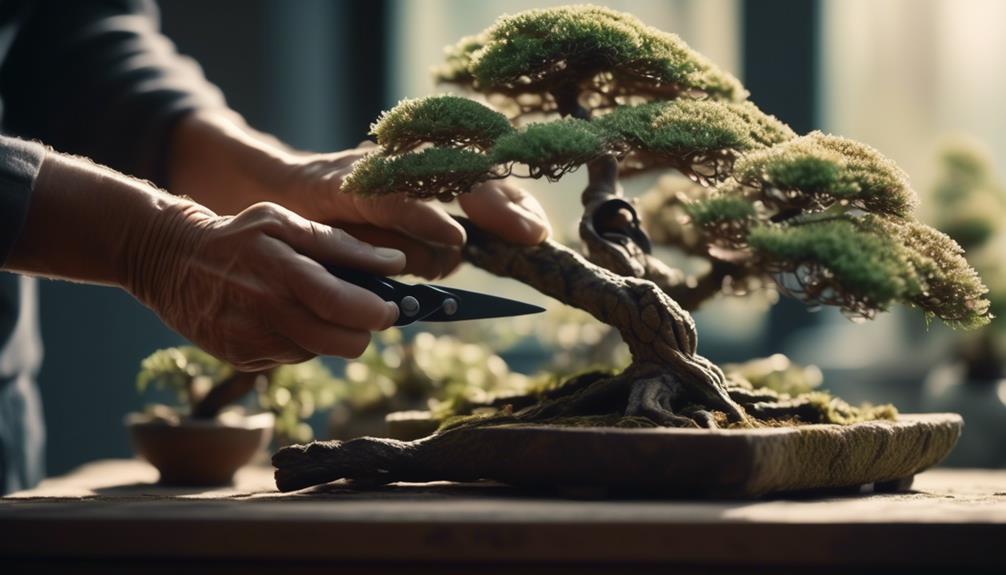
Sculpting your bonsai tree through essential pruning and shaping techniques is a pivotal part of bonsai tree care, helping maintain its miniature stature and aesthetic appeal. Shaping your bonsai isn’t merely a cosmetic step. It’s a vital process that encourages new growth and lets you control its form, ensuring its longevity and vitality.
Commence by pruning away unnecessary branches. This is best done during the tree’s dormancy period, but it might require professional skills. Regular maintenance pruning, however, can be done by you and helps to encourage new growth.
During winter, consider wiring the branches. It’s a simple yet effective technique to control the tree’s growth and shape. But do monitor for wire scarring, as it could harm the tree.
The soil you choose also plays an underappreciated role in bonsai care. It should offer good drainage, as excess water can lead to root rot. And don’t forget a balanced fertilizer to nourish the tree.
Choosing Soil and Fertilizer
While pruning and shaping play crucial roles in preserving the aesthetics and health of your bonsai tree, choosing the right soil and fertilizer is equally vital to ensure its thriving growth and longevity. The right soil is one that provides the nutrients it needs, while also promoting good drainage. Soil mixture plays a pivotal role in the health of your bonsai, as it affects both water retention and aeration.
Bonsai trees require specific care when it comes to choosing soil and fertilizer. Here are some key points to consider:
- Opt for a well-draining soil mix, suitable for your particular tree species and climatic conditions.
- To improve aeration, you can add large particles like volcanic rock or stones to your soil.
- Clay can enhance water retention in your soil mixture, benefiting your bonsai tree.
- After watering your tree thoroughly, apply a balanced fertilizer containing nitrogen, phosphorus, and potassium.
- Be cautious in selecting the soil and fertilizer to avoid over-fertilization, which can harm your bonsai.
The Repotting Process

Diving into the world of bonsai care, you’ll need to become familiar with the pivotal process of repotting, which involves carefully extracting the tree from its current pot, trimming its roots, and replanting it in a refreshed environment. This is where bonsai trees are planted anew, nourishing the root system and allowing for continued growth.
First, remove the tree from its pot, taking care to minimize root disturbance. Inspect the roots, cutting back the outer layers, and be vigilant for any signs of rot. This part of the repotting process is crucial; it’s the perfect time to assess the health of your bonsai.
Next, prepare your pot. Clean it thoroughly, place mesh squares over drainage holes, and layer in fresh soil. This ensures a clean, well-drained environment for your tree.
Frequently Asked Questions
How Do You Take Care of a Bonsai Tree for Beginners?
You’ll need to position your bonsai correctly, water it when the top soil’s dry, prune and shape regularly, use proper soil and balanced fertilizer, and repot every 2-5 years. Each tree’s care varies slightly.
How Often Do You Water a Bonsai Tree?
You’d water your bonsai tree when the top soil feels dry. Frequency depends on the tree species, pot size, and climate. Monitoring its soil and appearance helps you gauge when it needs watering.
How Do You Keep an Indoor Bonsai Tree Alive?
To keep your indoor bonsai tree alive, ensure it’s placed in proper light. Water when topsoil’s dry, prune regularly. Pick right soil, use balanced fertilizer. Repot every 2-5 years. It’s about diligence and love!
Do Bonsai Trees Need Direct Sunlight?
Yes, your bonsai tree needs direct sunlight, but the exact amount varies based on its species. Generally, it should get morning or late afternoon sun. Monitor it for signs of sunburn and adjust accordingly.