Ideal Soil Mix for Thriving Bonsai Trees you can Imagine your bonsai tree as a delicate dancer on a tightrope, relying on the perfect balance and support to thrive.
Just like a tightrope walker needs a sturdy rope, your bonsai tree needs the ideal soil mix to provide the necessary nutrients, drainage, and aeration for its roots.
But what exactly is this ideal soil mix?
In this discussion, we will explore the differences between organic and inorganic soil, the importance of drainage and aeration, the role of pH balance, and how to choose the right soil components for your bonsai tree.
So, let’s dig deeper into the world of bonsai soil and uncover the secrets to a thriving bonsai tree.
Organic Vs. Inorganic Soil For Ideal Soil Mix for Thriving Bonsai Trees
When choosing the ideal soil mix for your bonsai tree, it’s important to understand the differences between organic and inorganic soil.
Organic soil contains plant matter such as peat, bark, and leaf-litter, while inorganic soil contains little to no organic matter. Organic soil can be continually sodden or difficult to water thoroughly, whereas inorganic soil holds its structure longer and allows excess water to drain.
Inorganic materials like volcanic lava and fired clays have advantages such as good water retention, drainage, and aeration. On the other hand, organic soil breaks down, becomes compacted, and lacks aeration over time.
When it comes to bonsai trees, volcanic lava soil is considered the best due to its natural nutrients and porosity. Akadama, a Japanese baked clay, is commonly used in inorganic soil, but it breaks down into mush. Volcanic lava soil isn’t easily broken down, has a neutral pH, and is less expensive than organic soil components.
This type of soil provides the necessary drainage and aeration for the root system of bonsai trees, promoting their healthy growth. It’s particularly beneficial for deciduous trees, allowing them to thrive in the container environment.
Importance of Drainage and Aeration
Proper drainage and aeration are essential for ensuring the health and growth of bonsai trees. When it comes to growing bonsai trees, having a good quality soil mix is crucial. One of the most important aspects of a bonsai soil mix is good drainage. This is because excess water can lead to root rot and other related issues. Good drainage allows water to flow through the soil, preventing it from stagnating around the roots.
In addition to drainage, aeration is also vital for the well-being of bonsai trees. Adequate aeration allows oxygen to reach the roots, promoting healthy root development. It also helps beneficial bacteria thrive in the soil, which aids in nutrient absorption.
To achieve good drainage and aeration, it’s important to consider the soil components. Bonsai soil mixes typically consist of inorganic and organic components. Inorganic materials such as pumice and lava are commonly used in bonsai soil mixes due to their ability to provide good drainage and aeration. These materials have a suitable particle size that allows water to pass through easily, preventing excess water retention.
In contrast, organic components like peat moss can retain water, which may hinder proper drainage. Therefore, it’s crucial to strike a balance between organic and inorganic components in the bonsai soil mix. One popular inorganic component is akadama, a fired clay that provides good water retention, aeration, and drainage.
Finding the Right Ph Balance
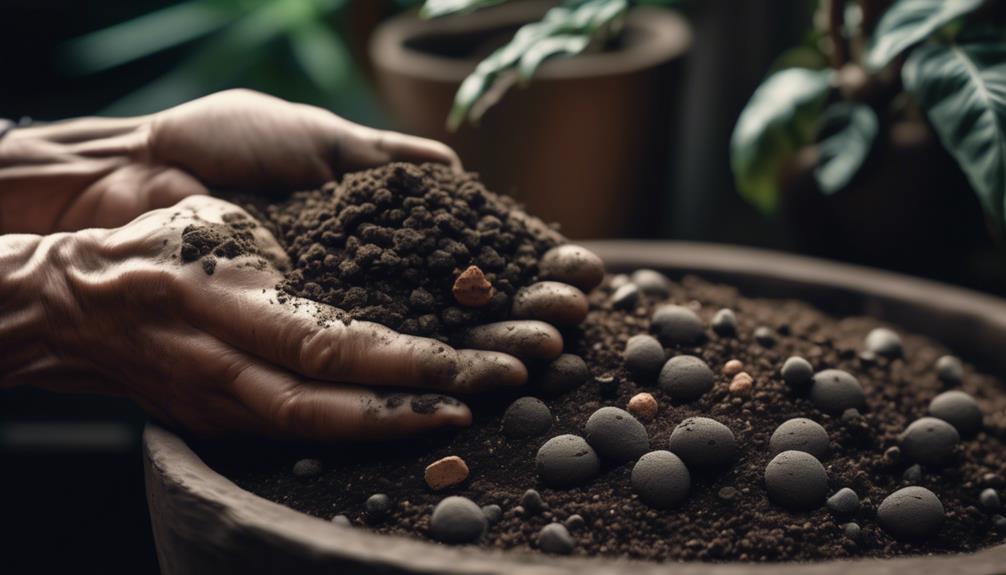
To ensure the health and growth of your bonsai tree, it’s crucial to find the right pH balance for the soil. The pH balance of the soil plays a significant role in the overall well-being of your bonsai tree. It determines the availability of essential nutrients that the tree needs for thriving.
Maintaining the ideal pH balance is important because it ensures optimal nutrient absorption by the tree roots. Different minerals and nutrients are more readily available to the roots within specific pH ranges. For example, a slightly acidic pH between 5.5 and 6.5 is considered ideal for bonsai trees, as it allows for better absorption of phosphorus, potassium, and nitrogen – key nutrients for healthy growth.
Regularly testing the pH of the soil is crucial to monitoring and maintaining a suitable pH balance for your bonsai tree. pH testing kits are readily available at garden centers and can provide accurate readings. If the pH is too high or too low, adjustments can be made using additives. Adding lime can help raise the pH, while sulfur can be used to lower it.
Finding the right pH balance for your bonsai tree is an essential part of creating an ideal soil mix. By ensuring the pH is within the appropriate range, you provide the necessary conditions for your bonsai tree to thrive and reach its full potential.
Choosing the Right Soil Components
Maintaining the ideal pH balance for your bonsai tree sets the foundation for creating a balanced soil mix, which is vital for the health and vitality of your tree. When it comes to choosing the right soil components for your bonsai trees, there are a few key factors to consider.
First, you need to understand the soil needs of bonsai trees. They require a well-draining soil mix that allows for good aeration and root growth. This is especially important because bonsai trees are typically grown in small pots, which limits the amount of space and resources available to them.
One popular soil component used in bonsai soils is akadama. Akadama is a type of clay that has excellent water-holding capabilities while still providing good drainage. It’s often mixed with other components such as pumice, lava rock, and kanuma to create a well-balanced soil mix. These components help to improve drainage and promote healthy root growth.
Ideal Soil Mix for Thriving Bonsai Trees In addition to inorganic components, organic matter is also an important part of bonsai soils. Adding organic matter such as compost or pine bark helps to improve water retention and provides essential nutrients to the tree.
When choosing the right soil components for your bonsai trees, it’s important to consider the specific needs of your tree species, as well as the environmental conditions and growth requirements. By selecting the right soil components and creating a balanced soil mix, you can provide the ideal conditions for your bonsai tree to thrive.
Tips for Proper Bonsai Tree Potting and Repotting
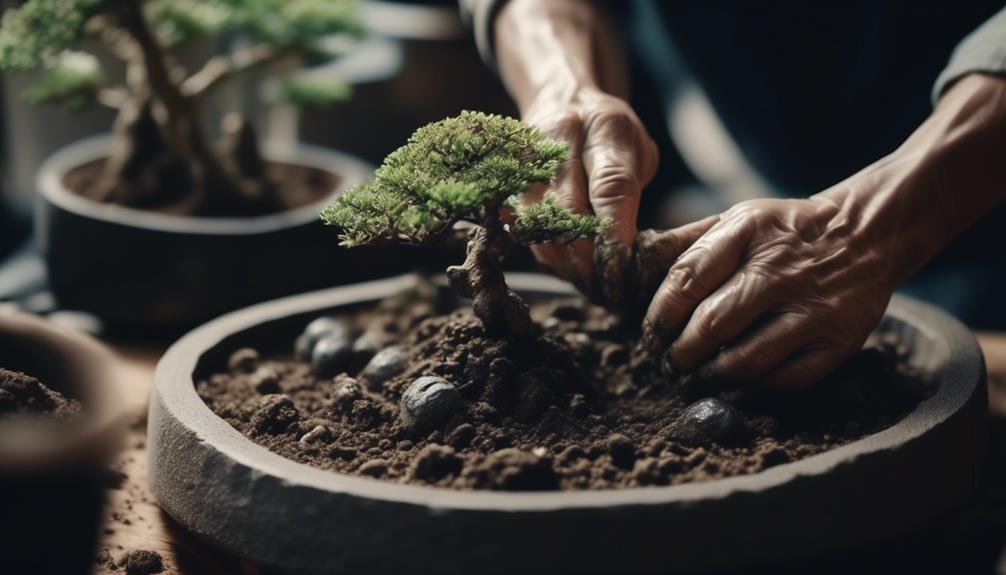
If you want your bonsai tree to thrive, it’s essential to understand the proper techniques for potting and repotting. Potting and repotting your bonsai tree is a crucial step in its overall health and growth. Here are some tips to help you with this process.
First, make sure you have the proper soil mix. As discussed in the previous section of this article, the ideal soil mix for bonsai trees consists of a combination of Akadama, pumice, and lava rock. This mix provides excellent drainage and aeration for the roots, allowing the tree to absorb water and nutrients effectively.
When potting or repotting your bonsai tree, choose a pot that’s slightly larger than the current one. This will allow room for the roots to grow. Before placing the tree in the pot, make sure to trim any damaged or excessively long roots. This will encourage new root growth and prevent the tree from becoming root-bound.
When repotting, gently remove the tree from its current pot, being careful not to damage the roots. Inspect the roots for any signs of rot or disease and trim them if necessary. Place the tree in the new pot, making sure it’s centered and at the desired height. Fill the remaining space with the soil mix, making sure to gently pack it around the roots.
After potting or repotting, water the tree thoroughly to settle the soil and remove any air pockets. Place the tree in a shaded area for a few weeks to allow it to recover from the stress of the repotting process.
Frequently Asked Questions
What Is the Best Soil Mix for Bonsai?
The best soil mix for bonsai is one that provides optimal moisture, nutrient balance, and pH levels. Drainage is important to prevent fungal growth and promote root development. Organic matter, particle size, water retention, and aeration are key factors to consider.
What Is a Good Substitute for Bonsai Soil?
A good substitute for bonsai soil would be regular bonsai soil, which can replace akadama. You can also use fertilizers like fish emulsion or organic meals for nutrient requirements. Seek advice from local bonsai enthusiasts for suitable substitutes.
Can I Use Miracle Gro Potting Mix for Bonsai?
You may use Miracle Gro potting mix for bonsai, but it may not be the ideal choice. Consider the importance of soil composition for bonsai trees and the benefits of specialized bonsai soil mix for their health and growth.
What Do You Put on Top of Bonsai Soil?
To enhance your bonsai’s appearance and retain moisture, consider using moss as a top dressing. Choose a top dressing that complements your tree’s design and ensures proper drainage. Prevent weed growth and add aesthetic appeal with decorative stones or organic materials like gravel.
Conclusion
In conclusion, finding the ideal soil mix for thriving bonsai trees is crucial for their health and growth.
By understanding the advantages and disadvantages of organic and inorganic soil, considering drainage and aeration, and choosing the right soil components, bonsai enthusiasts can create the perfect environment for their trees.
Regular monitoring and experimentation will help determine if the soil mix needs to be adjusted.
Proper potting and repotting techniques are also essential for maintaining the health and stability of bonsai trees.