
Indoor Bonsai Tree Species
Discover the intricate world of Indoor Bonsai Tree Species, where each species holds a unique story in its delicate branches. From the graceful Ficus Bonsai to the resilient Hawaiian umbrella, these miniature wonders require precise care for their well-being.
Uncover the secrets behind providing optimal light, humidity, and temperature for these bonsai trees to flourish indoors. By mastering the art of nurturing these tiny marvels, you can unlock a serene oasis within your home, where nature’s beauty is intricately cultivated.
Popular Indoor Bonsai Tree Species
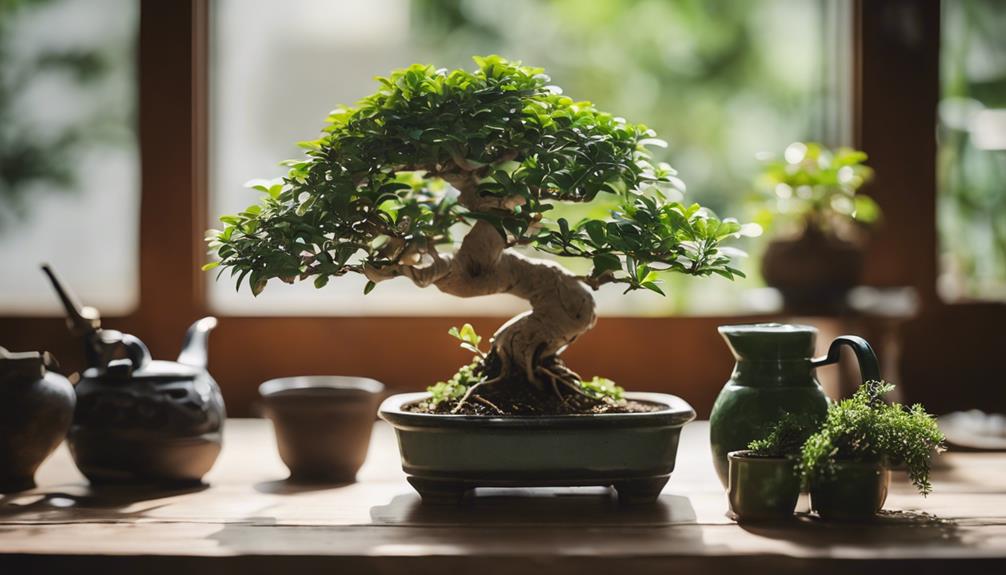
When selecting indoor bonsai tree species, it’s essential to consider the characteristics and care requirements of popular options such as the Ficus Bonsai, Dwarf jade Bonsai, Fukien tea Bonsai, Hawaiian umbrella Bonsai, and Sweet plum Bonsai.
Bonsai trees are planted for their aesthetic appeal and the meditative practice of tending to these miniature masterpieces. The Ficus Bonsai stands out for its adaptability to indoor conditions and relatively easy care guidelines, making it a favorite among enthusiasts. For beginners, the Dwarf jade Bonsai is a wise choice due to its resilience and compact size, making it manageable for those new to growing Bonsai.
Fukien tea Bonsai, known for its small, glossy leaves and delicate white flowers, brings a touch of elegance to indoor settings. Hawaiian Umbrella Bonsai is treasured for its unique umbrella-shaped canopy and ability to thrive indoors, adding a tropical flair to your space. Lastly, the Sweet Plum Bonsai, with its charming pink flowers and petite, shiny leaves, offers a delightful indoor Bonsai option for those seeking beauty and grace in their growing collection.
Basic Care for Indoor Bonsai Trees
To ensure the health and vitality of your indoor bonsai trees, it’s imperative to understand and implement basic care practices that encompass proper lighting, humidity management, watering routines, fertilization schedules, and overall maintenance techniques.
- Optimal Lighting: Place your indoor bonsai trees in a location that receives full sun exposure, ideally from a bright south-facing window or supplemented with artificial lighting for at least 10 hours daily. Adequate light is crucial for the photosynthesis process and overall growth.
- Increased Humidity: Maintain proper humidity levels for your indoor bonsai by using methods like placing the tree on a water tray filled with pebbles or regularly misting the foliage. Increased humidity levels mimic the tree’s natural environment and promote healthy growth.
- Watering Practices: Tailor your watering practices to suit the specific needs of your bonsai tree species, pot size, and climate. Overwatering can lead to root rot while underwatering causes stress. Develop a watering routine that keeps the soil consistently moist but not waterlogged to support a healthy root system.
Advanced Care Techniques for Bonsai
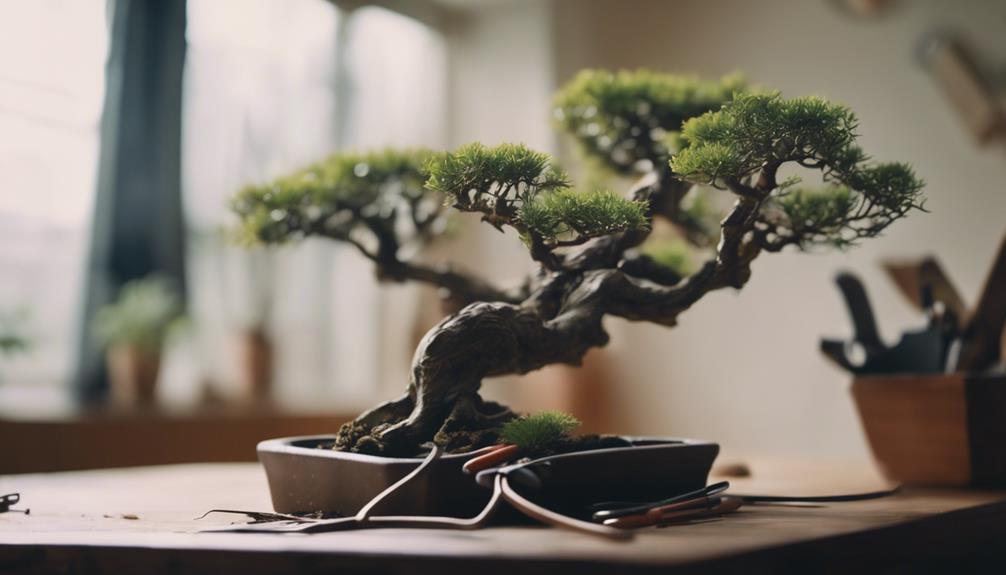
For advanced care techniques that elevate the well-being and refinement of your bonsai trees, incorporating practices such as regular repotting, substrate selection, pot aesthetics, pest monitoring, and winter adjustments is paramount. When repotting, consider the tree needs for fresh nutrients and space to grow. Select a substrate that ensures proper drainage and nutrient retention, catering to the tree’s specific requirements. Choose pots that not only enhance the tree’s aesthetics but also provide ample space for root development. Monitor your bonsai regularly for pests and diseases to address any issues promptly. During winter, adjust care routines to suit the tree’s needs, ensuring it receives enough light and humidity to thrive. By following these advanced care techniques, your bonsai tree becomes a masterpiece of botanical art. Make sure to select the right environment and care practices to increase the humidity and provide enough light for your bonsai’s optimal health and growth.
| Care Technique | Description |
|---|---|
| Regular Repotting | Prevents root-bound trees and provides fresh nutrients |
| Substrate Selection | Crucial for proper drainage and nutrient retention |
| Pot Aesthetics | Enhances visual appeal and complements the tree’s style |
| Pest Monitoring | Ensures the bonsai’s health by addressing issues promptly |
Understanding Bonsai Tree Species Requirements
Understanding the specific requirements of different Bonsai tree species is crucial for successful indoor cultivation. When considering the needs of various Bonsai trees, a few key factors should be taken into consideration:
- Planted in Small Pots: Bonsai trees are typically planted in small pots to restrict their growth and mimic the appearance of a mature tree in nature. This limited space affects their watering and nutrient requirements.
- Needs to Grow: While Bonsai trees are miniaturized versions of their larger counterparts, they still need room to grow and flourish. Regular pruning and re-potting are essential to ensure the tree’s health and longevity.
- South-Facing Window: Many Bonsai species, such as Juniper or Elm, thrive when placed near a south-facing window where they can receive ample sunlight. Understanding the light requirements of your specific Bonsai tree is crucial for its overall well-being.
Common Mistakes in Indoor Bonsai Care
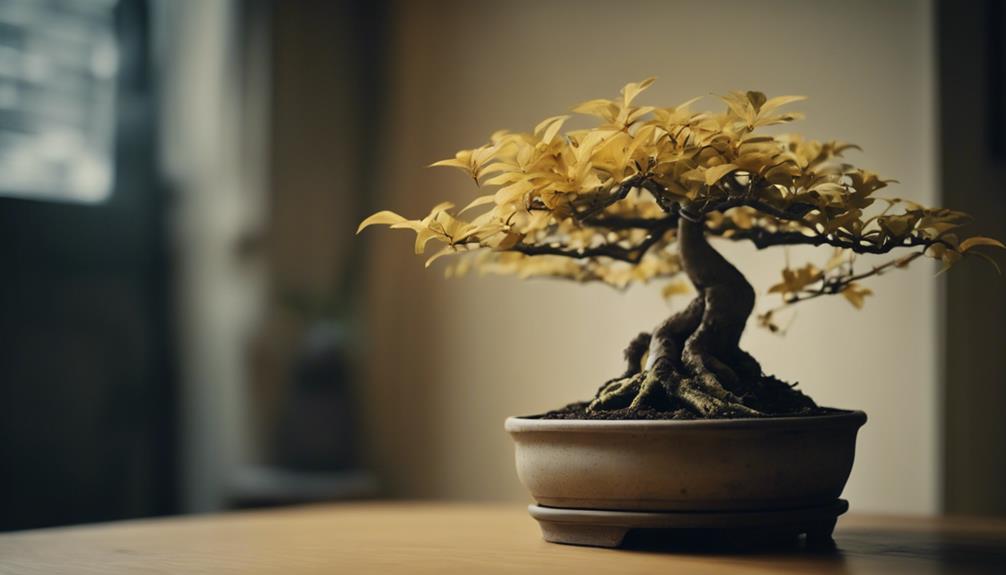
Considering the specific requirements of your indoor Bonsai tree is essential to avoid common care mistakes that can impact its health and growth. Overwatering is a prevalent issue that can lead to root rot and various health problems in indoor Bonsai trees.
Ensuring your tree receives adequate light exposure is crucial for its growth and vitality. Adjusting the watering frequency based on the species of your Bonsai and the environmental conditions it’s in is vital to maintaining its health.
Neglecting to monitor and maintain proper humidity levels can cause stress and decline in indoor Bonsai trees. Regular pruning is essential to control growth and maintain the aesthetic appearance of your Bonsai tree.