As the chilly tendrils of winter wrap around your bonsai trees and the Importance for Bonsai Trees, their delicate branches and vibrant foliage are at risk of being swept away by the frosty winds. Just like a warm coat shields you from the biting cold, winter care plays a vital role in protecting your bonsai trees from the harsh elements.
But why is it important, you may wonder? Well, my curious friend, in this discussion we shall unravel the secrets of winter care for bonsai trees, exploring the essential steps you need to take to ensure their survival and thriving beauty throughout the coldest months of the year.
So, let us embark on this journey together, and discover the wisdom that lies within the art of winter care for bonsai trees.
Importance for Bonsai Trees
Winter care is crucial for the health and survival of bonsai trees, as it protects them from the harsh effects of extreme cold and temperature fluctuations. Different tree species have varying cold hardiness and shelter needs, so it’s important to consider these factors when providing winter care.
Temperate trees can handle varying levels of cold, but tropical bonsai require additional protection when temperatures drop.
Proper winter care involves protecting the trees from wind, minimizing freeze-thaw cycles, and maintaining appropriate temperatures for dormancy. Wind can cause drying and damage to the branches and foliage of bonsai trees, so it’s important to provide a sheltered location or use windbreaks. Freezing and thawing cycles can cause stress to the roots and soil, so insulating the soil with mulch or wrapping the pot can help protect against these fluctuations.
It is also important to ensure that the trees are in a state of dormancy during winter. This means providing them with a period of rest where they stop growing and conserve energy. Maintaining appropriate temperatures for dormancy, usually around 32°F to 50°F (0°C to 10°C), helps the trees conserve energy and ensures their survival.
Protecting Bonsai Trees in Cold Weather
When it comes to ensuring the health and survival of your bonsai trees during the cold winter months, protecting them from the elements is of utmost importance. Different trees have varying cold hardiness and shelter needs, so it’s crucial to understand how to care for them in cold weather.
Tropical bonsai, for example, requires additional shelter when temperatures drop. Place them in bright, warm spots, but be sure to avoid heating vents, as they can cause dryness and damage to the trees.
For temperate species, evaluate their hardiness based on factors such as USDA Plant Hardiness Zones, elevation, precipitation, and season length. These trees may require winter storage options such as unheated garages, sheds, or cold frames. Protect them from extreme cold and temperature fluctuations by providing insulation and shielding them from harsh winds.
Monitor soil moisture levels regularly and adjust watering accordingly. Additionally, controls pests that may take advantage of the protected environment during winter.
For trees that enter dormancy, such as deciduous bonsai, they require a period of rest during winter. Place them in a protected area where they can experience the natural temperature changes necessary for their dormancy cycle.
Lastly, pay attention to the condition of conifers during winter. If you notice brown needles, it may be a sign of winter burn or dehydration. Protect conifers from harsh winter conditions by providing adequate shelter and moisture.
Necessary Preparations for Winter Care
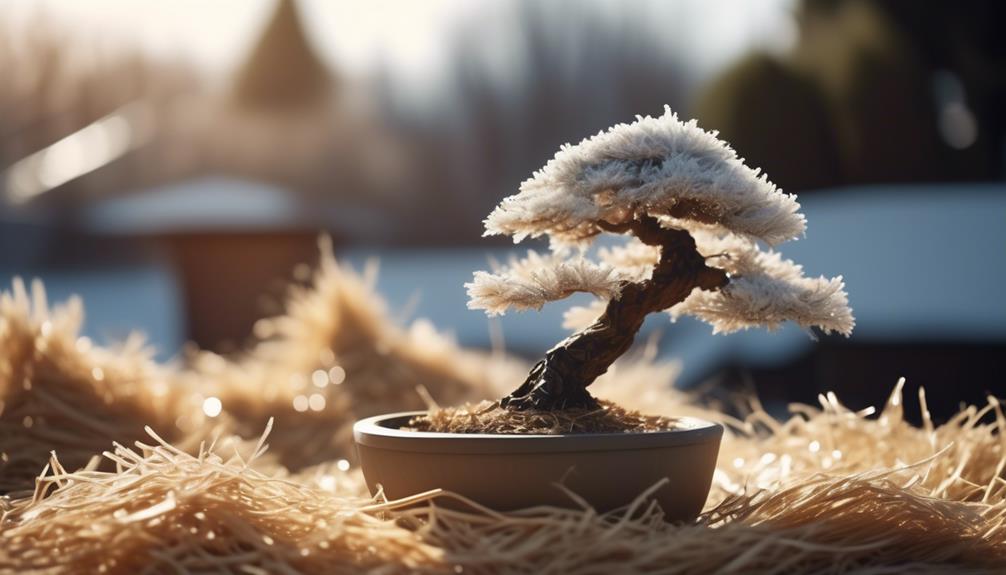
To properly prepare your bonsai trees for winter care, it’s essential to take necessary precautions and make thoughtful arrangements. As the cold weather approaches, it’s important to gradually expose temperate bonsai trees to fall temperatures. This allows them to naturally enter a dormant state, which is crucial for their survival during the winter months. Additionally, removing leaves from deciduous trees is necessary to prevent fungal diseases and conserve energy.
Protection from extreme temperatures and wind is also vital. Consider using shelters such as greenhouses, cold frames, or finding insulated spots in your garden. These structures can shield your bonsai trees from harsh weather conditions and temperature fluctuations. Remember to adjust the watering frequency to match the reduced needs of your trees during winter.
Furthermore, it’s crucial to consider the specific needs of each tree species. Some trees may require additional insulation to protect them from the cold. One way to provide insulation is by creating mulch beds around the base of the trees. Mulch helps regulate soil temperature and prevents extreme temperature fluctuations, which can be damaging to the roots.
If you live in an area with extremely cold winters, you may need to move your bonsai trees indoors. Unheated garages or basements can provide a suitable environment for dormant trees. Just ensure that the storage area is well-ventilated and that the trees receive sufficient light.
Effective Winter Storage Methods
Consider the various methods of effective winter storage to ensure the survival and health of your bonsai trees during the colder months. Proper winter care is crucial for the well-being of your bonsai trees, as they experience a dormant period where they’re more vulnerable to temperature drops and harsh weather conditions.
Here are three effective winter storage methods to protect your trees:
- Provide wind protection: Strong winds can cause damage to your bonsai trees, especially during winter. To shield them from the cold gusts, consider placing your trees in a sheltered area, such as an unheated garage, shed, or cold frame. These structures can provide a barrier against the wind and offer some insulation.
- Insulate the roots: As the temperature drops, it’s important to insulate the roots of your bonsai trees. One way to achieve this is by burying the pots in the ground. This allows the soil to act as a natural insulator, protecting the roots from extreme cold. Additionally, you can use mulch beds or insulating materials to fill the spaces between the pots, providing further protection.
- Bring them indoors: For bonsai trees that are more sensitive to cold temperatures, bringing them indoors is the best option. Consider using temperature-controlled storage areas such as cold frames, heated patios, sunrooms, or greenhouses. These spaces provide a controlled environment where you can maintain the ideal temperature and protect your trees from freezing temperatures.
Transitioning Bonsai Trees in Spring
Are you ready to transition your bonsai trees in spring and ensure their healthy growth and development?
After a period of winter dormancy and careful winter care, it’s important to properly transition your bonsai trees as the temperatures begin to rise and the days become longer.
Gradually move your trees into sunlight, taking into consideration the lengthening days and warming temperatures. This will help the trees adjust to the increased light and temperature levels.
If you have an intermediate greenhouse, it can be a great tool to encourage early growth and extend the growing season. Additionally, protect your trees from sunburn, windburn, and heat damage by providing them with shade.
Be cautious when moving your trees in and out of storage daily, as this can be labor-intensive, especially for larger collections.
And remember, if the nighttime temperatures drop below freezing or during storms, it’s important to bring your trees back indoors for their protection.
Frequently Asked Questions
Do Bonsai Trees Need Winter?
Bonsai trees need winter care for various reasons. Winter protection is crucial to shield them from extreme cold. Winter watering ensures they stay hydrated. Some species can tolerate cold temperatures, while others require winter dormancy. Pruning, sunlight, pests, storage, repotting, and display are important considerations.
What Is Overwintering Bonsai?
Overwintering bonsai is the practice of protecting them during winter. It involves strategies like insulating, pruning, and fertilizing to maintain their health. Shelter options, winter watering, and frost prevention are also important for winter care.
Do You Feed Bonsai in Winter?
Yes, you should feed your bonsai in winter. Use a winter fertilizer to provide essential nutrients. However, be careful not to overfeed as the tree’s growth slows down during winter dormancy.
Will My Bonsai Lose Its Leaves in Winter?
Your bonsai may lose its leaves in winter due to winter dormancy. To protect it from frost damage, provide cold protection, regulate winter watering, choose the right storage option, and consider winter pruning and fertilization. Don’t forget about winter sunlight and other winter care tips.
Conclusion
In conclusion, winter care is of utmost importance for bonsai trees to ensure their health and survival during the cold months.
By providing shelter, monitoring soil moisture, and conducting regular inspections, bonsai enthusiasts can protect their trees from damage caused by cold temperatures, wind, and frost.
Effective winter storage methods such as greenhouses, cold frames, or insulated storage spaces play a vital role in safeguarding the bonsai trees.
Transitioning the trees carefully in spring will help them thrive and continue to bring beauty to any garden or space.