
As you walk into the serene space of your home, your eyes are immediately drawn to the enchanting beauty of an indoor bonsai tree. Its delicate branches twist and turn, creating a captivating display of nature’s artistry.
Popular Indoor Bonsai Tree Species Intrigued by its allure, you wonder which species of bonsai would thrive in the comfort of your own home. Look no further, for this comprehensive guide will unveil the secrets of popular indoor bonsai tree species.
From the graceful Ficus Bonsai to the resilient Dwarf Jade, each species has its own unique qualities that make it a perfect fit for your indoor sanctuary.
So, let’s embark on a journey of discovery, where we will explore the captivating world of indoor bonsai trees and uncover the keys to their successful cultivation.
Ficus Bonsai Varieties Popular Indoor Bonsai Tree Species
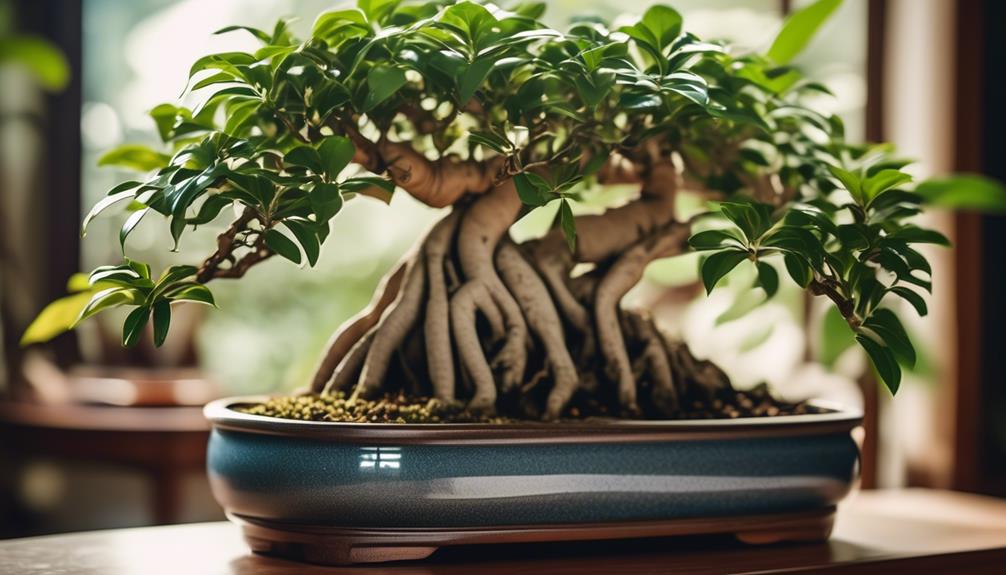
When it comes to Ficus Bonsai varieties, you’ll find a range of options that aren’t only adaptable and forgiving but also boast an elegant appearance and low-maintenance characteristics.
Ficus Bonsai trees are popular choices for indoor bonsai cultivation due to their glossy leaves and dark green color. These varieties offer a balance of elegance and beauty, making them ideal for bonsai enthusiasts.
Ficus Benjamina and Ficus Retusa are two of the most popular Ficus bonsai varieties, known for their robust nature and healthy growth. These trees can tolerate lower light levels, making them suitable for indoor cultivation. They’re forgiving with watering, making them low-maintenance options for those who may forget to water regularly.
To ensure the best growth and health of your Ficus Bonsai, it’s important to place them in a bright location with indirect sunlight. By providing the right conditions and care, you can enjoy the beauty and elegance of Ficus Bonsai varieties in your indoor bonsai collection.
Juniper Bonsai Trees
If you’re looking for a classic choice in bonsai trees that will add elegance and beauty to your indoor collection, look no further than Juniper Bonsai Trees. These popular indoor bonsai trees are known for their elegant, cascading branches and needle-like foliage, making them a timeless choice for bonsai enthusiasts.
Here are some key facts about Juniper Bonsai Trees:
- Juniper Bonsai Trees require full sun, making them perfect for bright indoor spaces or outdoor areas with ample sunlight.
- They’re hardy and drought-tolerant, making them ideal for beginners or those with busy schedules who may not be able to water their bonsai frequently.
- Juniper Bonsai Trees can be shaped into various styles such as the informal upright, slanting, or cascade, allowing for creative expression in bonsai design.
- When caring for Juniper Bonsai Trees, it’s important to ensure good air circulation and avoid overwatering to prevent root rot.
With their graceful branches and unique needle-like leaves, Juniper Bonsai Trees are a popular choice among bonsai enthusiasts. Whether you’re a beginner or a seasoned bonsai gardener, these indoor bonsai trees are sure to bring beauty and serenity to your home or office space.
Chinese Elm Bonsai
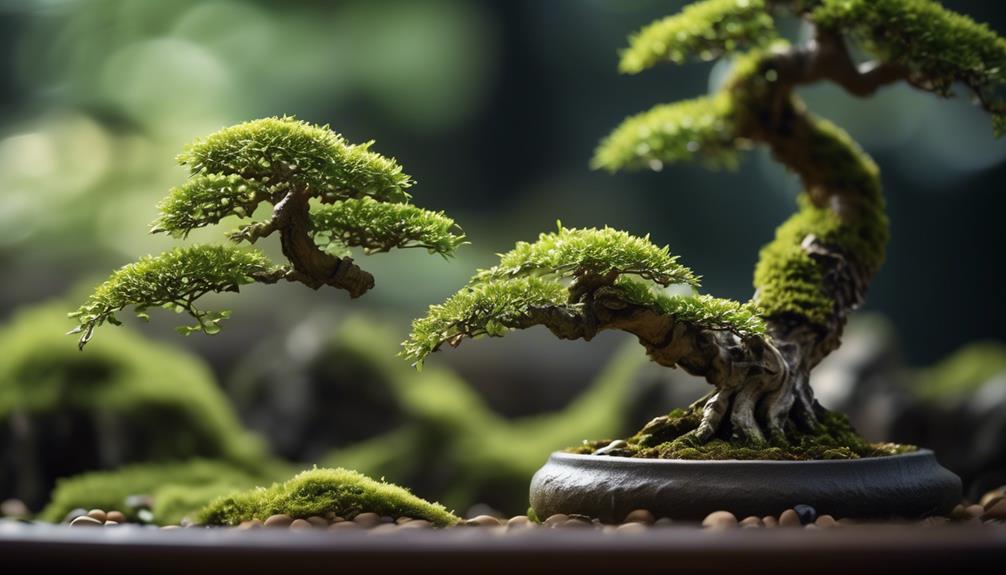
Chinese Elm Bonsai, with its perfectly proportioned structure and vibrant green leaves, is a versatile and easy-to-care-for option for bonsai enthusiasts. This species, Ulmus parvifolia, can be grown both indoors and outdoors, making it suitable for various living environments. Chinese Elm Bonsai represents a woodland tree, and its small bright green leaves and excellent twig structure are characteristic of this species. It’s one of the popular choices for indoor bonsai due to its adaptability and aesthetic appeal.
To ensure the proper care of your Chinese Elm Bonsai, it’s important to provide it with the right conditions. This species thrives in tropical and subtropical climates, so it’s essential to replicate these conditions indoors. You can achieve this by placing your bonsai near a window that receives ample sunlight throughout the day. If natural light is limited, you can supplement it with artificial lighting.
In terms of watering, Chinese Elm Bonsai trees require regular watering, but it’s crucial to avoid overwatering. The soil should be kept moist, but not waterlogged. It’s advisable to allow the soil to dry out slightly between watering sessions to prevent root rot. Additionally, providing adequate humidity levels by misting the leaves or using a humidity tray can promote the health and vitality of your Chinese Elm Bonsai.
With proper care and maintenance, your Chinese Elm Bonsai can thrive and bring beauty to your indoor space. Its versatility and ease of care make it an excellent choice for bonsai enthusiasts of all levels.
Jade Bonsai Trees
Jade Bonsai Trees, also known as Crassula ovata, are highly sought-after indoor bonsai options due to their resilient nature and low maintenance requirements. These popular indoor bonsai trees have thick, fleshy leaves and attractive trunk structures, making them a visually appealing addition to any indoor space.
Here are some key points to keep in mind when caring for Jade Bonsai Trees:
- Ideal for beginners: Jade Bonsai Trees can withstand occasional neglect and are forgiving with watering, making them perfect for those new to bonsai care.
- Light requirements: These trees prefer bright light and should be placed in a south-facing location indoors to ensure they receive adequate light exposure.
- Watering and soil: Proper watering is crucial for Jade Bonsai Trees. They should be watered thoroughly when the top inch of soil feels dry, and the soil should be well-draining to prevent overwatering.
- Humidity needs: Jade Bonsai Trees thrive in low humidity environments. To create the ideal humidity levels, you can place the tree on a humidity tray filled with water or mist the leaves occasionally.
Japanese Maple Bonsai
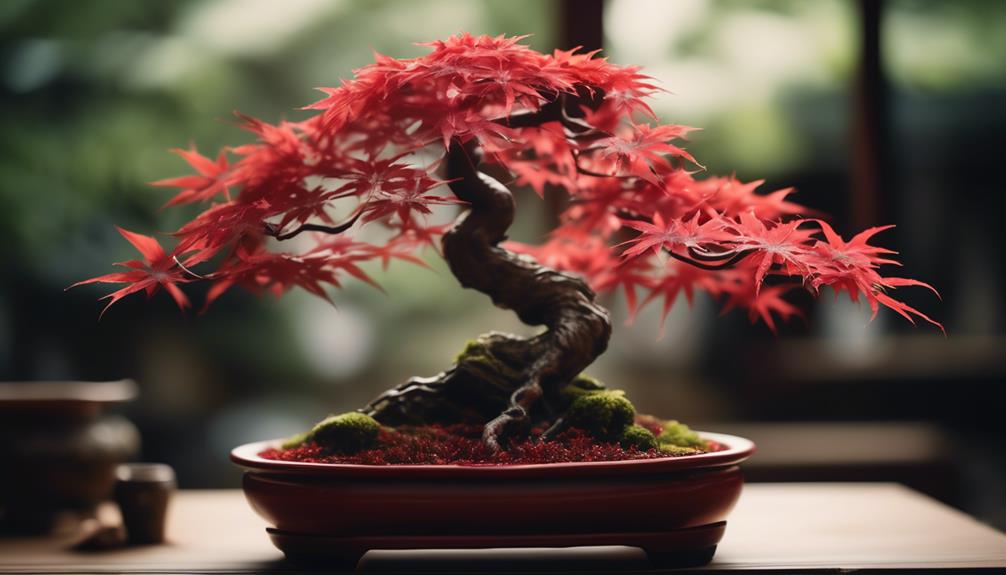
Japanese Maple Bonsai, renowned for its delicate leaves and vibrant colors, is a captivating addition to any indoor space. This popular indoor bonsai species, also known as Acer palmatum, is highly sought after for its graceful branching pattern and stunning foliage. Japanese Maple Bonsai is a subtropical tree that requires partial shade and well-draining soil for optimal growth. It’s an excellent choice for bonsai enthusiasts who desire a visually striking and unique tree.
When caring for your Japanese Maple Bonsai, it’s important to provide appropriate lighting, watering, and soil conditions. This species thrives in environments with high humidity levels, so misting the leaves regularly or using a humidity tray can help maintain its health. Additionally, Japanese Maple Bonsai can tolerate lower light levels compared to other bonsai species, making it suitable for indoor cultivation.
To ensure the health of your bonsai, it’s crucial to place it in a location that receives indirect sunlight or dappled shade. Direct sunlight can scorch the delicate leaves, while insufficient light can cause weak growth. As with all bonsai trees, regular pruning and shaping are necessary to maintain the desired size and form.
Frequently Asked Questions
What Is the Most Popular Indoor Bonsai Tree?
The most popular indoor bonsai tree for beginners is the Ficus Bonsai. It’s low maintenance, thrives in low light conditions, and has unique varieties with colorful foliage. Follow a care guide for success.
What Is the Easiest Bonsai Tree to Keep Indoors?
The easiest bonsai tree to keep indoors is the Ficus Bonsai. It thrives with proper care and doesn’t require dormancy. Ensure ideal size, lighting, humidity, watering schedule, soil composition, and temperature control for successful indoor bonsai care.
What Is the Most Sought-After Bonsai Tree?
The most sought after bonsai tree is the Ficus Bonsai, Dwarf Jade, Fukien Tea, Hawaiian Umbrella, and Sweet Plum. These unique and exotic varieties are favored by enthusiasts for their adaptability and relatively easy care requirements.
What Is the Fastest Growing Bonsai Indoor?
The fastest growing bonsai indoor is the Ficus Bonsai. To promote fast growth, use well-draining soil, prune strategically, provide ideal lighting conditions, water regularly, prevent pests and diseases, choose the right container, fertilize appropriately, train for shape, propagate carefully, and maintain proper humidity.
Conclusion
In conclusion, the Popular Indoor Bonsai Tree Species: A Comprehensive Guide offers a wealth of knowledge and practical advice for those interested in cultivating indoor bonsai trees.
With its comprehensive coverage of popular species, care guidelines, and tips for overcoming challenges, this guide is an essential resource for beginners and experienced enthusiasts alike.
Whether you’re looking to grow a Ficus Bonsai, Chinese Elm, or any other variety, this guide will provide the necessary information to help you successfully nurture and train your indoor bonsai tree.