Outdoor Bonsai Tree Varieties
Embark on a journey through the serene world of Outdoor Bonsai Tree Varieties, where the whispering leaves of Juniper, the graceful branches of Elm, and the majestic presence of Cedar await your touch.
These outdoor-friendly bonsai varieties hold the key to unlocking a tranquil oasis in your outdoor space, each possessing a unique charm and resilience that beckons for your attention.
Curious to discover more about these miniature marvels that blend nature and artistry seamlessly into your surroundings?
Juniper Bonsai Trees

Juniper bonsai trees, renowned for their hardiness and adaptability to various climates, are a captivating choice for outdoor cultivation. Their needle-like foliage, ranging from vibrant green to soothing blue-gray, not only adds visual interest to outdoor spaces but also symbolizes resilience and strength. These hardy trees thrive in full sun, embracing the warmth and light to flourish. To maintain their vitality, ensure the soil is dry before watering, preventing the onset of root rot.
One of the most appealing features of juniper bonsai trees is their low-maintenance nature, making them an ideal option for both beginners and experienced enthusiasts. Their ability to endure frequent pruning and shaping without losing their natural charm is a testament to their adaptability and durability. With proper care, these bonsai trees can grace your outdoor sanctuary for many years, evolving into living works of art that tell stories of endurance and transformation. Embrace the art of cultivating juniper bonsai trees, where nature and human creativity intertwine to create harmonious beauty.
Elm Bonsai Trees
Gracefully arching branches and small, serrated leaves characterize Elm Bonsai trees, making them a beloved choice among enthusiasts for their elegance and adaptability. Chinese Elm, specifically Ulmus parvifolia, stands out as a common Elm species used in Bonsai cultivation. One of the reasons these trees are favored is their hardiness and adaptability, which makes them ideal for beginners venturing into the art of Bonsai. Elm Bonsai trees aren’t only resilient but also respond exceptionally well to pruning and shaping, allowing for intricate and artistic designs to flourish.
Whether you prefer the tranquility of indoor gardening or the fresh air of outdoor spaces, Elm Bonsai trees offer versatility. They thrive equally well in both environments, providing growers with the flexibility to choose where to showcase their botanical masterpiece. For those starting their Bonsai journey, Elm Bonsai trees present a wonderful opportunity to learn and experiment, all while witnessing the beauty and grace of these hardy and adaptable trees.
Cedar Bonsai Trees

Embracing the allure of outdoor bonsai cultivation, Cedar Bonsai trees captivate enthusiasts with their striking aesthetic and unique bonsai styles. When it comes to Cedar bonsai trees, including Atlas cedar, Western red cedar, and Lebanon cedar species, the outdoor environment is their ideal habitat.
These majestic trees thrive under direct sunlight, demanding well-draining soil to flourish as stunning outdoor bonsai specimens. Careful attention to watering practices is crucial for their health, ensuring the soil partially dries between waterings to prevent root rot.
As these cedar bonsai trees mature, their bark development becomes a focal point, with the potential for exfoliating light or gray bark that enhances their visual appeal in outdoor settings. To truly appreciate the beauty and grace of Cedar bonsai trees, one must be diligent in their care, embracing the art of cedar bonsai tree care to cultivate a masterpiece in their outdoor space.
Maple Bonsai Trees
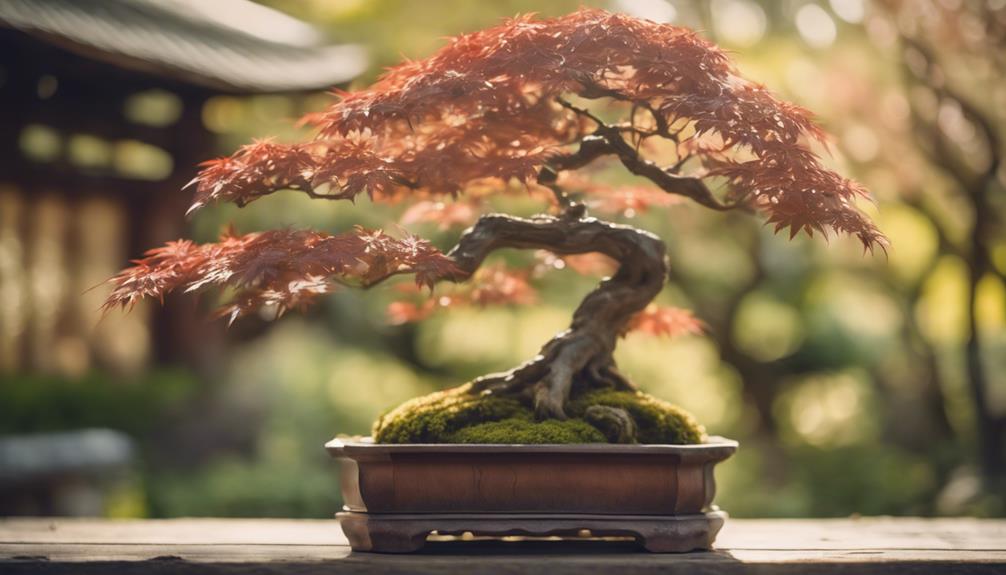
With their vibrant foliage colors and intricate branching patterns, Japanese Maple (Acer palmatum) stands out as a popular choice for Maple Bonsai trees. These miniature marvels require regular pruning to maintain their desired shape and size, ensuring a compact and balanced appearance that captivates onlookers. To emphasize the importance of care, consider the following table:
| Care Tips | Description |
|---|---|
| Well-Draining Soil | Ensures proper moisture levels for healthy growth. |
| Partial Shade | Protects leaves from scorching in hot climates. |
| Regular Pruning | Maintains shape and promotes a balanced look. |
| Vibrant Foliage | Adds a touch of elegance to outdoor spaces. |
| Stunning Fall Colors | Exhibits seasonal charm and beauty in autumn. |
To truly appreciate the beauty of Maple Bonsai trees, it is essential to provide them with the ideal environment and care they need. By following these guidelines, you can cultivate a masterpiece that evolves with the seasons, showcasing a kaleidoscope of colors and textures that will undoubtedly elevate your outdoor space.
Azalea Bonsai Trees

Azalea Bonsai Trees, renowned for their vibrant and colorful blooms, add a captivating allure to outdoor spaces with their exquisite floral displays. These stunning bonsais boast a wide array of colors, including shades of white, pink, red, orange, and peach, creating a mesmerizing visual feast for the eyes.
To ensure these beauties thrive, remember to provide them with frequent watering to keep the soil moist and encourage healthy flowering. Their ability to bloom in various captivating hues makes them a popular choice for outdoor Bonsai arrangements, injecting a burst of color into any garden or patio.
Azaleas flourish in well-draining soil, benefiting from regular pruning to maintain their elegant appearance and shape. Their relatively easy care requirements make them a favorite for outdoor cultivation, offering gardeners the opportunity to enjoy their stunning floral displays with minimal fuss.
Cypress Bonsai Trees
Renowned for their elegant, slender foliage and unique growth patterns, Cypress bonsai trees from the Cupressaceae family captivate enthusiasts with their versatility and symbolic significance in bonsai artistry. These trees are exceptional choices for both indoor and outdoor settings, adapting effortlessly to various climates. Cypress bonsai trees offer a range of styling options, including formal upright, slanting, and cascade, allowing you to express your creativity in bonsai arrangements. To ensure optimal growth, provide them with well-draining soil, regular pruning to maintain their shape, and ample sunlight for their development. Beyond their aesthetic appeal, Cypress bonsai trees hold deep symbolism, representing longevity, strength, and resilience in the art of bonsai cultivation. Embrace the elegance and endurance of Cypress bonsai trees in your collection, embodying the artistry and beauty of nature within your living space.
| Elegant Foliage | Unique Growth Patterns | Thrive Indoors and Outdoors |
|---|---|---|
| Different Styles | Well-Draining Soil | Regular Pruning |
| Adequate Sunlight | Symbolism of Longevity |
Oak Bonsai Trees

Oak bonsai trees, characterized by their sturdy trunks and distinctive lobed leaves, are revered for their timeless elegance and potential for creating striking bonsai displays. When cultivating these miniature marvels, consider the majestic White Oak (Quercus alba) for a touch of natural grandeur.
Here are some essential care tips to help your oak bonsai thrive:
- Species Selection: Choose the White Oak for its rough gray trunks and shapely rounded lobed leaves.
- Sunlight Needs: Ensure your oak bonsai receives ample sunlight to flourish.
- Soil Requirements: Opt for well-draining soil to prevent waterlogging and promote root health.
- Fertilization: Support growth with periodic fertilization during the active growing season.
With dedication and attention to detail, your oak bonsai specimen can evolve into a stunning representation of nature’s resilience and beauty. Embrace the art of bonsai cultivation and witness the transformation of your oak tree into a living masterpiece that captures the essence of tranquility and strength.