
Most Popular Bonsai Tree Types
As you explore the realm of bonsai trees and Most Popular Bonsai Tree Types, think of them as tiny masterpieces, each holding a story in its intricate branches.
From the stoic Juniper to the delicate Japanese Maple, the world of bonsai is a captivating one. These eight best and most popular bonsai tree types offer a glimpse into a world where patience and skill intertwine to create living works of art.
Whether you’re a seasoned enthusiast or just starting out, there’s something for everyone in this diverse selection that promises to inspire and challenge in equal measure.
Juniper (Juniperus spp.)

Juniper bonsai trees, renowned for their hardy nature and distinctive characteristics, are a favored choice among bonsai enthusiasts for their resilience and adaptability to various artistic styles. These evergreen trees, with their scale-like foliage and shaggy bark, offer a unique canvas for bonsai artists to create stunning pieces. Junipers are particularly popular among beginners due to their forgiving nature, making them ideal for those just starting in the art of bonsai. Their ability to withstand frequent pruning and shaping allows beginners to explore different bonsai styles without fear of damaging the tree.
The adaptability of junipers extends to their environmental needs, thriving in full sun and well-draining soil. This versatility makes them suitable for both outdoor and indoor bonsai cultivation, providing enthusiasts with options for displaying their creations. Junipers aren’t only popular but also offer a wide range of sizes and shapes, allowing artists to express their creativity and innovation through these resilient trees.
Japanese Maple (Acer Palmatum)
Renowned for its vibrant red-burgundy or green leaves, the Japanese Maple (Acer Palmatum) stands out as a popular bonsai tree species prized for its exquisite foliage and tolerance of pruning mistakes. This tree, ideal for beginners in bonsai cultivation, offers an affordable option that adds a touch of elegance to any collection.
To care for your Japanese Maple bonsai effectively, remember to:
- Water Frequently: Especially during the growing season, ensure your bonsai receives regular watering to thrive and maintain its vibrant colors.
- Provide Adequate Sunlight: Place your Japanese Maple bonsai in sunny to partially sunny conditions to promote healthy growth and colorful foliage.
- Enjoy Colorful Blooms: With various color varieties available, the Japanese Maple bonsai offers a visually appealing display of beautiful blooms that enhance its overall aesthetic charm.
Japanese Flowering Cherry (Prunus Serrulata)
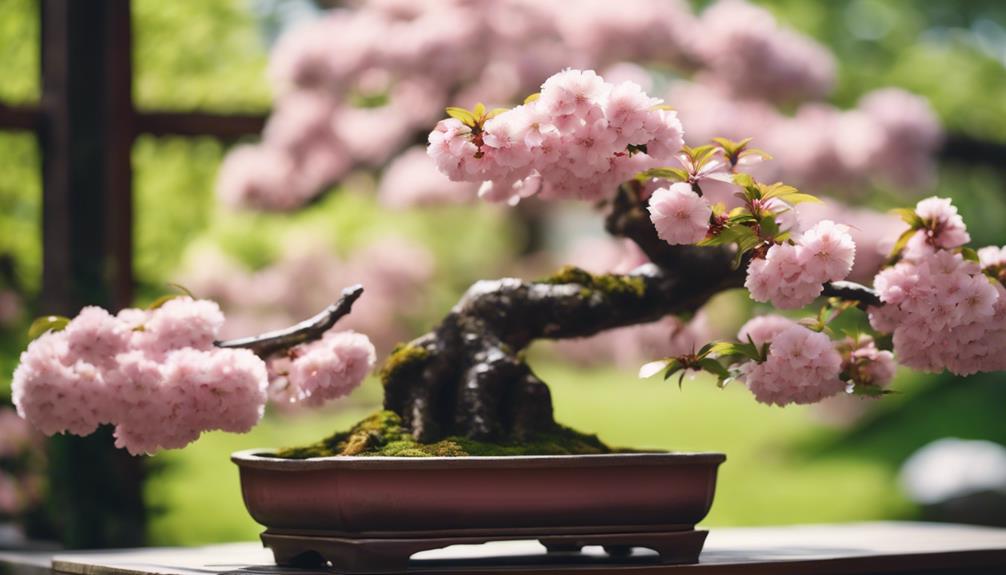
The Japanese Flowering Cherry, known for its delicate pink or white blossoms that grace its branches in spring, is a captivating choice for outdoor bonsai enthusiasts seeking to add a touch of elegance to their collection. This ornamental bonsai, scientifically named Prunus Serrulata, thrives best outdoors, where it can receive full sun to partial shade, allowing for healthy growth and vibrant blooms. Its stunning display of colorful flowers not only enhances the aesthetic appeal of any bonsai collection but also reflects a deep appreciation for traditional Japanese garden artistry.
| Features | Description |
|---|---|
| Scientific Name | Prunus Serrulata |
| Best Growing Location | Outdoors with full sun to partial shade |
| Blooms | Delicate pink or white blossoms that adorn the branches in spring |
| Special Characteristics | Highly ornamental, adding elegance and beauty to the bonsai collection |
The Japanese Flowering Cherry, with its delicate blossoms and graceful presence, offers bonsai enthusiasts a mesmerizing fusion of nature and artistry, making it a beloved choice for those seeking innovation in their outdoor bonsai displays.
Cedar (Cedrus spp.)
Cedar bonsai trees, with their dramatic styles and unique appearance, demand specialized care to flourish and preserve their distinct characteristics. These tree species, known as cedar (Cedrus Spp.), exhibit needle-like foliage, making them more challenging to shape compared to other bonsai varieties. To ensure the health and vitality of your cedar bonsai, consider the following care tips:
- Direct Sun Exposure: Cedars thrive when placed in areas with direct sunlight. Providing adequate light is crucial for their growth and overall well-being.
- Partial Drying Between Waterings: Allow the soil of your cedar bonsai to partially dry out between waterings. Overwatering can lead to root rot, so it’s essential to strike the right balance in moisture levels.
- Dedicated Care: Due to their unique features and requirements, cedars necessitate a dedicated approach to care. Regular maintenance, pruning, and attention to detail will help your cedar bonsai tree flourish and showcase its distinctive charm.
Ginseng Ficus (Ficus Microcarpa)
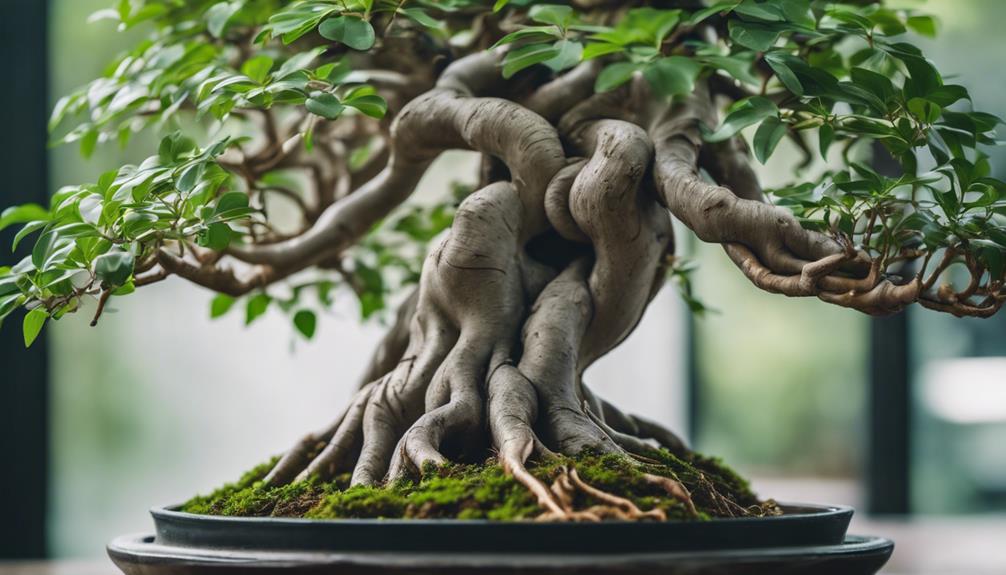
Indoor bonsai enthusiasts often find the Ginseng Ficus (Ficus Microcarpa) to be a forgiving and captivating choice due to its unique characteristics and adaptability to various pruning techniques. This bonsai species, ideal for beginners, boasts a forgiving nature, tolerating inconsistent watering schedules. Its bulbous roots, reminiscent of ginseng, not only lend an exotic flair but also contribute to its unique aesthetic appeal. Thriving in bright, indirect light, the Ginseng Ficus is well-suited for indoor environments with ample natural light.
The adaptability of the Ginseng Ficus to different pruning and shaping techniques makes it an excellent learning platform for bonsai enthusiasts. Its hardy nature allows for experimentation, making it a favorite among those keen on honing their bonsai skills. Whether you’re a novice seeking a resilient plant or an experienced enthusiast looking to explore new styles, the Ginseng Ficus offers a delightful journey into the world of indoor bonsai cultivation.
Weeping Fig (Ficus Benjamina)
Elegantly cascading with glossy green leaves, the Weeping Fig (Ficus Benjamina) captivates indoor bonsai enthusiasts with its graceful branches. This indoor bonsai tree is a favorite due to its elegant weeping branches and air-purifying properties.
Here are some key points about the Weeping Fig:
- Weeping Fig bonsai trees are known for their forgiving nature, making them an excellent choice for beginners in the bonsai world.
- To thrive, these bonsai trees require bright, indirect light and consistent watering, ensuring they maintain their glossy green leaves and artistic appearance.
- Beyond their aesthetic appeal, Weeping Fig bonsai trees are valued for their ability to purify indoor air, creating a healthier environment while bringing a touch of nature indoors.
Embrace the beauty and functionality of a Weeping Fig bonsai tree in your living space, knowing that with proper care, it will flourish and enhance your surroundings for years to come.
Dwarf Jade (Portulacaria Afra)
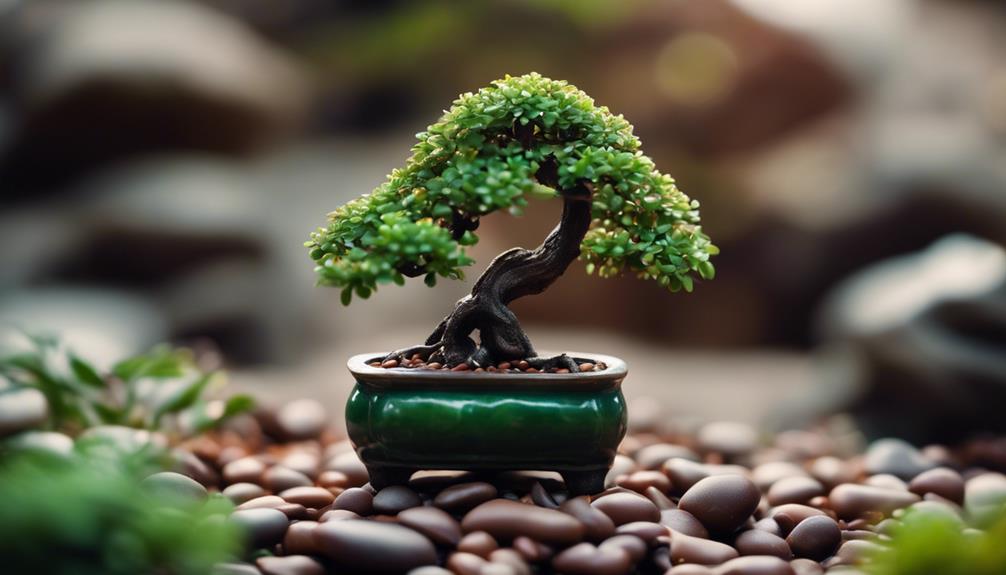
The captivating allure of the Weeping Fig transitions seamlessly into the realm of the Dwarf Jade (Portulacaria Afra), a popular bonsai tree species renowned for its small, succulent-like leaves. Dwarf Jade, also known as Portulacaria Afra, is a fantastic choice for beginner bonsai enthusiasts. Its hardy nature and forgiving characteristics make it an excellent starting point for those new to the art of bonsai. This bonsai tree species, a semi-evergreen softwood shrub, features smaller foliage compared to the common jade plant. With regular watering and the ability to adapt well to various bonsai styles, Dwarf Jade is a versatile and visually appealing option for enthusiasts. The dark green succulent leaves, paired with light brown branches, create a striking aesthetic that can enhance any bonsai collection.
| Characteristics | Details |
|---|---|
| Species | Portulacaria Afra |
| Foliage | Small, succulent-like |
| Difficulty Level | Beginner-friendly |
Pomegranate (Punica Granatum)
With its vibrant red-orange flowers and glossy green leaves, the Pomegranate (Punica Granatum) stands out as a fruit-bearing tree highly favored in bonsai cultivation. This tree species is known for its striking and colorful flowers, along with its edible fruits, which add visual interest to bonsai displays. Pomegranate bonsai trees require regular watering and full sun exposure to thrive and produce fruits in the right conditions.
- Pomegranate bonsai trees are versatile in styling, allowing for creative and unique designs to enhance any bonsai collection.
- The glossy green leaves of the pomegranate tree provide an elegant backdrop to the vibrant flowers, creating a visually appealing contrast.
- Proper care and maintenance of pomegranate bonsai trees can help them develop a distinct character, making them a captivating focal point in any bonsai arrangement.
Whether indoors or outdoors, these bonsai trees offer a blend of beauty and functionality, making them a popular choice among bonsai enthusiasts seeking innovative options for their collections.