
Top Bonsai Tree Types
If you’re just starting your Top Bonsai Tree Types, think of yourself as a bonsai tree seedling, with vast potential waiting to be nurtured.
Among the myriad of bonsai tree types, there are several that stand out as ideal choices for beginners. From the resilient Ficus to the graceful Chinese Elm, each offers a unique learning experience.
As you embark on this green-fingered adventure, exploring these top bonsai tree types will not only hone your skills but also cultivate a sense of tranquility and connection with nature.
Ficus – Easy to Care For

Ficus bonsai trees offer beginners a resilient and rewarding introduction to the art of bonsai, thriving with minimal care and easily shaped to showcase creativity. These trees are forgiving to those starting out, as they can withstand occasional underwatering, a common mistake among novices.
Their ability to adapt to indoor growth in various settings adds to their appeal, flourishing in well-lit environments within your home. For beginners, the minimal watering needs of Ficus bonsai trees make them a practical choice, requiring less attention compared to other bonsai varieties.
When it comes to shaping your Ficus bonsai, pruning is essential and straightforward, involving the careful cutting back of leaves since they easily backbud. Additionally, the flexibility of these trees allows for wire shaping, enabling beginners to learn and practice this fundamental bonsai technique effectively.
Chinese Elm – Great for Beginners
For those venturing into the world of bonsai cultivation, the Chinese Elm presents itself as an excellent choice for beginners due to its resilient nature and forgiving characteristics. This beginner bonsai tree is slow-growing, making it easier to manage and shape. Its small leaves and forgiving nature towards pruning errors ensure that even novices can enjoy cultivating this elegant tree. Chinese Elm thrives in outdoor settings, particularly in USDA Zones 5 to 10, where it can receive the ideal balance of morning sun and afternoon shade for optimal growth. Below is a table summarizing key points about the Chinese Elm:
| Feature | Description |
|---|---|
| Growth Rate | Slow-growing |
| Pruning Resilience | Resilient to pruning |
| Leaf Size | Small leaves |
| Sunlight Needs | Morning sun, afternoon shade |
| Ideal Settings | Outdoor settings in USDA Zones 5 to 10 |
With its compatibility with a wide range of climates and forgiving nature, the Chinese Elm is a perfect choice for those looking to start their bonsai journey.
Juniper – Ideal for Outdoor Growth
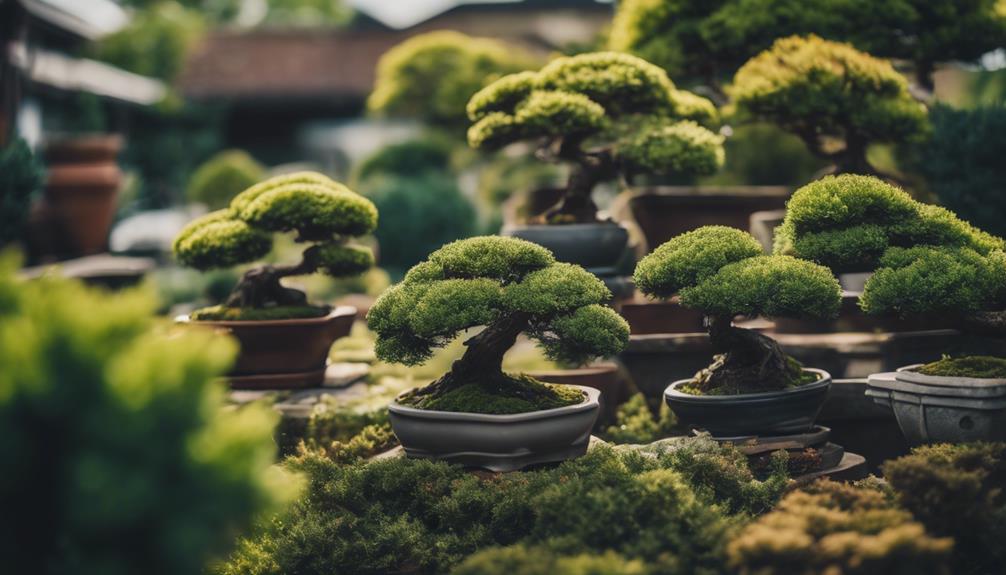
With their needle-leaved characteristics and suitability for outdoor bonsai cultivation, Juniper trees offer an ideal choice for beginners seeking to embark on their bonsai journey. Here are some key points to consider when working with Junipers:
- Beginner-Friendly: Junipers, especially the Chinese garden juniper variety, such as Juniperus procumbens Nana, are known for being easy to care for, making them perfect for those new to bonsai cultivation.
- Sunlight Requirements: Ensure your Juniper bonsai receives at least 4 hours of sunlight daily to promote healthy growth and development.
- Resilience and Shaping Techniques: Junipers are resilient plants that can withstand various pruning and shaping techniques. This flexibility allows beginners to practice and learn different bonsai techniques without fear of harming the tree.
When working with Juniper bonsai trees, keep in mind their need for sunlight, their forgiving nature, and the opportunity they provide for honing your pruning and shaping skills. These qualities make them a fantastic choice for outdoor bonsai enthusiasts in USDA Zones 4 to 9.
Jade – Suitable for Both Indoor and Outdoor
Ideal for beginners venturing into bonsai cultivation, Jade plants present a versatile option suitable for both indoor and outdoor environments. These succulent plants, including Crassula ovata and Portulacaria afra, are characterized by their forgiving nature and resilience to underwatering, making them an excellent choice for those new to bonsai care. Jade bonsai trees require minimal watering and can tolerate cold temperatures in Zones 9 to 12. When it comes to shaping, these plants respond well to careful pruning, eliminating the need for intricate wiring techniques. Varieties like the Cork Jade offer a unique blend of bonsai aesthetics with succulent qualities, adding an interesting touch to your collection. To help you understand the suitability of Jade plants for different settings, refer to the table below:
| Aspect | Jade Bonsai Trees |
|---|---|
| Environment | Indoor and Outdoor |
| Watering Needs | Minimal |
| Shaping Technique | Pruning |
| Difficulty Level | Beginner-Friendly |
| Resilience | High |
Rosemary – Aromatic and Beginner-Friendly
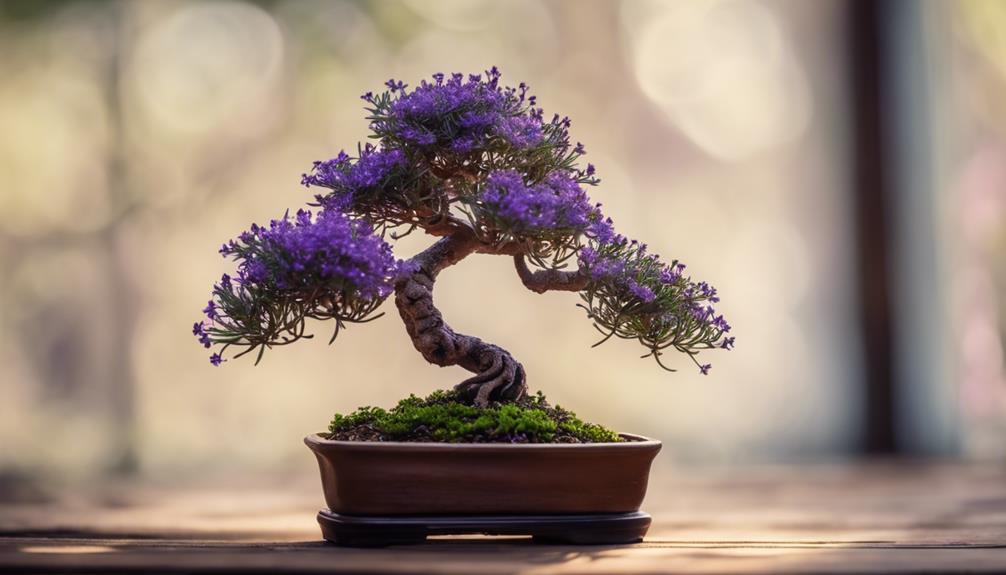
Aromatic and beginner-friendly, rosemary is a hardy herb that thrives in USDA Zones 8 to 10, preferring a dry environment and benefiting from full sun exposure. Here are three essential tips for cultivating rosemary as a bonsai tree:
- Pruning: Regular pruning is key to maintaining the shape of your rosemary bonsai. Not only does pruning help in shaping the tree, but it also provides you with fresh herbs for culinary use. Remember to trim the branches back to maintain the desired size and form.
- Sunlight: Rosemary thrives in full sun, so it’s essential to place your bonsai in a location where it can receive ample sunlight. Placing it in a southern-facing window or outdoors in a sunny spot will ensure the plant’s healthy growth and aromatic fragrance.
- Watering: While rosemary prefers a dry environment, it’s crucial to water it when the top inch of soil feels dry to the touch. Overwatering can lead to root rot, so allowing the soil to dry out slightly between waterings is ideal for the plant’s health and longevity.