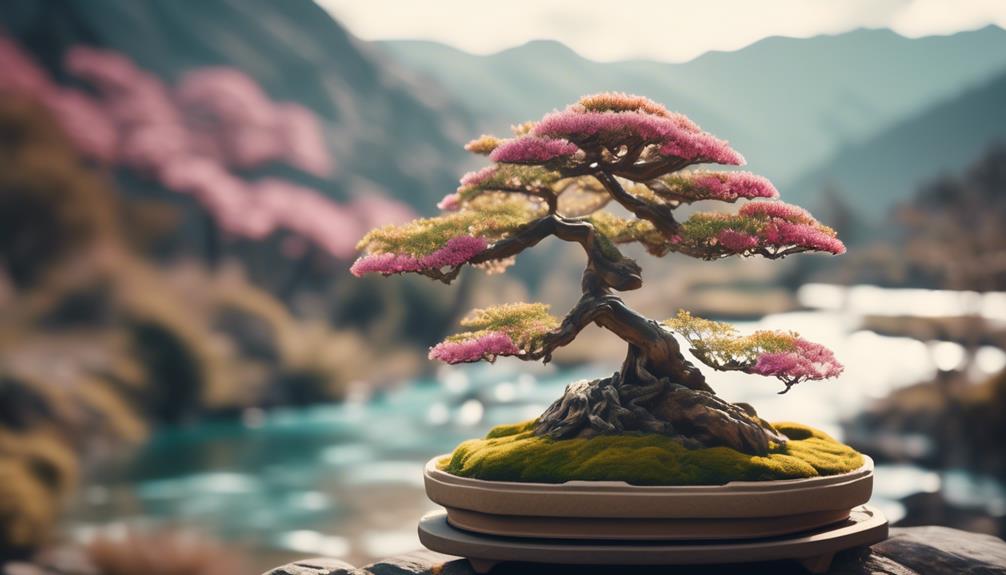
They say that great things come in small packages, and when it comes to artistic miniature tree landscapes, this adage holds true. From the ancient art of bonsai to the intricate techniques of penjing, bonkei, bonseki, and saikei, these miniature masterpieces require a delicate touch and a keen eye for detail.
But what techniques are used to create these captivating landscapes? How do artists bring the essence of nature into these miniature worlds? In this discussion, we will explore the artistry behind these miniature tree landscapes, from the selection of the perfect plants to the intricate pruning and shaping techniques that bring these tiny trees to life.
Get ready to step into a world where beauty flourishes in miniature form, and discover the techniques that transform these tiny trees into breathtaking works of art.
Bonsai Tree Selection and Pruning Techniques
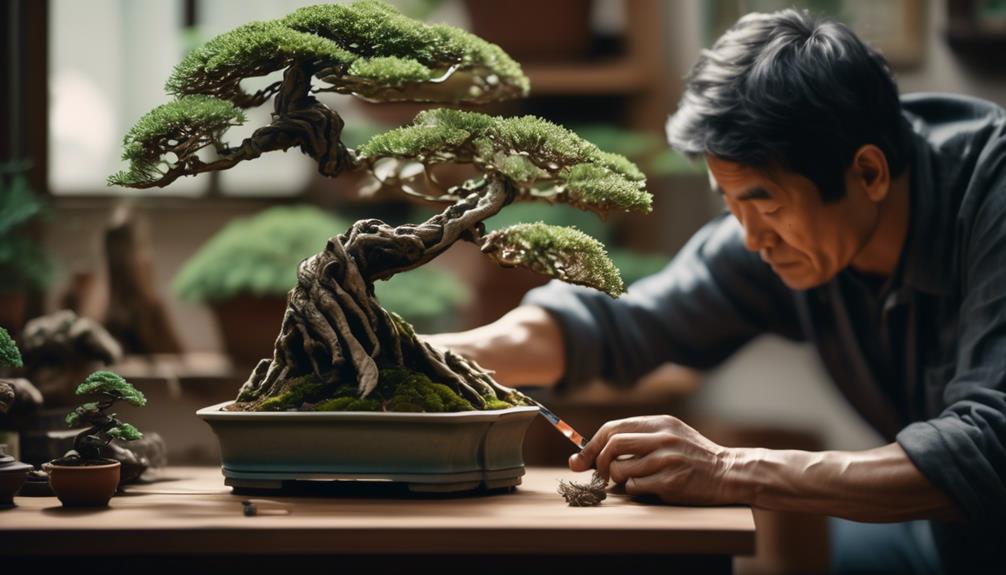
When selecting and pruning bonsai trees, it’s important to choose a dwarfed, perennial woody plant with unique characteristics suitable for miniaturization, and to employ techniques such as pinching, pruning, and wiring to shape and maintain their aesthetic appeal.
Bonsai, which means ‘tray planting’ in Japanese, isn’t simply a miniature tree, but rather an art form that has been practiced for centuries. The art of bonsai involves creating small, living representations of full-sized trees, and it requires careful consideration of tree species and their natural growth patterns.
To begin, selecting the right tree species is crucial. Certain tree species are more suitable for bonsai due to their ability to thrive in small containers and their natural dwarfed characteristics. Examples include the Japanese maple, Chinese elm, and juniper. These trees possess unique traits such as interesting bark patterns, small leaves, and graceful branches that can be manipulated to create the desired aesthetic.
Once the appropriate tree species has been chosen, pruning techniques come into play. Pinching is a method of removing new growth with your fingers, promoting branching and compactness. Pruning involves selectively cutting branches to shape the tree and maintain its desired form. Wiring, on the other hand, is used to bend and shape branches, allowing for greater control over the tree’s overall structure.
Artistic Shaping and Wiring Methods
To continue the art of bonsai, mastering the techniques of artistic shaping and wiring methods is crucial for creating intricate and natural-looking tree structures that enhance the overall aesthetic of miniature tree landscapes.
Artistic shaping involves carefully bending and training the branches and trunks of miniature trees to achieve desired forms and styles. By using specialized wiring techniques, artists can manipulate the growth of the tree, directing branches and creating elegant shapes.
Shaping and wiring allow for the creation of intricate and natural-looking tree structures, contributing to the overall aesthetic of the miniature landscape.
In the art of bonsai, the techniques of artistic shaping and wiring are essential to transform a simple tree into a masterpiece. These techniques have been refined over centuries and are deeply rooted in Japanese culture.
Through artistic shaping, artists can evoke the appearance of mature, weathered trees, enhancing the realism and character of the miniature scene. By carefully bending and training the branches, they can create elegant and harmonious shapes that mimic the beauty of nature.
Wiring methods play a significant role in achieving the desired form and style of the bonsai tree. Artists use specialized wires to gently guide the growth of branches, allowing them to take on graceful curves and angles. This technique gives the artist control over the tree’s structure, enabling them to create a sense of movement and balance within the miniature landscape.
When done skillfully, artistic shaping and wiring methods can transform a bonsai tree into a living work of art. These techniques require patience, precision, and an understanding of the tree’s growth patterns. By mastering these techniques, artists can bring their miniature tree landscapes to life, creating art forms that captivate and inspire.
Soil Composition and Watering Strategies
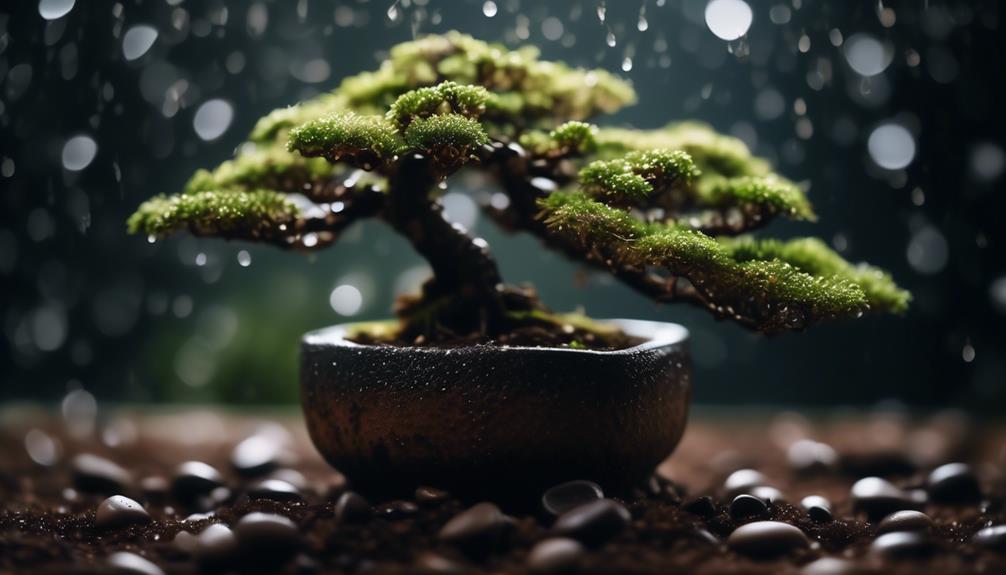
In order to create thriving miniature tree landscapes, it’s essential to understand the importance of soil composition and implement effective watering strategies.
The soil composition plays a crucial role in providing the necessary nutrients and moisture retention for the miniature trees to flourish. It’s recommended to use a well-draining soil mix to prevent waterlogging and root rot. This can be achieved by employing a blend of organic and inorganic components in the soil mix, which helps in maintaining a balanced moisture level while providing adequate nutrients for the trees.
When it comes to watering strategies, it’s important to water the miniature trees thoroughly. This means allowing the water to penetrate the soil completely and then allowing any excess water to drain out. Overwatering should be avoided as it can lead to root suffocation and other issues. It’s also crucial to consider the specific water needs of different tree species in the miniature landscape. Some trees may require more frequent watering, while others may need less. By tailoring the watering frequency and quantity to the specific needs of the trees, you can ensure that they receive the right amount of water to thrive.
Regular monitoring of soil moisture levels is essential to maintain a balanced and suitable environment for the miniature trees. This can be done by checking the moisture level using a moisture meter or by simply feeling the soil with your finger. By keeping a close eye on the soil moisture, you can adjust your watering schedule accordingly and provide the optimum conditions for your miniature tree landscapes to flourish.
Enhancing Miniature Landscapes With Accent Plants
Enhance the beauty and realism of your miniature landscapes with carefully selected accent plants that add detail and depth to the scene. Accent plants are small, carefully chosen plants that enhance the natural feel of your miniature landscape. They come in various forms, such as mosses, ferns, small flowering plants, or ground covers.
Here are five reasons why accent plants are essential in enhancing your miniature landscape:
- They bring a sense of realism: Accent plants mimic the natural growth found in nature, creating a more authentic and lifelike environment.
- They add visual interest: By carefully placing accent plants, you can create focal points and draw the viewer’s eye to specific areas within your miniature landscape.
- They offer scale and style: Choosing accent plants that complement the main trees and structures in your miniature setting helps create a cohesive and harmonious scene.
- They contribute to balance: Proper placement of accent plants helps create a sense of balance and harmony within your miniature landscape.
- They require maintenance: Regular maintenance and pruning of accent plants are necessary to keep them in proportion with the overall aesthetic appeal of your miniature landscape.
Incorporating accent plants into your miniature landscape adds an extra layer of detail and artistry, enhancing the overall beauty and realism of your creation.
Creating Depth and Perspective With Rock and Moss Arrangements
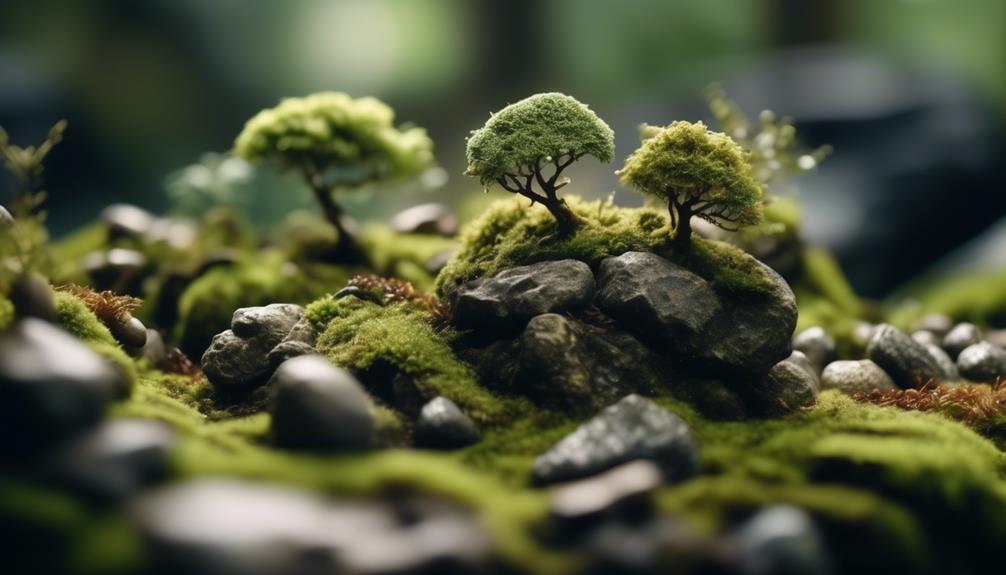
Utilize the artistry of rock and moss arrangements to create a captivating sense of depth and perspective in your miniature landscape. In the art of bonsai, creating depth and perspective is essential to evoke the beauty of nature in a traditional Japanese style. By strategically placing rocks of varying sizes and shapes, you can give the illusion of distance and scale. Position larger rocks towards the back of the arrangement to suggest a sense of distance and make them appear smaller in comparison to the foreground elements. This technique adds depth to your miniature landscape, making it more visually engaging.
To further enhance the illusion of depth, layer moss in a gradient pattern. Place denser moss towards the front of the arrangement to create a sense of proximity, while lighter moss towards the back suggests distance. The contrasting textures and colors of the rocks and moss will contribute to the overall visual depth and realism of your miniature landscape.
Consider incorporating moss-covered rocks and boulders at different heights to create a natural and dynamic appearance. This technique adds visual interest and mimics the natural formations found in nature. The combination of rocks and moss in your arrangement will bring depth and perspective to your miniature landscape, allowing you to create a captivating scene that captures the essence of the beauty of nature.
Frequently Asked Questions
How Do You Make a Miniature Landscape?
To make a miniature landscape, gather materials like pottery, stones, artistically-trained trees, and living plants. Start by choosing a container or base. Then, build your landscape step by step, adding realistic details and miniature buildings. Use different types of miniature trees and plants for variety.
What Is the Art of Producing Miniature Trees Called?
The art of bonsai involves using various techniques to create miniature tree landscapes. These techniques include pruning, wiring, and shaping the trees to achieve a desired aesthetic. Tools such as bonsai shears and wire are essential for creating these miniatures. There are different types of miniature trees that can be used in bonsai, such as pine, maple, and juniper. The history of miniature tree art dates back to ancient China and Japan, where it was practiced by scholars and monks. Creating miniature landscapes has many benefits, including stress relief, artistic expression, and a deeper connection to nature.
What Is the Art of Making Small Trees?
The art of making small trees involves using various techniques, materials, and tools to create realistic miniature tree landscapes. Different styles and attention to detail, combined with proper care and maintenance, contribute to the beauty of these artistic creations.
What Is Miniature Landscape?
A miniature landscape is a small-scale natural scene that you can create using living plants and other elements. It offers benefits like fostering environmental awareness and mindfulness. To create one, you’ll need materials like shallow trays, miniature plants, rocks, figurines, and suitable soil mixtures. Popular themes for miniature landscapes can range from serene gardens to rugged mountain scenes. Techniques for adding realistic details include careful pruning, shaping, and wiring of the plants, as well as using suitable accessories like moss, gravel, or miniature structures. Creating depth and perspective can be achieved through careful placement of elements and using different sizes of plants and objects. To display and showcase your miniature landscape, you can use a variety of methods, such as placing it on a tabletop, mounting it on a wall, or even incorporating it into a larger garden setting.