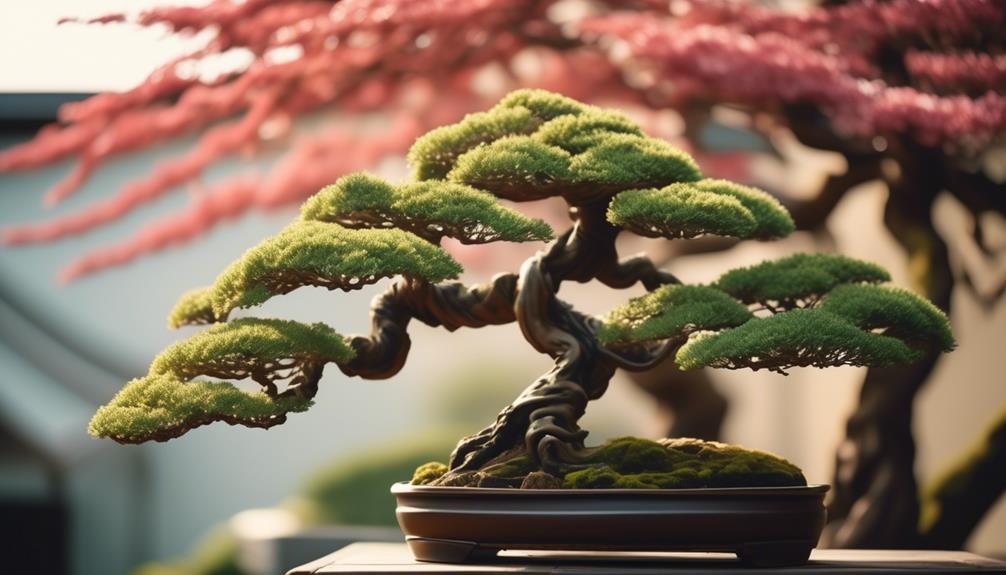
You may wonder why Japanese tree artistry is so mesmerizing, as there are countless forms of art that can captivate your attention. However, the allure lies in the deep cultural significance and symbolism associated with pine trees in Japanese culture.
Pines are revered for their timeless qualities of persistence, longevity, and adaptability, and they play a central role in Japanese gardens, temples, and artwork.
The art of bonsai, which originated in China and was refined in Japan, further showcases the meticulous craftsmanship and aesthetic principles that make Japanese tree artistry so captivating.
From the resilience of pine trees to the intricate techniques used in bonsai, there is a world of beauty and meaning waiting to be discovered.
Historical Origins of Japanese Tree Artistry
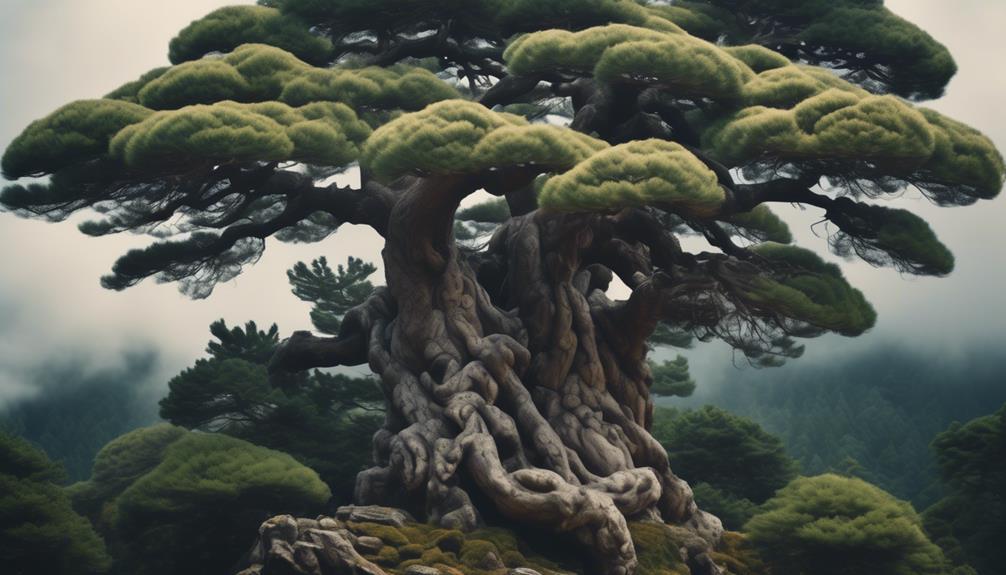
Explore the rich tapestry of history behind the artistry of Japanese trees, as you journey through centuries of cultivation and refinement. The historical origins of Japanese tree artistry can be traced back to ancient times when the practice of cultivating bonsai trees began.
Bonsai, which translates to ‘tray planting,’ emerged as a form of art in the 6th century and has since captivated people with its mesmerizing beauty.
The art of bonsai involves carefully shaping and pruning a tree to create a miniature representation of nature. It requires great patience, skill, and an understanding of horticulture. The Japanese have honed this art form over generations, passing down their knowledge and techniques from one master to another.
The historical significance of Japanese tree artistry lies in its connection to Zen Buddhism. Bonsai was initially practiced by Buddhist monks as a form of meditation and a way to connect with nature. The miniature trees were seen as a reflection of the larger world and a means of finding inner peace and harmony.
Over time, bonsai became popular among the Japanese elite, who appreciated its aesthetic appeal and the symbolism it represented. It became a status symbol and a way for individuals to express their taste and refinement.
Today, the historical origins of Japanese tree artistry continue to influence and inspire bonsai enthusiasts worldwide. The art form has evolved, but its essence remains the same – a celebration of nature’s beauty and the human connection to the natural world.
Aesthetic Principles of Bonsai Tree Design
To create a visually captivating bonsai tree, one must adhere to the aesthetic principles of proportion, asymmetry, and a natural appearance. These principles are deeply rooted in the art of bonsai and reflect the traditional Japanese art forms. Bonsai artists strive to capture the beauty of a full-sized tree in a miniature form, creating a sense of tranquility and harmony.
Proportion is a key element in bonsai tree design. It involves carefully balancing the size of the trunk, branches, and foliage to create a harmonious and pleasing visual effect. The proportions should mimic those found in nature, ensuring that the tree appears balanced and unified.
Asymmetry is another important principle in bonsai design. It embraces the imperfections and lopsidedness that can be found in nature, adding a sense of realism and vitality to the bonsai. By strategically positioning branches and foliage asymmetrically, bonsai artists create a dynamic and visually interesting composition.
A natural appearance is essential in bonsai tree design. Bonsai artists aim to create trees that appear as if they were grown in nature, rather than meticulously shaped by human hands. This involves allowing the tree to exhibit its natural growth patterns and selecting pots that complement the overall feeling of the bonsai.
Techniques for Creating Miniature Landscapes
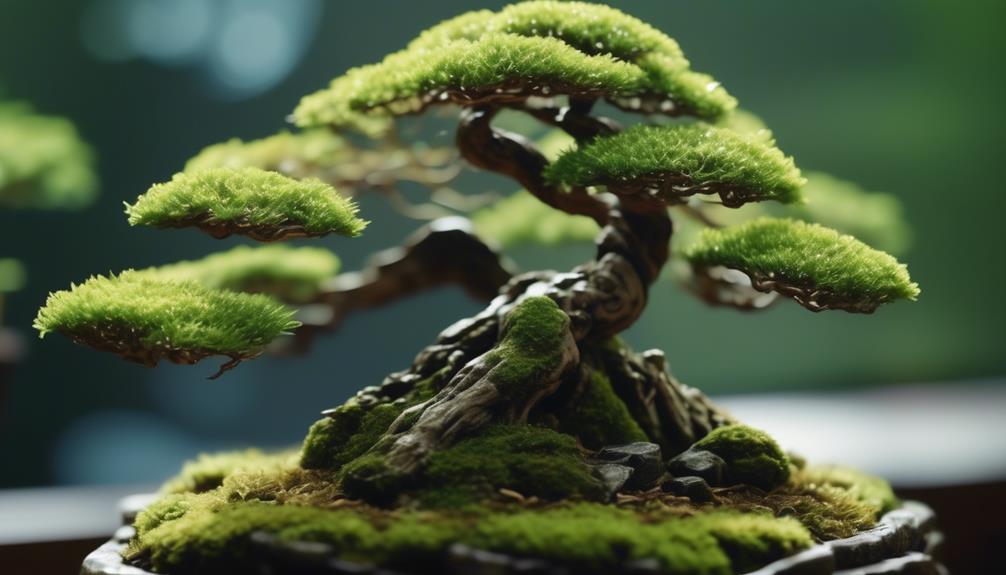
One of the key aspects of bonsai tree artistry is the mastery of techniques for creating miniature landscapes. Creating a bonsai involves carefully cultivating and shaping a miniature tree to resemble a full-size tree in nature. The techniques used in bonsai cultivation are rooted in Japanese culture and have been refined over centuries.
To create a bonsai, you must start with a young tree or a cutting from a larger tree. Native species are often preferred, as they’re better suited to the local climate and environment. Once you have selected your tree, the first step is to carefully prune the roots and branches to create the desired shape. Leaf trimming is also important to maintain the miniature size and balance of the tree.
Wiring branches is another technique used in bonsai cultivation. By gently bending and shaping the branches, you can create the illusion of age and movement in the tree. It’s important to be patient and work slowly, as the branches of a bonsai tree are delicate and can easily break.
Regular watering and repotting are essential for the health and longevity of a bonsai tree. The small size of the pot limits the amount of soil and nutrients available to the tree, so it’s important to monitor its moisture levels and provide it with the appropriate amount of water.
Symbolism and Cultural Significance in Bonsai Art
The symbolism and cultural significance of bonsai art can be seen in the deep-rooted connection between the pine tree and Japanese culture. The pine tree holds a special place in Japanese art, symbolizing qualities such as persistence, longevity, and adaptability to the elements. It has been an integral part of Japanese gardens for centuries, shaping the structure and ambiance of these spaces. In these gardens, the pines often evoke maritime landscapes and aristocratic properties, adding a touch of elegance to the surroundings.
Bonsai art, deeply ingrained in Japanese culture, represents a miniature version of a real-life tree and is associated with Zen Buddhism. By cultivating bonsai trees, one can learn patience, dedication, and the ability to withstand adversities, embodying the harmony between man and nature. The symbolism of bonsai trees goes beyond their aesthetic appeal. Famous bonsai trees, such as the oldest bonsai tree in the world, have rich histories and lineages. This adds cultural significance and storytelling to their overall appeal, making them even more captivating to admire.
The Meditative Process of Bonsai Tree Care
As you continue your exploration of the art of bonsai, let’s now immerse ourselves in the meditative process of caring for these miniature trees, where each step becomes a mindful dance between you and nature.
Taking care of bonsai trees isn’t just a routine task; it’s an art form that requires patience, attention to detail, and a deep connection with the natural world.
The meditative process of bonsai tree care begins with the simple act of watering. As you delicately pour water into the soil, you can feel the life force of the tree flowing through your fingertips. It’s a moment of quiet contemplation, where you become attuned to the tree’s needs and nourish its existence.
Next comes the meticulous task of leaf trimming and branch wiring. With each cut and twist, you shape the tree’s form and guide its growth. It’s a process that requires precision and a keen eye for aesthetics. As you carefully trim away excess leaves and wire the branches into graceful arcs, you create a mesmerizing visual composition that captures the essence of Japanese tree artistry.
Repotting is another crucial step in bonsai tree care. It’s a delicate operation that involves carefully removing the tree from its pot, trimming the roots, and placing it in fresh soil. This process not only ensures the tree’s well-being but also allows for its continued growth and development.
Throughout the meditative process of bonsai tree care, you’re reminded of the profound connection between yourself and nature. Each action you take is a testament to the harmony and balance that exists between man and the natural world.
Frequently Asked Questions
What Is the Significance of Trees in Japanese Culture?
In Japanese culture, trees hold deep symbolism, reflecting the connection between nature and spirituality. Appreciation for trees has historical roots, influenced by Zen Buddhism. Traditional techniques of shaping trees have had a profound impact on modern landscaping practices.
What Is the Japanese Art of the Tree?
The Japanese art of tree shaping combines tree pruning techniques with deep symbolism in Japanese art. It involves using traditional tools to create intricate designs, and famous Japanese tree artists have elevated this practice, highlighting its cultural significance.
Why Are Bonsai Trees so Special in Japan?
Bonsai trees hold a special place in Japanese culture due to their cultural significance, aesthetic appeal, historical roots, and symbolism. They are admired for their meditative practice and require skillful bonsai techniques.
What Is the Japanese Art of Tree Shaping?
The Japanese art of tree shaping involves manipulating trees using various techniques. It has historical origins in China and is deeply rooted in Japanese culture, symbolizing harmony between man and nature. Different styles and techniques exist, and famous tree artists have mastered this art. Modern advancements have expanded its applications.